
The Simple Difference Between Emergency Care and Urgent Care
When symptoms appear suddenly, many patients face the same question: should they go to the emergency room, visit urgent care, call their doctor, or wait for a scheduled appointment? The answer depends on severity, speed of onset, medical history, and whether the condition could threaten life, limb, organ function, or long-term health if treatment is delayed. Understanding the difference between the emergency room vs urgent care can help patients make safer decisions when time matters.
Emergency care is designed for serious, potentially life-threatening, disabling, or rapidly worsening problems. This includes symptoms such as chest pain, severe trouble breathing, stroke-like symptoms, loss of consciousness, heavy bleeding, severe allergic reaction, major injury, severe burns, poisoning, or sudden confusion. In these situations, patients should not focus on convenience, cost, or waiting time first. The priority is access to emergency equipment, emergency clinicians, imaging, laboratory services, medications, monitoring, and hospital-level care when needed.
Urgent care is different. It is usually intended for medical problems that need prompt attention but do not appear to be life-threatening. Examples may include minor cuts, mild to moderate sprains, sore throat, ear pain, urinary symptoms, low-grade fever without severe warning signs, mild asthma symptoms that respond to usual care, simple rashes, or minor burns. Urgent care can be useful when a problem should not wait several days but does not clearly require an emergency department.
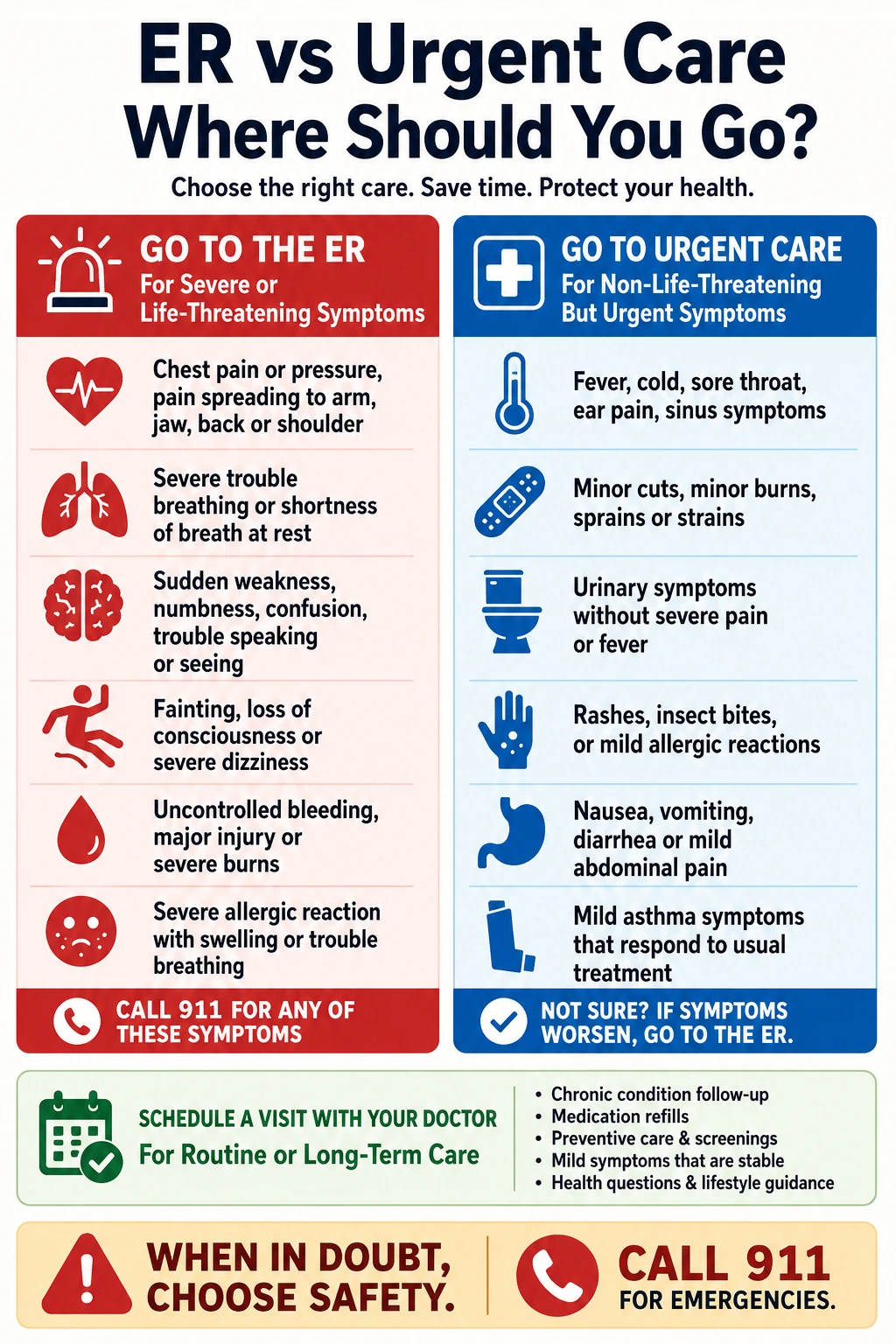
A scheduled primary care visit is often the best setting for stable concerns, chronic disease follow-up, medication review, preventive care, screening discussions, routine lab work, and symptoms that have developed gradually without severe warning signs. Primary care gives the physician time to review the full history rather than respond only to the immediate symptom. Patients who are unsure whether their concern is preventive or urgent may benefit from understanding how preventive care visits support non-emergency health concerns.
The safest rule is simple: symptoms that could signal a heart attack, stroke, severe breathing problem, major injury, severe allergic reaction, poisoning, uncontrolled bleeding, or sudden neurologic change should be treated as emergency concerns, not routine medical issues.
The decision is not always obvious because symptoms can overlap. Chest tightness may feel like indigestion or anxiety. Stroke symptoms may begin as mild weakness or confusion. Severe infection may first look like fever and fatigue. A broken bone may seem like a sprain. This is why patients should judge symptoms by risk and severity, not only by what they hope the problem might be.
Medical history also changes the decision. A fever may be less concerning in one adult and more concerning in a patient with immune suppression, cancer treatment, pregnancy, advanced age, recent surgery, or a serious chronic condition. Shortness of breath may be mild after exercise but urgent when it appears at rest, comes with chest pain, or affects speech. A high blood pressure reading may need routine follow-up in one case but urgent evaluation when it appears with chest pain, neurologic symptoms, confusion, or severe headache. Patients with blood pressure concerns can review warning signs related to high blood pressure.
When a patient is unsure and symptoms are severe, sudden, or worsening, emergency medical services may be safer than driving. MedlinePlus notes that emergency medical services are appropriate when a person’s condition is life-threatening, could become life-threatening on the way to the hospital, moving the person could cause further injury, paramedic skills or equipment are needed, or distance and traffic could delay care. This is especially relevant for chest pain, stroke-like symptoms, fainting, major injury, or severe breathing difficulty.
Symptoms That Usually Require Emergency Care
Some symptoms should be treated as emergency warning signs because they may represent conditions where minutes matter. A patient does not need to be certain about the diagnosis before seeking help. Emergency care exists because serious conditions can be difficult to identify at home, and delaying evaluation can increase risk.
Chest pain or pressure is one of the clearest examples. The American Heart Association describes heart attack symptoms as discomfort in the center of the chest that lasts more than a few minutes or goes away and comes back, pain or discomfort in the arms, back, neck, jaw, or stomach, shortness of breath, and other signs such as nausea, lightheadedness, or unusual tiredness. A patient should not assume chest symptoms are harmless simply because they are young, busy, anxious, or have had indigestion before.
Stroke-like symptoms also require immediate action. The Centers for Disease Control and Prevention lists sudden numbness or weakness of the face, arm, or leg, especially on one side of the body; sudden confusion or trouble speaking; sudden trouble seeing; sudden trouble walking, dizziness, or loss of balance; and sudden severe headache with no known cause as stroke symptoms. CDC advises calling 911 right away if these symptoms occur.
Severe trouble breathing is another emergency warning sign. This includes breathing difficulty at rest, inability to speak in full sentences, bluish lips, severe wheezing, choking, breathing difficulty with chest pain, or sudden worsening in a patient with heart or lung disease. Mild congestion or cough may not require emergency care, but severe breathing distress should not wait for a regular appointment.
Loss of consciousness, fainting, sudden severe dizziness that does not go away, or a person who is difficult to wake can also signal a serious problem. Causes can range from dehydration to heart rhythm problems, neurologic events, medication effects, infection, or injury. Because the cause is not always obvious, emergency evaluation may be needed when fainting is sudden, unexplained, recurrent, or associated with chest pain, breathing problems, injury, pregnancy, or neurologic symptoms.
Severe allergic reactions should be treated quickly. Trouble breathing, swelling of the face, lips, tongue, or throat, widespread hives with breathing symptoms, dizziness, fainting, or symptoms after exposure to a known allergen may indicate anaphylaxis. This is not a situation for a routine appointment. Patients with prescribed emergency medication should follow their care plan and seek emergency help.
Major injuries also belong in emergency care. This may include deep wounds, uncontrolled bleeding, severe burns, suspected broken bones with deformity or loss of movement, head injury with confusion or vomiting, neck or spine injury, motor vehicle injuries, or injuries where moving the person could make damage worse. In these situations, emergency services may be safer than private transportation.
Emergency Warning Signs Patients Should Not Ignore
These symptoms generally require emergency evaluation or immediate medical guidance, especially when they are sudden, severe, worsening, or unusual for the patient:
- Chest pain, pressure, tightness or pain spreading to the arm, jaw, back or shoulder
- Severe shortness of breath or breathing difficulty at rest
- Sudden weakness, numbness, confusion, trouble speaking or facial drooping
- Loss of consciousness, fainting or sudden severe dizziness
- Uncontrolled bleeding, deep wounds or major injury
- Severe allergic reaction with breathing trouble or swelling
- Sudden severe headache, especially with neurologic symptoms
- Severe burns, poisoning, overdose concern or inhaled toxic fumes
- Severe pain anywhere in the body that is sudden or worsening
- A person who is suddenly hard to wake, very confused or rapidly getting worse
This list is not complete. Patients should also consider age, pregnancy, recent surgery, cancer treatment, immune suppression, heart disease, kidney disease, diabetes, blood thinner use, and other medical conditions. A symptom that seems moderate in a healthy adult may be more urgent in a medically fragile patient.
When Urgent Care May Be the Better First Stop
Urgent care can be helpful for problems that need attention soon but do not appear to require emergency-level resources. It is often used when symptoms begin outside normal office hours, when a primary care appointment is not available quickly, or when a problem is uncomfortable but stable. The key phrase is stable. If symptoms suggest possible life-threatening illness, urgent care should not delay emergency evaluation.
Common urgent care concerns include sore throat, ear pain, sinus symptoms, mild to moderate fever without severe warning signs, urinary discomfort, minor cuts that may need simple care, mild burns, minor sprains, rashes, insect bites, and some uncomplicated respiratory symptoms. Urgent care may also provide limited testing, basic imaging, wound care, splinting, or medication prescriptions depending on the facility.
However, urgent care centers vary. Not every location has the same equipment, staff, imaging availability, laboratory access, or medication options. A patient with symptoms that may need advanced imaging, hospital monitoring, surgery, emergency medication, or specialist evaluation may be redirected to an emergency department. This is not a failure of urgent care. It means the patient needs a higher level of evaluation.
Urgent care may also be useful when a condition is worsening but still does not look like an emergency. For example, a patient with a painful ear infection, urinary symptoms without severe flank pain or fever, a minor work injury, a mild asthma flare that responds to treatment, or a small cut that needs attention may be appropriately seen in urgent care. The visit can prevent unnecessary delay while avoiding an emergency department visit that may not be needed.
Patients should be careful with symptoms that sound mild but behave aggressively. A rash with facial swelling, fever with stiff neck, abdominal pain with fainting, a headache described as the worst of life, or a wound with uncontrolled bleeding should not be treated as simple urgent care problems. The pattern, severity, and associated symptoms matter more than the label the patient first gives the complaint.
Urgent care also does not replace long-term primary care. It may solve an immediate problem, but it usually does not provide the same continuity for blood pressure, diabetes risk, preventive screening, medication review, chronic disease management, or lifestyle planning. After an urgent care visit, patients should follow up with their regular physician when symptoms persist, test results need review, medications are changed, or a chronic condition is involved.
ER, Urgent Care or Scheduled Visit?
The table below gives practical examples of how different symptoms may fit different care settings. It is not a substitute for medical judgment. If symptoms are severe, sudden, or rapidly worsening, patients should seek immediate medical help.
| Situation | More appropriate setting | Why timing matters |
|---|---|---|
| Chest pressure with sweating, nausea or shortness of breath | Emergency department or emergency medical services | May require rapid evaluation for a serious heart-related problem |
| Sudden weakness on one side or trouble speaking | Emergency department or emergency medical services | Stroke-like symptoms require immediate action |
| Minor cut with bleeding that stops with pressure | Urgent care or same-day clinic | May need wound cleaning, closure or tetanus review |
| Sore throat without breathing difficulty or severe dehydration | Urgent care or primary care | Testing or medication may be considered depending on findings |
| Gradual fatigue over several weeks | Scheduled primary care visit | Needs history, exam and possible lab review rather than emergency response |
| Routine medication refill without new symptoms | Primary care or prescribing clinician | Best handled through continuity and medication review |
| Sprained ankle with mild swelling and ability to walk | Urgent care or primary care | May need exam, support care or imaging depending on severity |
| Severe injury after a fall with deformity or inability to move | Emergency department | May require advanced imaging, pain control or specialist care |
Real-Life Examples Patients Often Misjudge
Many wrong decisions happen because symptoms do not always look dramatic at the beginning. A patient may compare the current problem with a past experience, search online for reassurance, or wait because they do not want to overreact. That hesitation is understandable, but certain patterns deserve more caution. The examples below show how the same symptom can belong in different care settings depending on severity, associated signs, and medical history.
“My Chest Feels Tight, But I Think It Is Stress”
Stress can cause chest tightness, rapid heartbeat, muscle tension, and shortness of breath. However, chest pressure should not be dismissed as anxiety when it is new, severe, persistent, or associated with sweating, nausea, faintness, pain spreading to the arm or jaw, or breathing difficulty. Patients with diabetes, high blood pressure, smoking history, known heart disease, or strong family history should be especially careful.
Emergency evaluation may be the safer choice when chest symptoms are unusual or concerning. A clinician can evaluate whether the problem appears cardiac, lung-related, digestive, muscular, anxiety-related, or linked to another cause. Guessing at home can delay care when the symptom is serious.
“My Blood Pressure Is High and I Have a Severe Headache”
A headache does not automatically mean blood pressure is dangerously high, and high blood pressure does not explain every headache. Still, a very high reading with severe headache, confusion, vision change, weakness, chest pain, or shortness of breath should be treated differently from a mild headache with a modestly elevated reading.
Patients should avoid taking extra medication without medical guidance unless their physician has given a specific plan. The safer step is to seek medical advice quickly, especially when symptoms are sudden or severe.
“My Child Has a Fever, But Is Breathing Normally”
Fever alone does not always require emergency care, but the child’s age, appearance, hydration, breathing, alertness, immune status, and associated symptoms matter. A child who is breathing comfortably, drinking fluids, urinating, and interacting normally may be appropriate for a pediatrician, same-day clinic, or urgent care depending on the situation. A child who is very sleepy, struggling to breathe, dehydrated, has a stiff neck, seizure, bluish lips, or a concerning rash needs faster medical attention.
Parents should follow pediatric guidance from their clinician, especially for infants, medically fragile children, and children with chronic conditions. When a parent is unsure and the child appears seriously ill, emergency evaluation is safer than waiting.
“I Twisted My Ankle and Can Still Walk”
A mild ankle injury may be appropriate for urgent care, same-day clinic, or a primary care appointment if pain is manageable and the person can walk. However, severe swelling, visible deformity, numbness, inability to bear weight, severe pain, open wound, or injury after a high-impact fall may require emergency evaluation or imaging.
Patients should not assume every injury is minor because they can move the joint. Pain level, mechanism of injury, swelling, function, and circulation all matter. Urgent care may be able to assess many mild to moderate injuries, but more serious trauma may need emergency resources.
“I Have Abdominal Pain After Eating”
Abdominal pain can come from indigestion, constipation, gallbladder problems, ulcers, infection, inflammation, kidney stones, bowel obstruction, or other causes. Mild, brief discomfort that improves may be appropriate for a scheduled visit. Severe pain, pain with fainting, vomiting blood, black stool, high fever, rigid abdomen, chest pain, pregnancy, or sudden worsening should be treated more urgently.
Patients should also pay attention to age and medical history. A symptom that seems like indigestion may need faster evaluation in an older adult or a patient with cardiovascular risk, especially if it appears with sweating, shortness of breath, weakness, or chest pressure.
“I Feel Dizzy, But I Have Not Fainted”
Dizziness can be caused by dehydration, inner ear problems, medication effects, low blood sugar, anxiety, infection, blood pressure changes, heart rhythm problems, neurologic conditions, or other causes. Mild positional dizziness may be appropriate for primary care or urgent care depending on severity. Sudden severe dizziness with trouble walking, weakness, speech difficulty, chest pain, fainting, or severe headache should be treated as more urgent.
Patients taking blood pressure medication, blood thinners, diabetes medication, sedatives, or several prescriptions should mention this during evaluation. Medication interactions and dosage changes can affect balance, alertness, and fall risk.
What Information to Bring When You Seek Same-Day Care
Whether the patient goes to urgent care, a same-day clinic, or the emergency department, good information can make evaluation faster and safer. In a stressful moment, many people forget medication names, allergies, recent test results, or when symptoms started. Preparing these details can help the care team understand the problem more accurately.
Medication information is especially important. Some medications affect bleeding risk, blood pressure, blood sugar, heart rhythm, alertness, breathing, kidney function, and interactions with new treatments. Patients should include prescriptions, over-the-counter medicines, vitamins, supplements, injections, inhalers, patches, and recent antibiotics or steroids.
Timing also matters. A clinician will usually ask when symptoms started, whether they came on suddenly or gradually, what makes them better or worse, and whether they are changing. “Since this morning” may not be enough. More useful details include the exact time, what the patient was doing, whether the symptom has happened before, and whether it is improving, worsening, or coming in waves.
Patients should bring information about chronic conditions and recent medical care. This includes heart disease, diabetes, kidney disease, cancer treatment, pregnancy, recent surgery, immune suppression, implanted devices, recent hospital stay, known allergies, and specialist care. These details can change which tests or treatments are safest.
Details That Help the Care Team
When seeking same-day care, the following information can support a more accurate evaluation:
- Current medications, supplements and allergies
- Time symptoms started and how they changed
- Recent injuries, travel, infections or procedures
- Existing conditions such as heart disease, diabetes or kidney disease
- Recent test results, imaging reports or hospital discharge papers
- Home measurements such as temperature, blood pressure or glucose
- Names of specialists or clinics involved in recent care
- Emergency contact and preferred pharmacy information
Patients should also be honest about sensitive information. Alcohol use, recreational drugs, missed medications, pregnancy possibility, sexual exposure, domestic injury, or self-harm concerns may change medical decisions. Clinicians need accurate information to protect the patient, not to judge them.
If the patient cannot speak clearly, is confused, or is too ill to explain, a family member or caregiver can provide important context. This is especially useful for older adults, children, patients with dementia, patients with disabilities, and anyone whose symptoms were witnessed by another person.
How Primary Care Helps Reduce Avoidable Emergency Visits
Emergency and urgent care are essential when symptoms need fast attention, but they are not designed to replace regular medical care. Many avoidable urgent visits happen because chronic conditions were not monitored, medications were not reviewed, screenings were delayed, or early symptoms were ignored until they became harder to manage.
Primary care can reduce avoidable escalation by tracking blood pressure, blood sugar, cholesterol, kidney function, weight changes, medication side effects, sleep problems, mental health, and preventive screening needs. A physician who knows the patient’s baseline can often recognize when something has changed and intervene before the problem becomes urgent.
For example, a patient with gradually rising blood pressure may not need emergency care today, but without follow-up, the risk can increase over time. A patient with worsening shortness of breath on exertion may need evaluation before symptoms appear at rest. A patient with repeated urinary symptoms may need a more complete review rather than repeated short-term treatment. Regular care helps identify these patterns.
Laboratory services can support this process. Blood work and other tests may help physicians monitor chronic conditions, evaluate infection, assess organ function, review medication safety, or decide whether additional testing is needed. This is why many patients benefit from understanding laboratory testing that supports faster diagnosis.
Preventive care also reduces confusion. When a patient knows which screenings are current, which medications are active, what symptoms should trigger a call, and when follow-up is due, they are less likely to delay care or use the wrong setting. A good care plan tells the patient not only what is wrong, but what to do next if symptoms change.
Heart disease prevention is another important example. Patients can reduce risk by managing blood pressure, moving regularly, improving nutrition, treating sleep problems, avoiding tobacco, and keeping regular medical follow-up. These habits do not remove the need for emergency care when warning symptoms occur, but they can reduce long-term risk and improve daily health. Patients can review daily habits that reduce heart disease risk as part of a broader prevention plan.
Primary care also helps after an urgent or emergency visit. Discharge instructions may include new medications, pending test results, follow-up imaging, wound checks, blood pressure rechecks, or specialist referrals. Without follow-up, important next steps can be missed. A regular physician can help interpret what happened and make sure the patient returns to stable care.
How to Decide When Symptoms Are Unclear
Not every medical decision fits neatly into emergency care, urgent care, or scheduled primary care. Some symptoms are uncomfortable but not clearly dangerous. Others are mild at first but become more concerning because of age, medical history, speed of change, or associated symptoms. When the answer is unclear, patients should use a risk-based approach.
The first question is whether the symptom could represent a time-sensitive emergency. Chest pain, trouble breathing, stroke-like symptoms, fainting, severe allergic reaction, uncontrolled bleeding, major trauma, poisoning, severe burns, or sudden confusion should not be managed through routine scheduling. Even if the cause turns out to be less serious, it is safer to evaluate these symptoms promptly.
The second question is whether the symptom is getting worse. A mild sore throat that stays mild may be appropriate for primary care or urgent care. A throat symptom with trouble breathing, drooling, inability to swallow, neck swelling, or severe dehydration changes the level of concern. Worsening speed matters.
The third question is whether the patient has risk factors that make the symptom more serious. Pregnancy, cancer treatment, immune suppression, advanced age, heart disease, kidney disease, diabetes, blood thinner use, recent surgery, or a history of stroke can change the safest setting for care. Patients with these risks should often seek advice sooner.
The fourth question is whether the patient can safely wait. If symptoms are stable, mild, and not associated with warning signs, a scheduled appointment may be appropriate. If pain is severe, the patient cannot keep fluids down, breathing is difficult, mental status is changing, or function is rapidly declining, waiting is not appropriate.
The final question is whether medical guidance is available. Calling a primary care office, nurse line, urgent care center, or emergency services may help direct the patient to the right setting. When severe symptoms are present, patients should not let the search for the “perfect” destination delay emergency help.
What Happens After You Choose the Right Setting
Choosing the right place for care is only the first step. What happens next depends on the setting, the patient’s symptoms, and the level of risk. Emergency departments, urgent care centers, and primary care offices are built for different types of decisions. Understanding what each setting can usually provide helps patients know what to expect and why they may be redirected if the problem is more serious than it first appears.
In the emergency department, the care team may focus first on stabilizing the patient and ruling out serious causes. This can include vital signs, physical examination, blood tests, electrocardiogram, imaging, medication, monitoring, specialist consultation, or hospital admission when needed. The goal is not always to give a final long-term diagnosis during the first visit. Sometimes the immediate goal is to identify or exclude dangerous conditions and determine whether the patient is safe to go home.
In urgent care, the evaluation is usually more limited and focused. The clinician may assess symptoms, perform basic testing, treat minor injuries, prescribe medication when appropriate, or recommend follow-up. If the urgent care team sees signs of a potentially serious condition, they may send the patient to the emergency department. Patients should not view this as wasted time; it means the initial evaluation found a reason to escalate care.
In primary care, the approach is usually broader and more continuous. A physician can review previous results, chronic conditions, medications, screening status, family history, and long-term risk. This setting is often best for symptoms that are stable, recurring, or connected to ongoing health concerns. It is also the right place to update preventive care after an emergency or urgent care visit.
Patients should also understand that discharge from the emergency department or urgent care does not always mean the issue is completely resolved. It may mean the patient is stable enough to continue evaluation as an outpatient. Follow-up instructions, warning signs, medication changes, pending test results, and referral recommendations are part of the care plan and should be taken seriously.
If symptoms return or worsen after a same-day visit, patients should not assume the previous evaluation still applies. Medical conditions can change. A symptom that was mild in the morning may become more concerning by evening. Patients should follow discharge instructions and seek care again if warning signs appear.
Why Delaying Emergency Care Can Be Risky
People delay emergency care for many reasons. They may worry about cost, long waiting times, missing work, frightening family members, or being told that nothing serious is wrong. Some patients also minimize symptoms because they do not want to feel dramatic. These concerns are common, but they can be dangerous when symptoms suggest a time-sensitive emergency.
For conditions such as heart attack, stroke, severe infection, major trauma, severe allergic reaction, poisoning, or serious breathing problems, time can affect treatment options and outcomes. A delay may reduce the chance of receiving certain treatments, allow organ damage to progress, or make stabilization more difficult. This is why emergency guidance often focuses on sudden, severe, or rapidly worsening symptoms.
Patients should also avoid driving themselves when symptoms could impair alertness, coordination, breathing, vision, or consciousness. Chest pain, severe shortness of breath, fainting, stroke-like symptoms, severe dizziness, or confusion can become worse during transport. Emergency medical services can begin assessment and support before arrival when the situation requires it.
Another risk of delay is self-treatment. Taking extra doses of medication, using someone else’s prescription, drinking alcohol for pain, taking sedatives during breathing symptoms, or trying to sleep off neurologic symptoms can make the situation worse. When symptoms are severe or unusual, professional evaluation is safer than guessing.
There is also a psychological reason patients delay care: they hope symptoms will prove harmless. Sometimes they are harmless. But emergency care is not only for confirmed emergencies. It is for symptoms that could represent an emergency and require timely evaluation. A patient does not need to know the diagnosis before seeking help.
When a Scheduled Medical Visit Is the Best Choice
Not every symptom belongs in urgent or emergency care. Scheduled visits remain the best choice for many health concerns because they allow time for a complete discussion, review of records, preventive planning, and follow-up strategy. Using emergency care for stable chronic problems can lead to fragmented care and may not solve the underlying issue.
Primary care is usually appropriate for medication refills, chronic disease management, routine blood pressure follow-up, mild fatigue, preventive screening, vaccination review, lab monitoring, stable joint pain, sleep concerns, digestive symptoms that are not severe, weight changes, and questions about long-term risk. These problems still matter, but they usually benefit from continuity rather than a one-time acute visit.
Scheduled care is also useful when symptoms are recurring. A patient with repeated headaches, intermittent abdominal discomfort, recurring urinary symptoms, sleep disruption, mild dizziness, or gradual shortness of breath with activity may need a pattern-based evaluation. A primary care physician can decide whether lab tests, imaging, referral, medication changes, or lifestyle adjustments are appropriate.
For preventive care, scheduled visits are especially important. Cancer screening, cardiovascular risk review, women’s health screening, diabetes risk evaluation, vaccination, and medication safety are not usually emergency tasks. They require planning. Patients can use routine visits to keep these needs organized rather than waiting until a symptom forces urgent care.
A scheduled visit also gives patients time to prepare questions. They can bring home readings, medication lists, previous test results, family history updates, and symptom notes. This makes the appointment more productive and helps the physician choose the next step more accurately.
Medical Disclaimer
This article is for educational purposes only and does not replace professional medical advice, diagnosis, or treatment. If you have chest pain, severe shortness of breath, stroke-like symptoms, fainting, uncontrolled bleeding, severe allergic reaction, poisoning, major injury, sudden confusion, or another urgent concern, seek emergency medical care immediately.
Author
By Dr. Cody R. Christensen, M.D. He practices at Sweetwater Medical Center, where he integrates pharmacologic treatment with lifestyle medicine and psychotherapy to support lasting patient wellness.
Medically Reviewed: by Clinical Pharmacy Board
Last Updated: 08.06.2026
FAQ
Should I go to the ER for chest pain?
New, severe, persistent, or unusual chest pain should be treated as an emergency, especially if it comes with shortness of breath, sweating, nausea, faintness, or pain spreading to the arm, jaw, back or shoulder. Patients should not wait for a routine appointment when chest symptoms may be serious.
Can urgent care treat high blood pressure?
Urgent care may evaluate some elevated readings, especially when the patient needs prompt guidance and has no severe symptoms. Very high readings with chest pain, neurologic symptoms, severe headache, confusion, vision changes, or shortness of breath require emergency evaluation.
Is urgent care faster than the ER?
Urgent care may be faster for minor, stable problems, but speed should not be the main factor when symptoms are serious. Emergency departments are designed for conditions that may require advanced testing, monitoring, stabilization, or hospital-level care.
When should I call 911?
Call 911 for symptoms such as chest pain, severe trouble breathing, stroke-like symptoms, loss of consciousness, severe allergic reaction, uncontrolled bleeding, poisoning, major injury, or sudden severe confusion. Emergency medical services may be safer than private transportation when symptoms could worsen on the way.
Can primary care help prevent urgent visits?
Yes. Regular primary care can help monitor chronic conditions, review medications, update screenings, identify early warning signs, and create a plan for what to do if symptoms change.