
Why an Annual Check-Up Still Matters When You Feel Healthy
Many adults delay a routine medical visit because they do not feel sick, have no obvious symptoms, or assume that a doctor’s appointment is only necessary when something is wrong. That is one of the main reasons a regular annual check-up can be so valuable. It gives a primary care physician the chance to review your health before a problem becomes urgent, track changes over time, and identify risks that are often silent in the early stages.
A yearly visit is not simply a quick conversation or a formality for insurance records. It is a structured opportunity to look at blood pressure, weight trends, medications, family history, lifestyle factors, age-related screening needs, and symptoms a patient may have normalized over time. Fatigue, poor sleep, headaches, weight changes, shortness of breath during activity, digestive changes, mood shifts, or frequent infections may seem minor when viewed separately, but they can become more meaningful when discussed as part of the full medical picture.
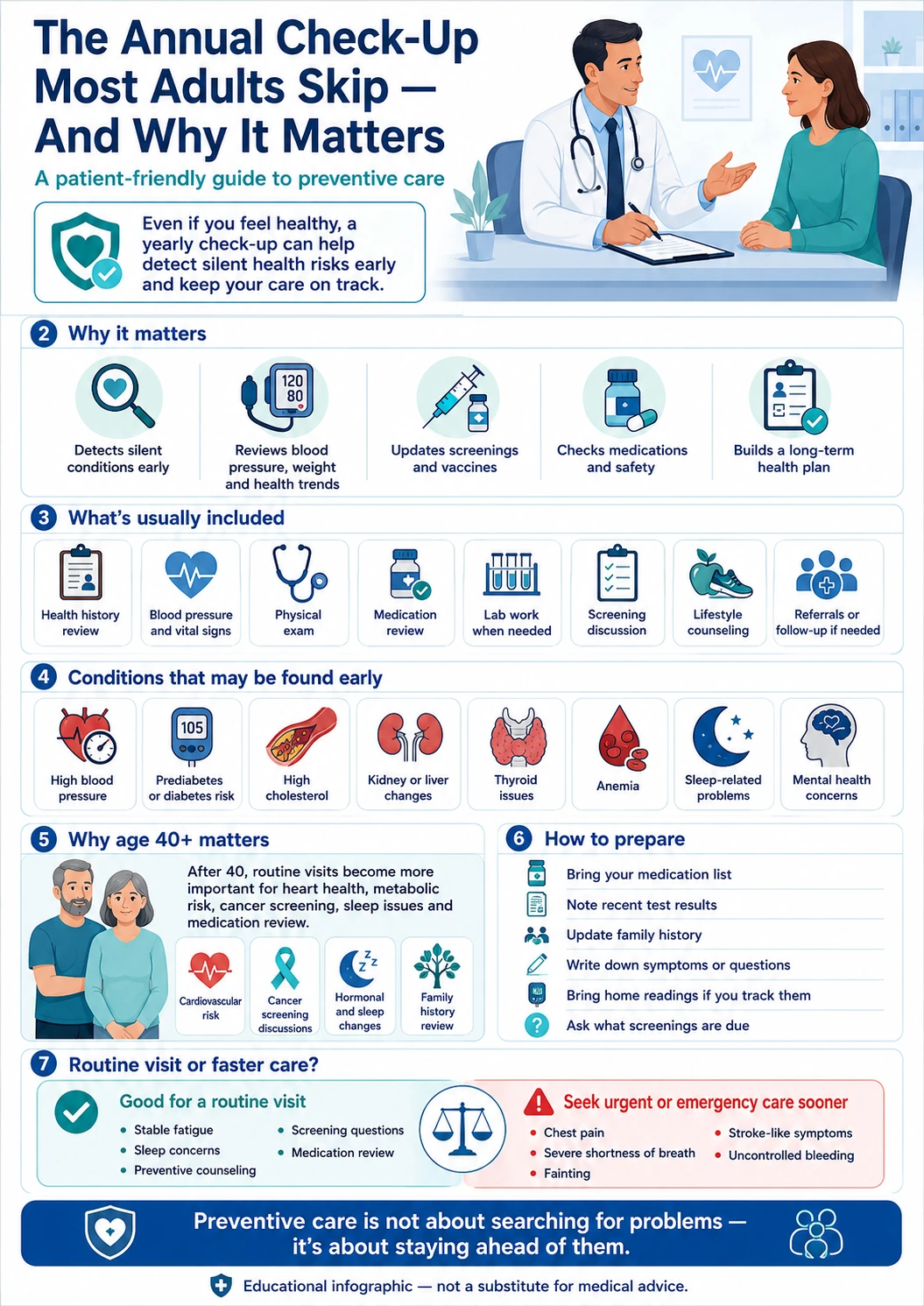
The purpose of a preventive visit is not to find disease in every patient, but to help your physician understand your baseline health, recognize changes early, and decide which screenings or follow-up steps make sense for your age, history, and risk factors.
Some of the most important health concerns in adults can develop quietly. High blood pressure may not cause symptoms for years. Cholesterol problems are usually found through testing, not by how a person feels. Blood sugar changes, kidney function changes, anemia, thyroid imbalance, depression, sleep disorders, and some cancer risks may also require a structured evaluation rather than waiting for a crisis. This is why a yearly physical exam remains relevant even for adults who consider themselves healthy.
Primary care also helps connect different parts of your health. A patient who comes in for a routine visit may need a blood pressure follow-up, a discussion about sleep quality, a cancer screening conversation, or updated lab work. Another patient may need medication review, vaccination planning, imaging, or a referral to a specialist. A well-organized check-up helps avoid fragmented care, where each issue is handled separately without anyone looking at the whole pattern.
For example, an adult with borderline blood pressure, weight gain, loud snoring, and daytime tiredness may not think these concerns are connected. During a preventive visit, a physician may recognize that these details deserve a broader discussion about cardiovascular risk, sleep quality, and long-term monitoring. In that situation, the patient may benefit from learning about warning signs that blood pressure needs medical attention or whether sleep-related symptoms should be evaluated more closely.
The same applies to cancer prevention and age-based screening. A patient may not know when to begin colorectal cancer screening, whether breast screening should be discussed earlier because of family history, or whether lung cancer screening is relevant after a smoking history. A primary care visit is often where these conversations begin, before a patient is referred to a cancer center, imaging center, or specialist. For a broader overview, patients can also review age-based cancer screening recommendations.
What Usually Happens During a Preventive Care Visit
A preventive care visit is usually built around several goals: reviewing your current health, identifying new concerns, updating your medical history, checking important health markers, and deciding whether additional testing or screening is appropriate. The exact visit may look different depending on your age, sex, symptoms, medical history, medications, family background, and previous results.
At the beginning of the appointment, your care team may ask about recent symptoms, chronic conditions, medications, allergies, surgeries, hospitalizations, family history, tobacco or alcohol use, physical activity, nutrition, sleep, stress, and mental health. This part of the visit matters because many early warning signs only become visible when the physician understands the context around them.
Vital signs are often checked during the visit. These may include blood pressure, heart rate, weight, body mass index, temperature, and oxygen level when appropriate. Blood pressure is especially important because elevated numbers can be present even when a person feels completely normal. If the reading is high, your physician may discuss repeat measurements, home monitoring, lifestyle changes, lab testing, or follow-up care.
The physical exam may be focused or more complete depending on the patient. A physician may listen to the heart and lungs, check the abdomen, evaluate the thyroid area, review the skin, assess swelling, check reflexes or strength when needed, and look for findings that match the patient’s symptoms or risk profile. The goal is not to perform every possible test, but to use clinical judgment to decide what deserves attention.
Medication review is another important part of a routine visit. Many adults take prescriptions, over-the-counter drugs, vitamins, supplements, or herbal products without discussing all of them at each appointment. A primary care physician can look for duplicate therapies, side effects, interactions, dosage concerns, and medications that may no longer be necessary. This is particularly important for older adults, patients with chronic disease, and anyone seeing several specialists.
Preventive care also includes screening conversations. These may involve blood pressure, cholesterol, blood sugar, colorectal cancer, breast cancer, cervical cancer, osteoporosis, depression, vaccination status, sexually transmitted infections, or other topics based on individual risk. Patients often assume that screenings are automatic, but many require timing decisions, eligibility review, shared decision-making, or preparation before testing.
A routine visit may also lead to laboratory testing. Basic blood work can help physicians evaluate several health areas that cannot be assessed by symptoms alone. Depending on the situation, a doctor may consider tests related to blood count, blood sugar, cholesterol, kidney function, liver function, thyroid function, inflammation, or medication safety. The laboratory does not replace the clinical exam, but it can give the physician objective information that supports faster and more accurate decisions. Patients who want to understand that process can read more about how laboratory testing supports faster diagnosis.
For some patients, the visit may also include discussion of imaging. This does not mean every adult needs scans as part of a routine appointment. Imaging is usually ordered when there is a specific reason, such as a symptom, abnormal exam finding, screening need, injury, or follow-up from a previous result. When used appropriately, imaging can help clarify what the physician cannot see from the outside. A separate guide on medical imaging that helps detect disease early can support that part of the patient journey.
What Your Doctor May Review During the Visit
The appointment is most useful when the physician can compare today’s information with your past health, your family history, and your future risks. A typical visit may include several discussion points:
- Current symptoms, even if they seem mild or unrelated
- Personal and family medical history
- Medication, supplement and allergy review
- Blood pressure, weight and other basic measurements
- Sleep quality, stress, mood and daily energy
- Diet, activity level, smoking and alcohol use
- Vaccination history and screening status
- Follow-up needs from previous tests or specialist visits
Common Health Checks and What They Help Evaluate
A routine visit does not mean every patient receives the same testing. Instead, your physician chooses what is appropriate based on your age, history, symptoms, previous results, and risk factors. The table below shows how common checks may support clinical decision-making without replacing individualized medical advice.
| Check | What it may help evaluate | Why it matters | How it may be discussed |
|---|---|---|---|
| Blood pressure measurement | Cardiovascular strain and vascular risk | Elevated readings may be present without symptoms | At routine visits and more often when readings are high |
| Weight and body composition trends | Metabolic, cardiovascular and mobility-related risk | Gradual changes may signal a need for lifestyle or medical review | Compared with previous visits rather than judged from one number |
| Basic blood work | Blood count, glucose, kidney, liver or thyroid-related markers | Some abnormalities develop before noticeable symptoms | Ordered when appropriate for age, history, symptoms or medication use |
| Medication review | Safety, interactions, side effects and dosing concerns | Medication needs can change over time | Reviewed whenever prescriptions, supplements or symptoms change |
| Family history review | Inherited or shared risk patterns | Family history may change screening timing or follow-up decisions | Updated when new diagnoses occur in close relatives |
| Mental health discussion | Mood, anxiety, stress, sleep and daily functioning | Emotional health affects physical health and treatment adherence | Discussed when symptoms, stressors or life changes are present |
This type of structured review is one reason a primary care check-up can be more useful than a single isolated test. A lab value, blood pressure reading, symptom, or screening result rarely tells the full story by itself. The physician’s role is to connect the data with the patient’s history, exam findings, personal risks, and goals for care.
Health Problems That Can Be Found Before Symptoms Start
One of the strongest reasons to keep a routine appointment on the calendar is that several common adult health problems may begin quietly. A person can feel productive, active, and generally well while blood pressure, blood sugar, cholesterol, inflammation, or organ function markers are slowly changing. Without regular review, these changes may only become visible after symptoms appear or after a complication occurs.
High blood pressure is one of the clearest examples. Many adults do not feel anything unusual when their numbers are elevated. They may not have chest pain, shortness of breath, dizziness, or headaches. However, repeated high readings can increase strain on the heart, blood vessels, kidneys, brain, and eyes over time. A routine visit gives the physician a chance to detect a pattern, confirm whether the reading is persistent, and decide whether follow-up monitoring or treatment discussion is needed.
Blood sugar changes can also develop gradually. Some patients move from normal glucose regulation to insulin resistance or prediabetes without obvious symptoms. They may notice mild fatigue or weight changes, but these signs are easy to blame on work, aging, stress, or poor sleep. When blood work is ordered for the right patient, it can help identify metabolic risk earlier and support a more practical discussion about nutrition, movement, weight, medication review, and long-term prevention.
Cholesterol and lipid abnormalities are usually silent as well. A person cannot feel whether LDL cholesterol, triglycerides, or other lipid markers are elevated. This is why a physician may recommend checking them based on age, family history, diabetes risk, smoking history, blood pressure, previous results, or other cardiovascular risk factors. The result is not interpreted as a single isolated number; it becomes part of a larger discussion about heart and vascular health.
A routine visit can also uncover changes in kidney or liver function. These organs may compensate for a long time before symptoms become obvious. Certain medications, chronic conditions, alcohol use, viral infections, metabolic disease, dehydration, or inherited risks can affect laboratory markers. When results are reviewed in context, a physician can decide whether the finding is minor, temporary, medication-related, or something that requires closer evaluation.
Thyroid problems, anemia, vitamin-related concerns, and inflammatory markers may also come into the conversation when symptoms or history point in that direction. Fatigue, cold intolerance, palpitations, hair changes, dizziness, heavy menstrual bleeding, unexplained weight change, or reduced exercise tolerance may lead a physician to consider targeted testing. These symptoms do not automatically mean a serious condition is present, but they should be evaluated rather than ignored when they persist.
Mental health can also be identified during a routine visit. Adults may mention poor sleep, irritability, low motivation, appetite changes, panic symptoms, grief, burnout, or difficulty concentrating without initially describing them as depression or anxiety. Primary care does not replace specialized mental health care when that is needed, but it often becomes the first safe place where a patient discusses how emotional health is affecting physical health, work, relationships, and daily functioning.
Sleep problems deserve particular attention because they can affect energy, mood, weight, blood pressure, heart rhythm, concentration, and quality of life. Loud snoring, pauses in breathing, morning headaches, or daytime sleepiness may point toward a sleep-related breathing disorder. When these concerns appear during a routine visit, a physician may recommend further evaluation, including sleep testing for patients with nighttime breathing concerns.
Cancer screening needs may also be identified during a regular visit. Some screenings are based mainly on age, while others depend on personal history, family history, prior abnormal results, smoking history, genetic risk, or symptoms. A patient may not come to the appointment thinking about cancer prevention, but the physician may recognize that a screening discussion is due. This is especially important because screening is designed for certain patients before symptoms appear.
Feeling healthy is useful information, but it is not the same as knowing that blood pressure, metabolic risk, screening status, medication safety, and age-related health markers are up to date.
Why Adults Over 40 Should Not Treat Check-Ups as Optional
Adults in their 20s and 30s may often use medical care only when they feel sick, need a specific form completed, or have an acute concern. After 40, that approach becomes less reliable. This does not mean that turning 40 automatically makes a person unhealthy. It means that the balance between short-term symptoms and long-term risk begins to change, and a check-up after 40 becomes a more important part of prevention.
Several risks become more relevant during this stage of adult life. Blood pressure may begin to rise. Cholesterol patterns may change. Weight distribution, muscle mass, glucose regulation, sleep quality, stress load, and hormonal changes may influence health in ways that are not always obvious day to day. Family history also becomes more important because some inherited risks begin to matter more as a patient moves through midlife.
For many patients, the 40s are also a decade when responsibilities are high and medical appointments are easy to postpone. Work, children, aging parents, financial stress, travel, and caregiving can push preventive care to the bottom of the list. However, this is also the period when physicians can often intervene earlier with practical changes, closer monitoring, or appropriate screening before a problem becomes harder to manage.
Women may need more structured conversations about breast health, cervical screening history, menstrual changes, perimenopause symptoms, bone health, pelvic symptoms, urinary concerns, sleep disruption, or cardiovascular risk. These topics should not be treated as separate from general health. A primary care physician may help coordinate follow-up, while women’s health specialists, imaging services, or other departments may become involved depending on the patient’s needs. A more focused guide can help patients review screenings women should schedule this year.
Men may also need age-appropriate conversations about blood pressure, cholesterol, diabetes risk, weight, sleep apnea, prostate-related symptoms, colon cancer screening, sexual health, testosterone-related concerns, and heart disease prevention. Some of these topics can feel uncomfortable to bring up, which is another reason a regular relationship with a physician matters. When the doctor knows the patient’s history, sensitive issues often become easier to discuss early.
For all adults over 40, cardiovascular prevention becomes a central theme. A routine visit may include discussion of blood pressure, cholesterol, physical activity, nutrition, smoking, alcohol, sleep, weight, and family history of heart attack or stroke. The goal is not to reduce heart health to one number or one test. The goal is to understand the full risk pattern and decide which actions are realistic for the patient. For additional support, patients can review lifestyle habits that support heart health.
Another reason adults over 40 should prioritize routine care is that screening decisions become more personalized. A physician may ask about previous test results, family history, smoking exposure, digestive symptoms, breast changes, abnormal bleeding, unexplained weight loss, or persistent pain. These details help determine whether routine screening is enough or whether a specific symptom needs diagnostic evaluation.
Imaging may also become part of the conversation when clinically appropriate. Mammography, ultrasound, CT, MRI, and other studies are not interchangeable, and they are not ordered simply because a patient reaches a certain age. They are used when the patient’s situation, risk factors, symptoms, or screening needs justify them. Understanding medical imaging that helps detect disease early can make these recommendations easier to discuss with a physician.
The value of routine care after 40 is not only the detection of disease. It is also the chance to build a plan before health becomes reactive. A physician can help set priorities: which screening is due now, which risk needs monitoring, which lifestyle change is most realistic, which medication should be reviewed, and which symptom deserves follow-up.That kind of coordination is difficult to achieve when every medical visit happens only during urgent illness.
How to Prepare for Your Visit So You Get More From It
A routine appointment becomes much more useful when the patient arrives prepared. The physician has limited time, and the quality of the conversation often depends on the information available during the visit. Patients do not need to bring a perfect medical file, but a few practical details can help the care team make better decisions.
Medication information is especially important. Patients should bring a current list of prescriptions, over-the-counter medicines, vitamins, supplements, and herbal products. The list should include dosage, frequency, and the reason each product is being used if known. This matters because side effects, interactions, duplicate therapies, and incorrect dosing can create symptoms that look like unrelated health problems.
Previous test results can also help. If a patient recently had blood work, imaging, specialist evaluation, hospital care, or an urgent care visit, those records can provide context. A physician may want to compare today’s findings with older results rather than repeat testing unnecessarily. Trends are often more useful than one isolated result.
Family history should be updated before the appointment. New diagnoses in close relatives can affect screening recommendations, especially for heart disease, stroke, diabetes, colon cancer, breast cancer, ovarian cancer, prostate cancer, kidney disease, and certain inherited conditions. Patients do not need to know every detail, but age at diagnosis and the type of condition can be helpful.
Symptoms should be written down before the visit, even if they seem minor. Many patients forget details once the appointment begins. Useful notes include when the symptom started, what makes it better or worse, whether it is getting more frequent, and whether it affects sleep, work, exercise, appetite, mood, or daily routines. A symptom that seems unimportant in isolation may become relevant when connected to other details.
Home measurements can be helpful when available. Blood pressure readings, blood sugar logs, weight changes, sleep tracking, temperature records, or symptom diaries may support the physician’s assessment. These numbers should not replace medical evaluation, but they can help show patterns that are not visible during one office visit.
What to Bring or Prepare Before the Appointment
A simple preparation checklist can make the visit more focused and reduce the chance of forgetting important information:
- A current list of medications, vitamins and supplements
- Names of specialists or clinics involved in recent care
- Recent test results, imaging reports or discharge paperwork
- Updated family history, especially new diagnoses in close relatives
- Notes about symptoms, timing and triggers
- Home readings such as blood pressure or glucose logs when available
- Questions about screening, vaccines, sleep, stress, pain or energy
- Insurance, referral or pharmacy information if needed
It also helps to choose the most important questions before the visit. Some patients arrive with many concerns, which is understandable, but not every issue can always be fully addressed in one appointment. A primary care physician can help prioritize what needs attention now, what can be monitored, what requires testing, and what should be scheduled for a separate follow-up.
Patients should also be direct about barriers. If medication cost, transportation, work schedule, fear of testing, previous bad medical experiences, language, caregiving responsibilities, or insurance concerns make follow-up difficult, the physician should know. A realistic care plan is more useful than an ideal plan that the patient cannot follow.
A routine visit is also the right time to ask about prevention, not only symptoms. Patients can ask which screenings are due, whether vaccines are current, whether lab work should be repeated, whether lifestyle changes are enough for certain risks, and when the next appointment should happen. This helps turn a single visit into a longer-term health plan.
When a Routine Visit Should Become a Faster Medical Appointment
A routine visit is designed for prevention, follow-up, and long-term planning. It is not the right setting for every medical concern. Some symptoms should be evaluated sooner because waiting for the next scheduled appointment may increase risk or delay necessary treatment. Patients should know the difference between a concern that can be discussed at a planned visit and a symptom that needs same-day care, urgent care, or emergency evaluation.
Chest pain, severe shortness of breath, sudden weakness, fainting, severe allergic reaction, sudden confusion, uncontrolled bleeding, stroke-like symptoms, or severe injury should not be treated as routine concerns. These symptoms may require emergency care because they can be linked to conditions where time matters. If a patient is unsure whether symptoms are dangerous, it is safer to seek immediate medical guidance rather than wait.
Other concerns may not require an emergency room but still deserve prompt attention. A persistent fever, worsening infection symptoms, painful urination with fever, a new rash with swelling, dehydration, a moderate injury, a concerning blood pressure reading with symptoms, or sudden worsening of a chronic condition may require same-day or urgent evaluation. Patients can use a practical guide on when to choose emergency care or urgent care to understand how different settings may fit different situations.
A planned appointment is usually more appropriate for stable concerns that have been present for a while without rapid worsening. Examples may include medication questions, fatigue that has developed gradually, weight changes, sleep problems, routine screening discussions, mild joint pain, preventive counseling, or follow-up after previous testing. These concerns are still important, but they often benefit from a structured discussion rather than a rushed acute-care visit.
Patients with chronic conditions should be especially careful about changes from their usual pattern. A person with known heart disease, diabetes, kidney disease, asthma, COPD, immune suppression, pregnancy, cancer history, or recent surgery may need faster care for symptoms that might be less urgent in another patient. This is one reason a regular relationship with a primary care physician is valuable: the care team understands the patient’s baseline and can better judge what has changed.
Blood pressure is a common example. A high number without symptoms may require repeat measurement, proper technique, follow-up, medication review, and risk evaluation. A high number with chest pain, trouble breathing, neurologic symptoms, severe headache, confusion, or vision changes is different and should be handled more urgently. Patients who monitor readings at home should bring those numbers to visits so the physician can look for patterns rather than rely on a single measurement.
The same principle applies to abdominal pain, headaches, dizziness, fatigue, and shortness of breath. These symptoms can be mild and temporary, but they can also signal something more serious depending on severity, duration, associated symptoms, age, and medical history. A routine visit gives the physician time to evaluate the full pattern, but sudden or severe symptoms should not wait for routine scheduling.
How Regular Visits Help Build a Long-Term Health Plan
The most useful primary care relationships are built over time. A single appointment can answer immediate questions, but regular visits allow the physician to see trends. Blood pressure may rise slowly. Weight may change gradually. Lab results may shift from normal to borderline. Sleep may worsen over several years. A medication that once worked well may begin causing side effects. These patterns are easier to recognize when care is continuous.
Long-term care also helps avoid unnecessary duplication. When a physician knows which tests were already completed, which screenings are due, which specialists are involved, and which medications have been tried, the patient is less likely to repeat the same steps without a clear reason. This can save time, reduce confusion, and help the care team focus on the next useful decision.
A regular primary care relationship is also important for patients who see several specialists. One specialist may focus on the heart, another on sleep, another on imaging, and another on a specific chronic condition. Primary care helps connect those pieces. The physician can review recommendations, identify medication conflicts, track preventive needs, and make sure the patient understands the overall plan.
For adults managing more than one condition, coordination becomes even more important. High blood pressure, diabetes risk, sleep apnea, obesity, depression, arthritis, kidney disease, or high cholesterol often overlap. Treating each issue separately may miss the bigger picture. A primary care physician can help prioritize which changes matter most now and which can be addressed gradually.
Regular visits also create space for lifestyle counseling that is specific rather than generic. Most patients already know they should move more, eat better, sleep enough, and manage stress. The harder question is how to make those changes in a realistic way. A physician can connect recommendations to the patient’s medical history, schedule, limitations, medications, family responsibilities, and measurable health markers.
For example, a patient with rising blood pressure and poor sleep may need a different plan than a patient with normal blood pressure but elevated cholesterol. A patient with joint pain may need a different activity plan than someone training for endurance events. A patient caring for an older parent may need stress and sleep support before major lifestyle changes become realistic. This kind of personalization is difficult without an ongoing care relationship.
Regular visits can also support safer decision-making. Patients often try new diets, supplements, over-the-counter medications, fitness programs, or online health advice before speaking with a clinician. Some of these choices may be harmless, while others may interact with medications or worsen existing conditions. A routine visit gives the patient a place to ask questions before a well-intentioned change creates a new problem.
What to Expect After the Appointment
The end of the visit should not leave the patient unsure about what happens next. A good preventive appointment usually ends with a plan. That plan may include lifestyle recommendations, medication changes, lab orders, imaging orders, referrals, vaccines, screening discussions, home monitoring, or a follow-up appointment. The patient should understand which steps are urgent, which are routine, and which are optional based on shared decision-making.
If testing is ordered, patients should ask how results will be delivered and when to follow up. Some results may be available quickly, while others may take longer depending on the type of test and whether additional review is needed. Patients should not assume that every normal result means no further care is needed or that every abnormal result means a serious disease is present. Results need interpretation in context.
If a referral is recommended, the patient should understand why. Referrals may be made to cardiology, oncology, sleep medicine, imaging, gastroenterology, women’s health, endocrinology, physical therapy, behavioral health, or another specialty depending on the findings. A referral does not always mean the physician suspects a severe condition. It may simply mean that a focused evaluation is the safest or most efficient next step.
Follow-up timing matters. Some patients need a recheck in a few weeks because of blood pressure, medication changes, abnormal labs, or new symptoms. Others may be advised to return in several months. Some may only need routine annual follow-up if everything is stable. The important point is that the interval should be based on the patient’s actual risk, not on a generic schedule.
Patients should also leave knowing what symptoms should prompt earlier contact. If new chest pain, shortness of breath, fainting, neurologic changes, severe pain, high fever, worsening infection signs, or concerning medication reactions occur, waiting for the next routine visit may not be appropriate. Clear instructions reduce uncertainty and help patients seek the right level of care sooner.
Why Skipping the Visit Often Costs More Than Scheduling It
Many adults skip routine care because they feel busy, healthy, anxious about medical visits, worried about cost, or unsure what the appointment will accomplish. These reasons are common and understandable. However, avoiding preventive care can make health decisions more reactive. Instead of adjusting a risk early, the patient may only seek care after symptoms interfere with work, sleep, exercise, or daily life.
Preventive visits are not about creating unnecessary testing. A careful physician should avoid ordering tests that do not fit the patient’s risk or symptoms. The value of the appointment is the clinical judgment behind the plan: deciding what matters, what can wait, what needs monitoring, and what should be evaluated now.
Skipping visits can also make it harder to interpret new symptoms. If a patient has not had blood pressure checked in years, has no recent medication review, has outdated screening status, and has not discussed family history, the physician has less baseline information when a concern appears. Regular care gives the medical team a clearer starting point.
For patients who feel anxious about appointments, it may help to begin with one practical goal. That goal could be reviewing blood pressure, updating screenings, discussing fatigue, checking medications, or asking what preventive steps are most important this year. A routine visit does not have to solve everything at once. It can begin with the most relevant next step.
The best preventive care is not based on fear. It is based on knowing what should be watched, what can be improved, and what does not need unnecessary attention. That balanced approach helps patients avoid both neglect and overtesting.
Medical Disclaimer
This article is for educational purposes only and does not replace professional medical advice, diagnosis, or treatment. If you have severe symptoms, sudden changes in health, chest pain, trouble breathing, neurologic symptoms, fainting, uncontrolled bleeding, or another urgent concern, seek medical care immediately.
Author
By Dr. Cody R. Christensen, M.D. He practices at Sweetwater Medical Center, where he integrates pharmacologic treatment with lifestyle medicine and psychotherapy to support lasting patient wellness.
Medically Reviewed: by Clinical Pharmacy Board
Last Updated: 08.06.2026
FAQ
How often should adults have a routine health visit?
Many adults benefit from a regular preventive visit, but the exact timing depends on age, medical history, medications, symptoms, and risk factors. A physician can recommend the right interval based on the patient’s current health and follow-up needs.
Do I need a visit if my recent blood work was normal?
Normal blood work is helpful, but it does not replace a complete clinical review. Blood pressure, symptoms, medications, family history, screening needs, mental health, sleep, and lifestyle risks may still need discussion.
What should I bring to the appointment?
Bring a current medication list, recent test results, specialist notes if available, family history updates, home measurements, and questions you want to discuss. Written notes can help you avoid forgetting symptoms or concerns during the visit.
Is a yearly exam different from a sick visit?
Yes. A sick visit usually focuses on a specific symptom or short-term problem, while a preventive visit reviews broader health risks, screenings, medications, and long-term planning.
Can one visit cover cancer screening, blood pressure and lifestyle risks?
One visit can often begin these conversations, but some topics may require follow-up appointments or testing. The physician can help prioritize what should be addressed first and what can be scheduled separately.