
Why High Blood Pressure Can Be Dangerous Even Without Symptoms
High blood pressure can be difficult for patients to judge because it often does not feel like a disease. Many adults with elevated numbers can work, exercise, sleep, and go through daily life without chest pain, dizziness, headaches, or obvious warning signs. That is why high blood pressure warning signs should never be understood only as symptoms a person can feel. In many cases, the first warning sign is the number itself, especially when repeated readings stay above the range your physician considers safe for your situation.
The Centers for Disease Control and Prevention explains that high blood pressure usually has no warning signs or symptoms, and measuring it is the only way to know whether a person has it. This is the main reason routine checks, home monitoring when recommended, and follow-up visits matter. A patient may feel normal while pressure inside the arteries remains high enough to increase long-term strain on the heart, brain, kidneys, eyes, and blood vessels.
Untreated hypertension can contribute to serious complications over time, including heart disease, stroke, kidney failure, eye problems, and other health issues. It may also worsen existing conditions or make treatment more complicated when other risks are present, such as diabetes, kidney disease, sleep apnea, smoking, obesity, high cholesterol, or a strong family history of cardiovascular disease.
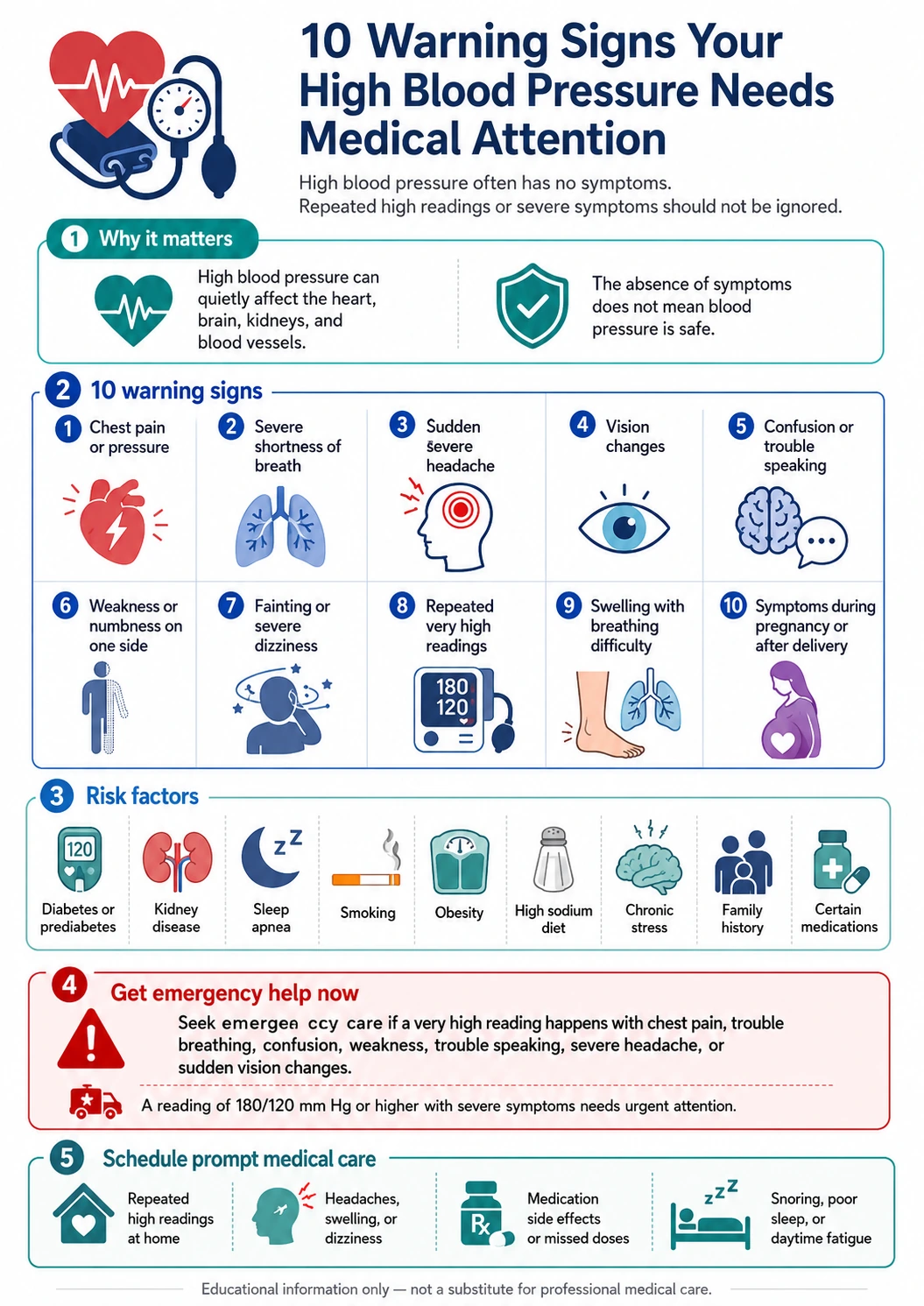
The absence of symptoms does not prove that blood pressure is safe; repeated measurements, risk factors, and medical follow-up are what help determine whether a patient needs closer evaluation or treatment.
For many adults, elevated blood pressure is first noticed during a routine visit, workplace screening, pharmacy reading, dental appointment, or home check. One isolated high reading does not always mean a person has chronic hypertension. Stress, pain, caffeine, nicotine, physical activity, poor sleep, certain medications, and incorrect measurement technique can temporarily affect the result. However, repeated high readings should not be dismissed, especially when they appear in different settings or continue over several days or weeks.
A primary care physician can help determine whether the pattern represents sustained hypertension, temporary elevation, medication-related change, or another health concern. This evaluation may include repeat measurements, review of home readings, assessment of cardiovascular risk, medication review, lab testing, sleep history, and discussion of lifestyle factors. Patients who have not had a recent preventive visit may benefit from understanding how routine health visits can detect silent risks before symptoms become urgent.
Blood pressure is also different from many short-term symptoms because it is both a current measurement and a long-term risk marker. A mildly elevated reading may not require emergency care, but it may still deserve follow-up. A very high reading with chest pain, shortness of breath, neurologic symptoms, vision changes, severe headache, or confusion is different. In that situation, the concern is not only the number, but also the possibility that the body is under acute stress or that an organ may be affected.
The American Heart Association advises calling 911 when blood pressure is higher than 180/120 mm Hg and symptoms such as chest pain, shortness of breath, back pain, numbness, weakness, vision change, or difficulty speaking are present. Patients should not wait to see whether the number comes down on its own when severe symptoms are happening with a very high reading.
The 10 Warning Signs You Should Not Ignore
Not every elevated blood pressure reading is an emergency, and not every symptom is caused by blood pressure. Still, certain symptoms become more concerning when they occur with very high readings, a known history of hypertension, cardiovascular disease, kidney disease, pregnancy, diabetes, or sudden change from a person’s usual health. These signs should be taken seriously and discussed with a medical professional promptly.
The following warning signs do not replace a medical diagnosis. They are practical signals that a patient should not delay care, especially if symptoms are severe, sudden, worsening, or combined with a very high blood pressure reading.
Chest Pain, Pressure or Tightness
Chest pain or pressure should never be casually attributed to stress, indigestion, muscle strain, or anxiety without considering medical evaluation. When chest discomfort occurs with elevated blood pressure, shortness of breath, sweating, nausea, pain spreading to the arm, jaw, shoulder, or back, or a sense that something is seriously wrong, emergency care may be necessary.
Blood pressure may rise during pain, panic, heart strain, or other acute conditions. The question is not whether blood pressure alone is causing the chest pain. The more important issue is that chest pain can signal a condition where time matters, including heart-related emergencies. Patients should not try to manage this at home if symptoms are severe or unusual.
Severe Shortness of Breath
Shortness of breath that is sudden, severe, worsening, or present at rest deserves urgent attention. When it appears with high blood pressure, chest discomfort, swelling, weakness, bluish lips, confusion, or inability to speak in full sentences, it may point to a serious cardiovascular, lung, or fluid-related problem. This is not the same as mild breathlessness after climbing stairs or deconditioning after inactivity.
Patients with known hypertension, heart disease, kidney disease, or pregnancy-related blood pressure concerns should treat new breathing difficulty carefully. A routine appointment is not the right setting for severe breathing symptoms. The safer choice is same-day medical guidance or emergency evaluation depending on severity.
Sudden Severe Headache
Headaches are common and often not related to blood pressure. However, a sudden severe headache, a headache described as the worst of someone’s life, or a headache combined with confusion, vision change, weakness, fainting, neck stiffness, vomiting, or neurologic symptoms should not be ignored. Very high blood pressure with this type of headache may require urgent evaluation.
Patients should be cautious about assuming that every headache means blood pressure is high or that every high reading explains a headache. Both assumptions can be misleading. The safest approach is to look at the whole picture: severity, speed of onset, associated symptoms, medical history, and blood pressure measurement.
Vision Changes
Blurred vision, sudden loss of vision, double vision, new blind spots, or major visual disturbance can be concerning when it happens with very high blood pressure. Blood pressure can affect small blood vessels, and sudden vision symptoms may also be connected to neurologic or vascular events that require urgent care.
Patients should not wait for the next routine visit if vision changes are sudden or severe. Eye symptoms may require immediate medical assessment, especially when accompanied by headache, weakness, speech difficulty, dizziness, or chest discomfort.
Confusion, Trouble Speaking or Sudden Weakness
Sudden confusion, difficulty speaking, facial drooping, weakness or numbness on one side of the body, trouble walking, loss of coordination, or sudden severe dizziness may be signs of a neurologic emergency. These symptoms can occur with or without high blood pressure, but very high readings may increase concern.
Patients should not attempt to drive themselves, sleep it off, or wait to see if symptoms pass. Stroke-like symptoms require immediate emergency response because treatment options may depend on timing.
Fainting or Severe Dizziness
Fainting, near-fainting, or severe dizziness can have many causes, including dehydration, medication effects, heart rhythm changes, blood pressure swings, neurologic problems, or acute illness. When these symptoms occur with high blood pressure, chest pain, shortness of breath, weakness, or confusion, they deserve urgent evaluation.
This is especially important in older adults, pregnant patients, people taking blood pressure medication, and patients with heart, kidney, or diabetes-related conditions. A fall caused by dizziness can also create injury risk, making prompt assessment more important.
Repeated Very High Readings
A single high reading should usually be repeated correctly after a short rest, unless severe symptoms are present. However, repeated very high readings are different from one anxious measurement. If a patient repeatedly sees numbers near a crisis range or far above their usual readings, they should contact a medical professional promptly for guidance.
Technique matters. The patient should sit quietly, use the right cuff size, keep the arm supported at heart level, avoid talking during the reading, and follow the device instructions. Even with perfect technique, persistently high readings should not be ignored.
Swelling With Breathing Difficulty
Swelling in the legs, ankles, abdomen, or face can have many causes. When swelling appears with shortness of breath, sudden weight gain, chest discomfort, fatigue, or reduced ability to lie flat, it may suggest fluid overload or another cardiovascular, kidney, or medication-related problem that needs medical attention.
Patients with hypertension, kidney disease, heart disease, or pregnancy-related concerns should not dismiss new swelling. The timing, location, associated symptoms, and recent medication changes all matter.
Symptoms During Pregnancy or After Delivery
High blood pressure during pregnancy or after delivery requires special attention. Severe headache, vision changes, swelling of the face or hands, shortness of breath, chest pain, abdominal pain, nausea, confusion, or very high readings should be treated as urgent concerns. Pregnancy-related hypertension can become serious quickly and should be evaluated by qualified medical professionals.
Patients should follow their obstetric care team’s instructions and seek urgent help when warning symptoms occur. This article is not a substitute for pregnancy-specific medical guidance.
Symptoms That Feel Unusual for You
Patients often know when something feels different from their normal pattern. A new combination of pressure, weakness, breathlessness, confusion, severe pain, sudden fatigue, or visual symptoms should not be dismissed simply because it does not match a familiar checklist. This is especially true for people with known hypertension, heart disease, diabetes, kidney disease, sleep apnea, or a history of stroke.
When symptoms are severe or rapidly worsening, the safest decision is to seek immediate medical care. When symptoms are milder but persistent, a same-day or prompt appointment may be appropriate. Patients can also use an emergency room versus urgent care decision guide to understand how different care settings may fit different situations.
Symptoms, Possible Concern and Next Step
The table below is designed to help patients think more clearly about symptoms that may require faster medical attention. It does not diagnose the cause of symptoms and should not delay emergency care when symptoms are severe.
| Symptom | Why it may be concerning | Suggested level of urgency |
|---|---|---|
| Chest pain or pressure | May be related to heart strain or another acute condition | Emergency evaluation if severe, new or combined with other warning symptoms |
| Severe breathing difficulty | May signal heart, lung or fluid-related stress | Immediate medical care if sudden, severe or present at rest |
| Sudden weakness or speech trouble | May suggest a neurologic emergency | Call emergency services immediately |
| Sudden vision change | May involve eye, vascular or neurologic causes | Urgent evaluation, especially with headache or weakness |
| Repeated very high readings | May indicate uncontrolled pressure or crisis-level elevation | Prompt medical guidance; emergency care if symptoms are present |
| Swelling with shortness of breath | May reflect fluid balance, heart or kidney-related concern | Same-day or emergency care depending on severity |
| Severe headache with confusion | May signal a serious neurologic or vascular problem | Urgent or emergency evaluation |
Risk Factors That Make Blood Pressure More Concerning
Blood pressure is never evaluated in isolation. The same reading may carry different meaning depending on the patient’s age, medical history, pregnancy status, kidney function, medications, smoking history, sleep quality, family background, and overall cardiovascular risk. This is why a physician looks beyond the number and asks what else is happening in the patient’s body.
Age is one factor, but it is not the only one. Blood vessels may become less flexible over time, and long-term exposure to elevated pressure can increase strain on the heart and arteries. However, younger adults should not assume they are protected. High readings in a younger patient still deserve evaluation, especially when there is obesity, diabetes risk, kidney disease, sleep apnea, tobacco use, stimulant use, or a strong family history of early heart disease or stroke.
Diabetes and prediabetes can make blood pressure control more important because both conditions may affect blood vessels, kidneys, nerves, and cardiovascular risk. A patient with elevated blood sugar and elevated pressure may need a more complete discussion about nutrition, weight, activity, lab monitoring, medication safety, and long-term prevention. In this situation, a routine medical plan is usually more useful than reacting only to occasional high readings.
Kidney disease is another major factor. The kidneys help regulate fluid balance and blood pressure, while high blood pressure can also damage kidney function over time. This two-way relationship means that patients with abnormal kidney markers, swelling, changes in urination, diabetes, or a history of kidney disease may need closer follow-up. Laboratory testing can help physicians understand whether blood pressure is affecting organ function or whether another condition is contributing to the readings.
Sleep apnea can also raise concern. Loud snoring, pauses in breathing during sleep, morning headaches, restless sleep, and daytime fatigue may point toward sleep-related breathing problems. These conditions can be associated with difficult-to-control pressure in some patients. When nighttime symptoms are present, the physician may discuss whether sleep apnea testing for patients with nighttime breathing concerns is appropriate.
Medications and substances should always be reviewed. Some prescription drugs, over-the-counter cold medicines, pain relievers, stimulants, steroids, decongestants, nicotine products, and certain supplements may affect blood pressure or interfere with treatment. Patients should not stop prescribed medication without medical advice, but they should bring a complete list to the visit so the physician can evaluate possible contributors.
Family history matters because cardiovascular risk can cluster in families. A parent or sibling with early heart attack, stroke, kidney disease, or difficult-to-control hypertension may change how carefully a physician monitors the patient. Family history does not mean a patient will develop the same problem, but it can influence screening, follow-up frequency, and prevention strategy.
Lifestyle patterns also influence blood pressure risk. High sodium intake, low physical activity, excess alcohol, chronic stress, poor sleep, weight gain, and smoking can all contribute to cardiovascular strain. These factors do not make hypertension a personal failure. They are modifiable parts of the overall plan, and a physician can help patients choose changes that are realistic rather than overwhelming.
Patients who want a broader prevention strategy can review habits that may lower long-term heart risk. Lifestyle changes are most effective when they are connected to medical follow-up, not used as a reason to delay care when readings remain high.
Common Mistakes Patients Make With Blood Pressure
Blood pressure management often becomes harder because of small, repeated mistakes rather than one major decision. Many patients are trying to do the right thing, but they may measure incorrectly, stop treatment too early, underestimate symptoms, or rely on advice that does not match their medical history. Recognizing these patterns can prevent avoidable risk.
Stopping Medication When Numbers Improve
One common mistake is stopping medication because readings look better. In many cases, the readings improve because the medication is working. Stopping suddenly may allow pressure to rise again, and in some patients this can create risk. Any medication change should be discussed with the prescribing clinician, especially when the patient has heart disease, kidney disease, diabetes, pregnancy-related concerns, or a history of very high readings.
Measuring Blood Pressure Incorrectly
Incorrect technique can lead to misleading numbers. A cuff that is too small, an unsupported arm, crossed legs, talking during measurement, recent caffeine or nicotine, a full bladder, or measuring immediately after activity can affect the reading. Patients who monitor at home should ask the care team how to measure correctly and how often to record readings.
Ignoring Repeated High Readings
Some patients treat high readings as random events, especially when they feel normal. One isolated number may not prove a diagnosis, but a repeated pattern deserves attention. Waiting months or years to discuss persistent elevation can allow silent damage to continue.
Relying Only on Supplements or Online Advice
Supplements, special diets, and online wellness programs can appear appealing because they promise simple solutions. However, these approaches may not be tested for the patient’s specific condition, may interact with medications, or may delay treatment that is known to reduce risk. Patients should tell their physician about any supplement or alternative approach they use.
Not Bringing Home Readings to the Visit
Home readings can be useful when they are measured correctly and recorded consistently. They help the physician understand whether blood pressure is high only in the office, high at home, variable during stress, or persistently elevated. Without a written log, the conversation may rely on memory, which is often less accurate.
Assuming Symptoms Are Always From Blood Pressure
Headache, dizziness, fatigue, anxiety, and chest discomfort can have many causes. Sometimes patients blame every symptom on blood pressure and miss another problem. Other patients do the opposite and assume symptoms are unrelated even when readings are very high. A medical evaluation helps separate coincidence from concern.
Waiting Too Long for Follow-Up
Blood pressure care often requires adjustment. A physician may recommend repeat checks, lab work, medication changes, lifestyle changes, or follow-up visits. Delaying those steps can leave the care plan incomplete. Follow-up is not a sign that treatment failed; it is part of responsible chronic disease management.
How Doctors Evaluate High Blood Pressure Over Time
A diagnosis or treatment plan is usually not based on one number alone. Physicians look at patterns, context, technique, symptoms, risk factors, and possible effects on organs. This is especially important because blood pressure changes throughout the day and can rise temporarily because of pain, anxiety, exercise, caffeine, nicotine, poor sleep, illness, or certain medications.
The first step is often confirming whether readings are consistently elevated. This may involve repeat office measurements, home monitoring, or ambulatory monitoring in selected situations. The physician may ask when the readings were taken, what device was used, whether the cuff fits correctly, and whether the patient was resting before the measurement.
The medical history is equally important. A doctor may ask about family history, smoking, alcohol, diet, exercise, sleep, stress, weight changes, pregnancy history, kidney disease, diabetes, cholesterol, heart symptoms, headaches, vision symptoms, urination changes, swelling, medication use, and previous cardiovascular events. These questions help determine whether the patient needs routine follow-up or faster evaluation.
Laboratory testing may be used to evaluate related risks or possible effects on the body. Depending on the patient, a physician may check kidney function, electrolytes, blood sugar, cholesterol, urine findings, or other markers. These tests do not simply label a patient as healthy or unhealthy. They help the physician understand whether blood pressure is part of a broader risk pattern. Patients can learn more about laboratory tests that help physicians make faster decisions.
Medication review is another part of the evaluation. A physician may check whether the patient is taking medication consistently, whether side effects are present, whether another drug is raising pressure, or whether a dose adjustment is needed. If the patient uses multiple medications from different clinicians, primary care can help coordinate the full list and reduce confusion.
Lifestyle review should be practical, not judgmental. Patients are more likely to make progress when recommendations match real life. A physician may discuss sodium intake, physical activity, alcohol, sleep, weight, stress, smoking, and barriers to follow-up. The goal is not to demand instant perfection. It is to identify changes that can be sustained and measured over time.
In some situations, the physician may recommend additional evaluation. This might include an electrocardiogram, imaging, sleep evaluation, specialist referral, or closer monitoring depending on symptoms and risk. These decisions are individualized. A patient with mild elevation and low risk may need a different plan from a patient with severe readings, kidney disease, pregnancy, chest symptoms, or prior stroke.
Effective blood pressure care is a process: confirm the pattern, evaluate risk, look for contributing factors, protect organs, and adjust the plan as the patient’s health changes.
Home Monitoring Mistakes and Better Habits
Home monitoring can give useful information, but only when the readings are taken consistently and interpreted with a clinician’s guidance. The table below shows common measurement problems and safer habits that can make home readings more reliable.
| Common mistake | Why it can mislead | Better habit |
|---|---|---|
| Using the wrong cuff size | The result may be falsely high or falsely low | Ask the clinic to confirm the correct cuff size |
| Measuring right after activity | The reading may reflect temporary exertion | Rest quietly before taking a measurement |
| Talking during the reading | Movement and conversation can affect the result | Sit still and remain quiet while measuring |
| Checking repeatedly during anxiety | Repeated checks may increase stress and confusion | Follow the schedule recommended by the physician |
| Recording only the lowest numbers | The physician cannot see the real pattern | Write down readings consistently with date and time |
| Changing medication based on one reading | Unsupervised changes may be unsafe | Contact the prescribing clinician for instructions |
When to Schedule a Visit and When to Seek Immediate Help
Patients often struggle with the same question: should a high reading lead to a regular appointment, a same-day visit, urgent care, or the emergency room? The answer depends on the number, symptoms, medical history, pregnancy status, and whether the reading is isolated or repeated. Blood pressure should be taken seriously, but not every elevated number needs the same level of response.
A routine appointment may be appropriate when readings are mildly or moderately elevated, the patient feels well, and there are no severe symptoms. In that setting, the goal is to confirm whether the pattern is persistent, review measurement technique, assess risk factors, and decide whether lifestyle changes, lab testing, or medication discussion is needed. Patients should not ignore the readings, but they may not need emergency care if there are no warning symptoms.
A faster appointment is more appropriate when readings are repeatedly high, rising above the patient’s usual range, or occurring with symptoms such as headache, fatigue, swelling, dizziness, or medication side effects. Same-day medical advice may also be appropriate for patients with kidney disease, heart disease, diabetes, pregnancy-related concerns, recent surgery, or a history of stroke.
Urgent care may be useful for patients who need prompt evaluation but do not appear to have life-threatening symptoms. However, urgent care is not always the right setting for chest pain, stroke-like symptoms, severe breathing difficulty, fainting, or severe neurologic changes. Those symptoms may require emergency services because they can involve conditions where timing is critical.
Emergency care should be considered when high blood pressure occurs with chest pain, severe shortness of breath, weakness on one side, trouble speaking, sudden vision loss, confusion, fainting, severe headache, or other signs of possible organ involvement. In these situations, patients should not try to lower the number at home with extra medication unless specifically instructed by a clinician. Taking additional medication without guidance can be dangerous.
Patients who are unsure should err on the side of safety. A quick call to a care team, nurse line, urgent care center, or emergency services may help determine the right next step. It is better to ask early than to wait through symptoms that may represent a serious problem.
How Treatment Decisions Are Usually Made
Blood pressure treatment is not based only on a single reading. Physicians usually consider repeated measurements, cardiovascular risk, age, kidney function, diabetes status, cholesterol, symptoms, lifestyle, medication history, and whether there are signs that high pressure is affecting organs. The treatment plan may include lifestyle changes, medication, monitoring, or additional evaluation.
For some patients, lifestyle changes may be the first step. This may involve reducing sodium intake, increasing physical activity, improving sleep, limiting alcohol, stopping tobacco use, managing weight, and addressing stress. These changes are not quick fixes, and they work best when tracked over time. A physician may help the patient choose one or two realistic goals rather than attempting every change at once.
Medication may be recommended when readings remain high, when risk is elevated, or when lifestyle changes alone are unlikely to provide enough protection. Patients should understand why the medication is being used, how to take it, what side effects to watch for, and when follow-up is needed. If side effects occur, the solution is not usually to stop treatment silently. The safer approach is to contact the prescribing clinician and adjust the plan if necessary.
Follow-up is a major part of treatment. Blood pressure plans often need adjustment because the patient’s body, schedule, stress level, medications, diet, weight, sleep, and other conditions may change. A first plan is not always the final plan. The goal is to reach a safer pattern over time while avoiding side effects and unnecessary treatment.
In some cases, the physician may look for secondary contributors. These may include kidney disease, sleep apnea, hormone-related conditions, medication effects, or other medical causes. This is especially relevant when blood pressure is difficult to control, begins at a young age, changes suddenly, or appears with unusual lab findings or symptoms.
What to Bring to a Blood Pressure Appointment
A focused visit is more useful when the patient brings clear information. Blood pressure care depends on patterns, not memory alone. Patients often remember the highest number because it caused fear, but the physician also needs ordinary readings, timing, symptoms, medication details, and context.
Information That Helps Your Physician
Before the appointment, prepare the details that can help your care team understand what is happening:
- Recent readings with dates and times
- The device used for home measurements
- A complete medication and supplement list
- Symptoms that occur with higher readings
- Recent changes in sleep, stress, diet or activity
- Any missed doses or medication side effects
- Family history of heart disease, stroke or kidney disease
- Recent lab results or specialist notes when available
Patients should also bring the home blood pressure device if the clinic recommends it. Comparing the device with office equipment can help identify cuff-size problems, device inaccuracies, or technique issues. This can prevent unnecessary anxiety from inaccurate readings or false reassurance from numbers that are too low.
It is also important to be honest about medication use. Many patients feel embarrassed if they miss doses, stop treatment, or adjust the schedule themselves. The physician needs accurate information, not perfect behavior. If the plan is too expensive, causes side effects, interferes with daily life, or feels confusing, the appointment is the right time to say so.
How Blood Pressure Connects to the Rest of Your Health
Blood pressure is often discussed as a heart issue, but it affects more than the heart. It can influence the brain, kidneys, blood vessels, eyes, sleep, exercise tolerance, pregnancy safety, and medication choices. This is why a complete plan often includes more than a prescription or a single lifestyle recommendation.
Kidney function is closely connected to pressure control. The kidneys help regulate fluid and electrolyte balance, and long-term elevation can damage kidney vessels. At the same time, kidney disease can make pressure harder to control. Lab testing may help physicians monitor this relationship and adjust treatment safely.
Sleep is another important connection. Poor sleep, untreated sleep apnea, insomnia, shift work, and chronic fatigue can affect cardiovascular risk and make healthy routines harder to maintain. Patients who snore loudly, wake up gasping, feel tired despite enough time in bed, or have morning headaches should mention these symptoms during the visit.
Stress also matters, but it should not be used as the only explanation for high readings. Stress can raise blood pressure temporarily and can also influence eating habits, alcohol use, sleep, physical activity, and medication consistency. However, persistent high readings still deserve medical review even when life is stressful.
Nutrition and activity patterns are part of the plan, but they should be individualized. A patient with joint pain may need a different movement strategy than an athlete. A patient with kidney disease, diabetes, heart failure, pregnancy, or medication-related concerns may need more specific nutrition guidance. General advice is not always enough.
This is why ongoing primary care is useful. Blood pressure management works best when it is integrated with preventive visits, laboratory monitoring, sleep assessment, medication review, and long-term heart health planning rather than handled as an isolated number.
Medical Disclaimer
This article is for educational purposes only and does not replace professional medical advice, diagnosis, or treatment. If you have chest pain, severe shortness of breath, stroke-like symptoms, fainting, sudden vision changes, severe headache with confusion, or another urgent concern, seek emergency medical care immediately.
Author
By Dr. Cody R. Christensen, M.D. He practices at Sweetwater Medical Center, where he integrates pharmacologic treatment with lifestyle medicine and psychotherapy to support lasting patient wellness.
Medically Reviewed: by Clinical Pharmacy Board
Last Updated: 08.06.2026
FAQ
Can high blood pressure cause symptoms?
High blood pressure often causes no symptoms, which is why measurement is essential. Symptoms such as chest pain, severe headache, shortness of breath, confusion, weakness, or vision changes with very high readings require urgent medical attention.
Should I go to the ER for a high reading?
A high reading without symptoms may require prompt medical guidance, repeat measurement, and follow-up. A very high reading with chest pain, breathing difficulty, neurologic symptoms, severe headache, confusion, or vision changes should be treated as an emergency.
Can stress alone cause high readings?
Stress can temporarily raise blood pressure, but repeated high readings should not be dismissed as stress without evaluation. A physician can help determine whether the pattern is temporary, persistent, medication-related, or linked to another health issue.
What should I bring to my appointment?
Bring recent readings, your home device if requested, medication and supplement lists, symptoms, family history, and recent test results. Accurate details help the physician evaluate the pattern and choose a safer next step.
Can sleep problems affect blood pressure?
Sleep problems, including possible sleep apnea, can be associated with cardiovascular risk and difficult-to-control readings in some patients. Loud snoring, pauses in breathing, morning headaches, or daytime sleepiness should be discussed with a clinician.