
Understanding what does amoxicillin do is essential for anyone in the United States who may need antibiotics in 2025.
Amoxicillin remains one of the most commonly prescribed antibiotics because it’s effective, affordable, and generally well-tolerated. It helps treat a wide range of bacterial infections, especially those affecting the ears, throat, lungs, skin, and teeth. Even though this medication has been used for decades, updated 2025 guidelines emphasize safer, more precise use to combat antibiotic resistance.
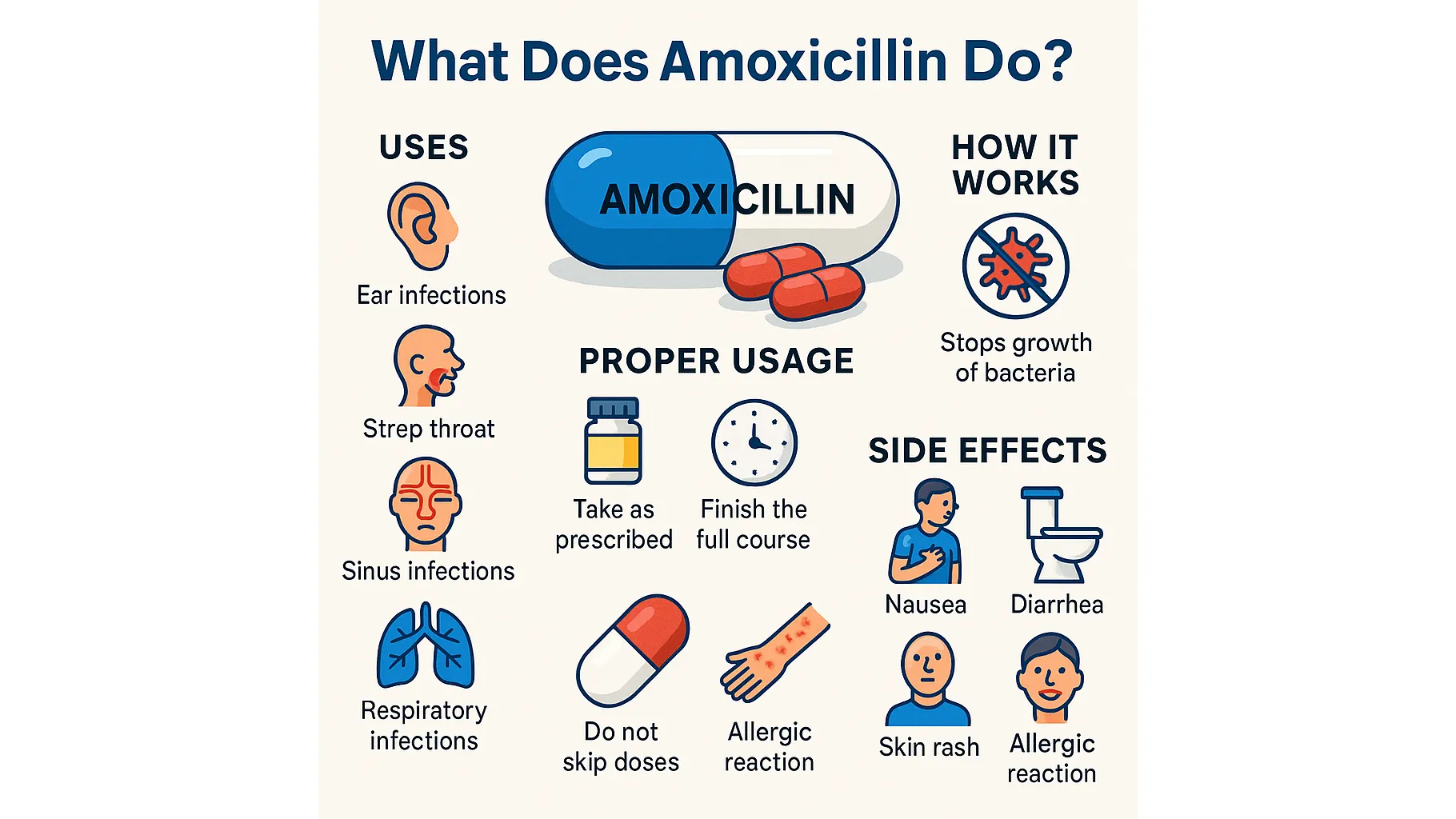
Amoxicillin works by stopping bacteria from forming strong cell walls. Without these protective walls, bacteria can’t multiply and eventually die. Because of this mechanism, amoxicillin is highly effective against several common bacterial strains, but it does not help with viral infections like the flu, colds, RSV, or COVID-19. In 2025, doctors across the United States continue to stress the importance of correct usage to avoid unnecessary antibiotic exposure.
Understanding What Amoxicillin Does in the Body
To understand what does amoxicillin do, it helps to look at how the medication behaves once taken. Amoxicillin is a beta-lactam antibiotic, part of the penicillin family. After swallowing a tablet or liquid dose, it’s quickly absorbed into your bloodstream. From there, it travels through your tissues to reach bacteria causing infection.
The drug attaches to specific proteins inside bacterial cells that help build their cell walls. Once these proteins are blocked, bacteria become weak and burst. This makes amoxicillin a “bactericidal” antibiotic, which means it kills bacteria rather than just slowing their growth.
In 2025, medical experts still consider amoxicillin a first-line treatment for many infections because:
- It targets bacteria that commonly cause respiratory and ear infections.
- It is safe for children and adults when used correctly.
- It has one of the lowest rates of severe side effects among prescription antibiotics.
Amoxicillin’s broad action makes it effective, but it’s not universal.
Author: Dr. David R. Dansie, Family Medicine Physician.
Medical Disclaimer
This article is for educational purposes only and does not constitute medical advice. Always consult a licensed healthcare professional before starting, adjusting, or stopping any medication.
When Amoxicillin Is Prescribed in 2025
Even in 2025, amoxicillin remains a go-to medication for many community infections in the US. Doctors prescribe it for conditions where bacteria are the known or likely cause. These commonly include:
Respiratory Infections
Amoxicillin is frequently prescribed for bacterial causes of sore throats, bronchitis, and mild to moderate pneumonia. In cases like strep throat, it’s still the top treatment because the bacteria involved remain highly sensitive to it.
Ear Infections (Otitis Media)
Children in the U.S. often receive amoxicillin for ear infections because it’s effective, safe, and recommended by pediatric guidelines when symptoms point to bacterial involvement.
Sinus Infections
While most sinus infections start as viral, amoxicillin is used when symptoms persist or worsen after several days, indicating bacterial growth.
Dental and Gum Infections
Dentists rely on amoxicillin for abscesses and post-procedure infections. Its ability to reach soft tissues and bone makes it especially helpful. As of 2025, U.S. guidelines encourage doctors to prescribe antibiotics only when necessary. This keeps amoxicillin effective for future patients and reduces antibiotic resistance.
What Does Amoxicillin Do for Specific Conditions?
Amoxicillin remains an important medication for treating several common bacterial illnesses in the United States in 2025. Its effectiveness depends on the type of bacteria and the specific location of the infection. Below are examples of conditions where amoxicillin continues to be widely used and supported by current U.S. clinical guidelines.
Streptococcal Throat Infections (Strep Throat)
Amoxicillin is still the preferred treatment for strep throat because it directly targets the Streptococcus pyogenes bacteria that cause the infection. Most patients begin noticing relief within 24–48 hours as inflammation decreases and fever subsides. Completing the entire prescription is vital because it helps prevent complications like rheumatic fever.
Urinary Tract Infections (UTIs)
In 2025, amoxicillin is not commonly used as the first-line treatment for UTIs, but it remains helpful when a urine culture confirms that the bacteria are sensitive to it. When appropriate, it stops the infection from spreading into the kidneys and helps relieve burning, urgency, and discomfort. Doctors rely on testing because resistance rates vary across different regions in the U.S.
To explore how amoxicillin is used for urinary tract infections, read Amoxicillin for UTI – Top Benefits, Uses & Essential Safety Guide 2025.
Sinusitis
For acute bacterial sinusitis that lasts more than 10 days or gets worse after initial improvement, amoxicillin is often prescribed. It works by targeting bacteria responsible for persistent symptoms like facial pressure, congestion, and thick nasal discharge. When taken as directed, many patients experience noticeable improvement within several days.
Pneumonia (Mild Community-Acquired Cases)
Amoxicillin continues to be a reliable treatment for mild cases of community-acquired pneumonia, especially in children and otherwise healthy adults. It helps reduce fever, chest discomfort, and coughing by acting against common respiratory bacteria. Providers monitor symptoms and adjust therapy if patients do not show signs of improvement within 48–72 hours.
Amoxicillin for Tooth Infection
Amoxicillin is widely used for dental infections when bacteria spread from the tooth into surrounding gums or tissues. It helps reduce pain, swelling, and bacterial activity, preventing serious complications such as infection spreading to the jaw or bloodstream. However, while amoxicillin controls the infection, dental procedures like drainage or a root canal are usually necessary to fully remove the cause. Many adults begin experiencing relief within a few days of starting treatment.
Proper Dosage and How to Take Amoxicillin Safely
Correct dosing is essential for ensuring amoxicillin works effectively and reduces the risk of resistance. U.S. healthcare providers follow established guidelines that consider the patient’s age, weight, kidney function, and type of infection. Adults typically receive 500 mg to 875 mg every 8–12 hours, while children require weight-based dosing calculated by a pediatrician.
Patients are advised to take amoxicillin at evenly spaced times, avoid skipping doses, and complete the full prescription even if symptoms improve early. If symptoms fail to improve within 48–72 hours, providers may adjust treatment. Staying hydrated and taking the medication with food can help reduce stomach upset.
Side Effects and Safety Warnings in 2025
Most patients tolerate amoxicillin well, but side effects can occur. Mild reactions include stomach discomfort, soft stools, and mild skin rashes. These symptoms are usually short-lived and manageable.
More serious reactions such as difficulty breathing, severe diarrhea, or swelling of the face and throat require urgent medical attention. In 2025, healthcare professionals continue emphasizing responsible antibiotic use to slow the rise of resistant bacterial strains across the United States.
How Amoxicillin Compares to Other Antibiotics
Understanding how amoxicillin compares to other commonly prescribed antibiotics helps patients make informed decisions about their treatment. The table below highlights key differences in action, effectiveness, and typical use cases.
| Antibiotic | Type of Action | Common Uses | Advantages | Limitations |
| Amoxicillin | Moderately broad-spectrum | Ear, throat, respiratory, dental infections | Safe, affordable, child-friendly | Not effective for resistant strains or viral infections |
| Penicillin V | Narrow-spectrum | Strep throat, specific infections | Highly targeted and effective | Limited use for mixed infections |
| Augmentin (Amoxicillin + Clavulanate) | Expanded spectrum | Severe sinusitis, animal bites, resistant bacteria | Overcomes resistance | More gastrointestinal side effects |
| Azithromycin | Macrolide antibiotic | Atypical pneumonia, penicillin allergy | Short treatment duration | Increasing resistance in the U.S. |
| Cefdinir | Cephalosporin antibiotic | Pediatric ear and respiratory infections | Well-tolerated | Higher cost; possible digestive issues |
Interactions With Other Medications and Substances
Amoxicillin has fewer interactions compared to many other antibiotics, but certain combinations still matter:
- Birth control pills: Most evidence shows minimal effect, but backup contraception is often recommended.
- Alcohol: Not dangerous, but can worsen digestive discomfort.
- Blood thinners such as warfarin: May require monitoring due to changes in clotting response.
- Chronic condition medications: Kidney and heart conditions may require dose adjustments.
Patients should always inform their healthcare provider about all medications and supplements they take.
Conclusion
Understanding what amoxicillin does helps U.S. patients use this antibiotic safely and effectively in 2025. Although it remains a trusted treatment for many infections, responsible use is crucial to preserving its effectiveness for the future. For additional trustworthy information, patients can visit resources such as the CDC Antibiotic Use Guidelines.
FAQs About What Amoxicillin Does
Does amoxicillin treat viral infections?
No, amoxicillin does not work against viruses such as colds, flu, or COVID-19 because it only targets bacteria. Using it for viral infections provides no benefit and contributes to unnecessary antibiotic exposure.
How long until amoxicillin starts working?
Most people begin to feel improvement within 24–48 hours as the medication reduces bacterial activity. However, it’s important to continue the full course even if you feel better early to prevent the infection from returning.
Is amoxicillin safe in 2025?
Yes, amoxicillin is considered safe in 2025 when prescribed by a licensed healthcare provider and taken as directed. Millions of patients in the U.S. use it safely each year for a wide range of bacterial infections.
Can I drink alcohol while taking amoxicillin?
Moderate alcohol is not considered dangerous, but it may worsen stomach upset or delay recovery. Doctors often recommend minimizing alcohol use until the infection has fully cleared.
Does amoxicillin affect birth control?
Current research shows that amoxicillin has little to no effect on hormonal birth control effectiveness. Still, many providers suggest using backup contraception as a precaution during treatment.
When should I see a doctor again?
You should contact your doctor if symptoms worsen or fail to improve within 72 hours of starting treatment. Seek urgent care if you develop severe side effects such as trouble breathing or significant swelling.
Resources
MedlinePlus – Amoxicillin (U.S. National Library of Medicine)