
Learn how amoxicillin for tooth infection works, why dentists trust it, how to use it safely, and what to expect when treating a dental abscess.
A tooth infection doesn’t take long to turn into a problem that disrupts your day. What starts as mild sensitivity can quickly become throbbing pain, swelling, or even fever. That’s why dentists often prescribe amoxicillin for tooth infection to reduce harmful bacteria, ease inflammation, and prevent the infection from spreading before a full dental procedure can be done.
The article gives you a deep yet easy-to-understand explanation of how amoxicillin works, why it’s used, how tooth infections develop, and what benefits this antibiotic offers.
Author: Dr. David R. Dansie, Family Medicine Physician.
Medical Disclaimer
This article is for educational purposes only and does not constitute medical advice. Always consult a licensed healthcare professional before starting, adjusting, or stopping any medication.
Understanding Amoxicillin: How This Antibiotic Works
Amoxicillin is a widely trusted antibiotic from the penicillin family. Despite being around for decades, it remains one of the most effective medications for dental infections thanks to its strong antibacterial action and reliable results.
The Science Behind Amoxicillin
Amoxicillin’s effectiveness comes from the way it disrupts bacterial survival. Bacteria rely on sturdy cell walls to protect themselves. Amoxicillin prevents them from building and repairing those walls.
When this happens:
- bacteria weaken,
- they stop multiplying,
- and the immune system can eliminate them more easily.
This explains why many people start to feel relief within the first 24–48 hours.
For a broader view of how amoxicillin works and is used across different infections, see What Does Amoxicillin Do? — Powerful 2025 Guide for Safe Use.
If you’re also interested in how amoxicillin is used for urinary tract infections (UTIs), check out Amoxicillin for UTI – Top Benefits, Uses & Essential Safety Guide 2025.
Why Dentists Choose Amoxicillin First
Dentists prefer amoxicillin because it targets the types of bacteria that typically cause dental abscesses. It also has a long history of safe use and works well for both adults and children. From a clinical perspective, it is reliable, predictable, and effective in a wide range of cases.
Here are the top reasons it’s usually the first choice:
- It covers the bacteria most commonly found in tooth infections.
- It reaches deep tissues, including areas around the tooth root.
- It causes fewer side effects than stronger antibiotics.
- It works quickly, helping stabilize patients before procedures.
Key Properties That Make Amoxicillin Effective
To better understand why this antibiotic remains a standard in dentistry, here is a quick overview of its most important characteristics:
| Property | Why It Matters |
| Fast absorption | Reaches the infected tooth quickly |
| Strong tissue penetration | Effective in deep areas near the root |
| Broad antibacterial coverage | Targets the bacteria involved in most dental abscesses |
| Predictable performance | Allows dentists to trust it in many situations |
These features combine to make amoxicillin both practical and powerful in dental care.
What Exactly Is a Tooth Infection?
A tooth infection, or dental abscess, happens when bacteria enter the inner part of the tooth called the pulp. The pulp is filled with nerves and blood vessels, so once bacteria get inside, the result is rapid inflammation, pressure, and pain.
Without treatment, the infection can spread into the gums, jawbone, and other surrounding areas which is why fast action is essential.
Types of Tooth Infections
There are three main types of dental abscesses, and each begins in a different part of the tooth:
- Periapical abscess: Forms at the tip of the root, often due to deep decay.
- Periodontal abscess: Affects the gums or bone supporting the tooth.
- Gingival abscess: Occurs in the gum tissue near the tooth surface, often from trapped food or injury.
Understanding the type of infection helps the dentist decide how to treat it, but amoxicillin for tooth infection is commonly used for all three when bacteria are involved.
Causes and Early Symptoms
Most tooth infections stem from issues that allow bacteria to penetrate the tooth’s protective layers.
Common causes include:
- untreated cavities
- cracked or chipped teeth
- worn or loose dental fillings
- severe gum disease
- poor oral hygiene
Early symptoms often appear mild but worsen quickly. You may notice:
- sensitivity to hot or cold foods
- discomfort while chewing
- pressure inside the tooth
- swelling around the gums
- bad taste or odor
When the infection progresses, the pain becomes more constant, more intense, and may spread to the jaw, ear, or face.
Why Dental Infections Spread So Quickly
The mouth is one of the most bacteria-rich environments in the body. Warmth, moisture, and food particles allow bacteria to multiply rapidly. Once they enter the pulp, they gain access to narrow pathways through the root, which act like tunnels that let the infection move deeper.
This is exactly why antibiotics matter not to fix the tooth, but to prevent the infection from moving to more dangerous areas, such as the jaw or bloodstream.
Major Benefits of Using Amoxicillin for Tooth Infection
Although amoxicillin doesn’t repair the tooth structure, it plays an essential role in controlling the infection and protecting overall health. Below are the first five major benefits, written with smooth transitions and supported by lists where they naturally fit.
Rapid Reduction of Bacterial Growth
As soon as amoxicillin enters the bloodstream, it begins disrupting bacterial cell walls. Most patients start noticing improvements after the first day. The pressure in the tooth decreases as bacterial activity slows down, making the pain more manageable.
Gradual Relief from Pain and Swelling
While not a painkiller, amoxicillin reduces the inflammation that causes much of the pain. As the swelling around the tooth and gums decreases, the throbbing pressure eases. This makes daily activities like eating, speaking, and drinking far more comfortable.
Prevention of Infection Spread
One of the greatest dangers of a tooth infection is its ability to spread. A severe abscess can move into:
- the jawbone,
- the cheek or neck,
- the sinuses,
- or, in rare cases, the bloodstream.
Amoxicillin significantly lowers this risk by stopping the infection from expanding.
Support Before and After Dental Procedures
Dentists often prescribe amoxicillin to ensure a safer environment for treatments such as root canals, extractions, or deep cleanings. By reducing bacterial activity, amoxicillin helps:
- stabilize the infection before the procedure
- reduce postoperative complications
- promote smoother healing
Effective Against Most Oral Bacteria
Tooth infections usually contain both aerobic and anaerobic bacteria. Amoxicillin’s broad spectrum allows it to target many of them simultaneously, making it a dependable first-line treatment.
Proper Dosage Guidelines (General Educational Information Only)
Amoxicillin is widely prescribed for dental abscesses, but the correct dosage depends on individual medical needs. Dentists determine the dose by considering factors such as age, infection severity, existing health conditions, and possible drug interactions. While general dosing patterns exist, they should never be used without professional supervision.
Standard Adult Doses
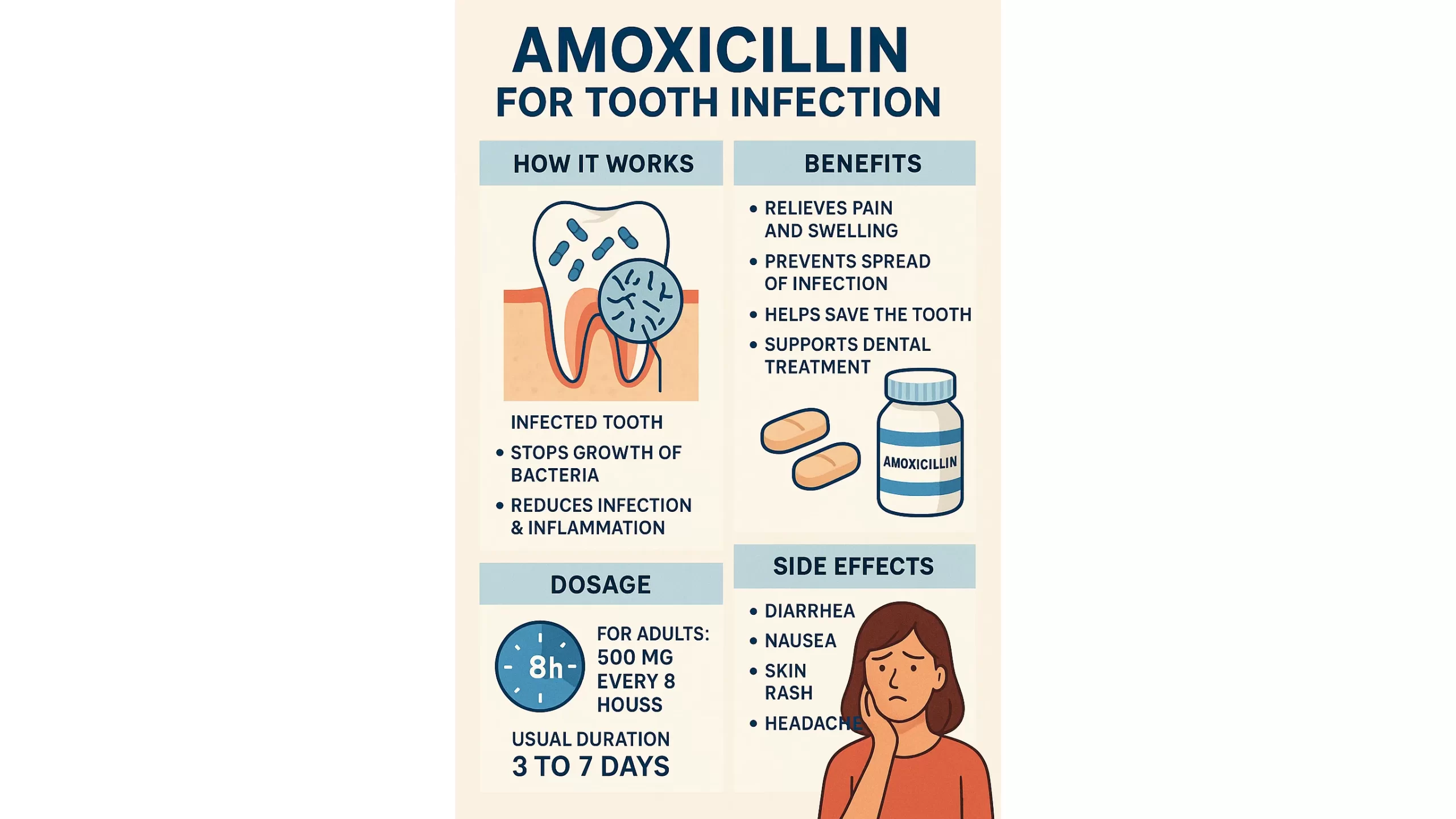
Dentists commonly use regimens like amoxicillin 500 mg three times per day or 875 mg twice per day. These amounts ensure the antibiotic stays active in the bloodstream long enough to suppress bacterial growth. Because tooth infections can vary in intensity, the exact dosage may change from one case to another.
How Long It Takes to Work
Amoxicillin begins circulating through the bloodstream rapidly, but noticeable relief usually appears only after a full day of consistent use. For many patients, the swelling and pressure begin to ease within 24–48 hours. Even when symptoms improve, the antibiotic course must be completed to prevent regrowth of surviving bacteria.
When You Must Contact a Dentist
If symptoms worsen despite treatment, it may signal a more aggressive infection. Fever, expanding facial swelling, difficulty opening the mouth, or increasing pain indicate that the drug alone may not be enough. These warning signs require immediate dental evaluation and possible adjustment of treatment.
Alternatives to Amoxicillin for Tooth Infection
Not everyone can take amoxicillin. People with penicillin allergies or those who do not respond to standard therapy may need another approach. Dentists have multiple options, and their choice depends on the patient’s medical history and the type of bacteria involved. Some alternatives are better suited for patients with allergies, while others are used when the infection is unusually severe or persistent.
Other Antibiotics Dentists May Use
This is the only list included in Part 2 because it is the most logical place for one:
- Clindamycin, often recommended for patients allergic to penicillin.
- Azithromycin, used when a milder antibiotic is needed.
- Metronidazole, sometimes combined with amoxicillin for complex infections.
These alternatives help manage cases where bacteria are resistant or when the patient cannot take standard medications.
Natural Home Remedies (Temporary Relief Only)
Some home methods can reduce discomfort while waiting for treatment, though they do not cure the infection. Warm saltwater rinses, cold compresses, and over-the-counter pain relievers may ease symptoms but cannot eliminate the bacteria inside the tooth. These methods support comfort, not healing.
Risks, Side Effects, and Warnings
Most people tolerate amoxicillin well, but no medication is entirely free of risks. Mild stomach discomfort, changes in bowel habits, or a temporary change in taste may appear during the first days of treatment. These reactions usually fade on their own and do not require stopping the medication.
Serious Side Effects (Rare but Important)
A small percentage of patients may experience stronger reactions that require medical attention. These include severe rashes, difficulty breathing, swelling of the face or throat, or persistent diarrhea. Individuals with a confirmed penicillin allergy should avoid amoxicillin completely. Anyone who suspects an allergic reaction must seek help immediately.
Who Should Avoid Amoxicillin?
People with severe renal disease, a history of medication-triggered rashes, or those taking certain blood thinners may need alternative treatments. The dentist’s role is to review the patient’s full medical background to ensure the antibiotic is safe.
Drug Interactions
Amoxicillin may interact with specific medications in ways that reduce effectiveness or increase side effects. Some interactions affect the metabolism of the antibiotic, while others alter how the body processes different drugs. This is why accurate disclosure of all medications including supplements is essential before treatment begins.
When Amoxicillin Is Not Enough
Even though amoxicillin is effective against many bacteria, it cannot cure every infection on its own. Some abscesses contain resistant bacteria or deep structural damage that no antibiotic can fully overcome. In these cases, the infection may improve temporarily but return as soon as the antibiotic is stopped. Procedures such as root canal therapy, tooth extraction, or direct drainage become necessary to remove the infection source permanently. Antibiotics assist the healing process but cannot replace dental treatment.
Conclusion
Amoxicillin for tooth infection remains one of the most reliable antibiotics in dentistry. Its fast absorption, deep tissue penetration, and ability to target common oral bacteria make it an essential part of treating dental abscesses. Although it cannot repair the tooth or remove the infection source, it reduces symptoms and prevents complications while the patient waits for appropriate dental care. The key is using it correctly, under professional supervision, and in combination with a dentist’s recommended treatment plan.
FAQs About Amoxicillin for Tooth Infection
How fast does amoxicillin work for a tooth infection?
Most people begin to feel some relief within 24–48 hours after starting amoxicillin. The swelling and pressure usually decrease gradually as the medication reduces bacterial activity. Full improvement takes several days, especially if the infection is severe.
Can amoxicillin cure a dental abscess without a dental procedure?
No, amoxicillin cannot cure the underlying cause of a dental abscess. It can reduce bacteria and ease symptoms, but the infected tooth structure or damaged tissue still needs treatment. Only a dentist can permanently remove the source of the infection.
What should I do if I miss a dose?
If you miss a dose, take it as soon as you remember unless the next one is very close. In that case, skip the missed dose to avoid doubling up. Maintaining a consistent schedule helps the antibiotic work more effectively.
Is it safe to drink alcohol while taking amoxicillin?
Alcohol does not reduce the effectiveness of amoxicillin, but it can increase side effects like nausea or dizziness. Drinking may also slow your recovery by dehydrating the body. It’s better to limit alcohol until the infection improves.
Why is my pain still strong after two days of taking amoxicillin?
Some infections take longer to respond, especially if swelling is significant or the bacteria are more resistant. Persistent pain may also indicate that dental treatment such as a root canal or extraction is urgently needed. If symptoms don’t improve after 48 hours, a dentist should evaluate the situation.
Can I take leftover antibiotics for a new toothache?
Leftover antibiotics are unsafe to use because they may be expired, the wrong dosage, or incomplete for treating a new infection. Using them can delay proper treatment and even worsen resistance. A dentist must examine the tooth and prescribe the correct medication.
Resources
NHS – Dental Abscess & Antibiotics