
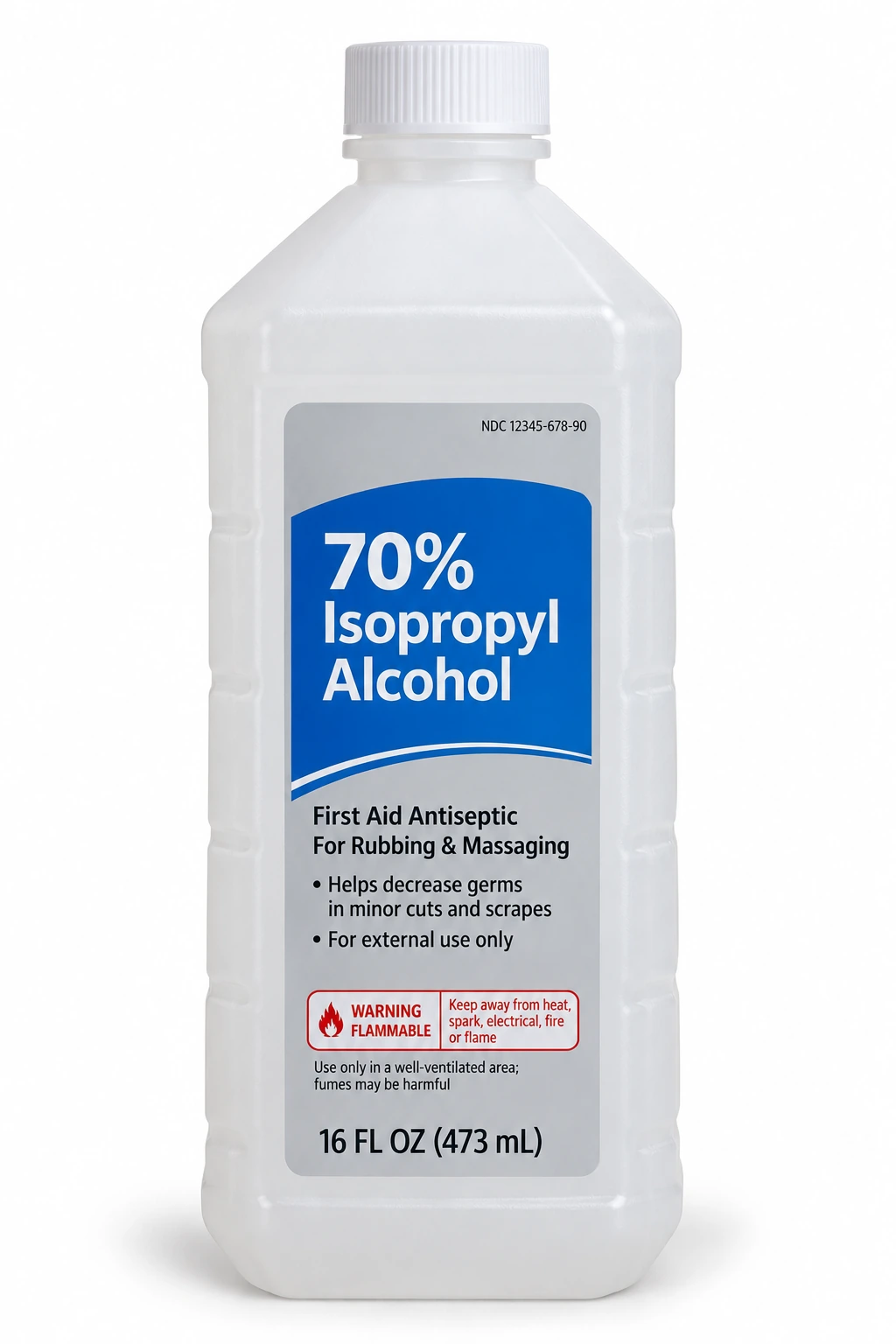
| Brand | Swan |
| Product Type | Rubbing alcohol and first aid antiseptic |
| Active Ingredient | Isopropyl alcohol 70% by volume |
| Inactive Ingredient | Water |
| Form | Topical liquid solution |
| Appearance | Clear, colorless liquid |
| Package | 16 fl oz (473 mL) plastic bottle |
| Application | External use only |
| Primary Purpose | First aid antiseptic |
| Safety Classification | Flammable liquid |
| Prescription Status | Over-the-counter (OTC) |
70% Rubbing Alcohol for First Aid
Swan Isopropyl Alcohol 70% is an over-the-counter topical antiseptic containing 70% isopropyl alcohol and water. Its labeled purpose is to help reduce the risk of infection associated with minor cuts, scrapes and burns.
The solution evaporates quickly and must be used with care on skin. It is highly flammable and should never be swallowed or applied to deep wounds.
Pharmacy Availability
Locate an offline pharmacy using the Sweetwater Medical Center pharmacy finder.
What Swan 70% Isopropyl Alcohol Is Used For
Swan labels its 70% rubbing alcohol as a first aid antiseptic for minor skin injuries. Isopropyl alcohol acts on microorganisms by disrupting cell membranes and denaturing proteins. The effect depends on direct contact with the treated surface.
The solution is also labeled for rubbing and massaging. It produces a cooling sensation as the alcohol evaporates, but this sensation should not be mistaken for treatment of muscle injuries or inflammation.
There is an important distinction between antiseptic labeling and routine wound care. Although the product is labeled for limited first aid use, alcohol can sting and irritate exposed tissue. For an ordinary cut or scrape, gently rinsing with clean running water is generally a better initial cleaning method.
Do not pour rubbing alcohol into an open wound to make it heal faster. It does not accelerate tissue repair and may damage cells involved in healing.
What the 70% Concentration Means
The formulation contains 70 mL of isopropyl alcohol in every 100 mL of finished solution. Water makes up the remaining portion. This ratio is commonly used in topical antiseptic preparations.
Water affects how alcohol interacts with microorganisms and how quickly it evaporates. A higher alcohol concentration does not automatically mean better antiseptic performance.
Isopropyl Alcohol vs. Ethyl Alcohol
Isopropyl alcohol and ethyl alcohol are different chemical compounds. Swan 70% Isopropyl Alcohol is not drinking alcohol, and its labeling specifically states that it must not be used as a substitute for ethyl or grain alcohol.
Swallowing isopropyl alcohol can cause serious poisoning, including vomiting, impaired consciousness and breathing problems. The bottle must be kept out of children’s reach.
Liquid Form and Packaging
The standard Swan formulation is available in several bottle sizes, including 16 fl oz and 32 fl oz. The product described here is the 16 fl oz (473 mL) version without added fragrance or wintergreen oil.
Other Swan alcohol products may contain additional ingredients. The Drug Facts panel on the actual bottle identifies the formulation.
How to Use Swan Isopropyl Alcohol 70%
Follow the Drug Facts directions on the package. For the standard first aid formulation, the label instructs users to clean the affected area and apply a small amount one to three times daily. These directions describe the manufacturer’s permitted use; they do not mean alcohol should be applied repeatedly to every healing wound.
Check the Treatment Area
Make sure the intended application is appropriate for an OTC antiseptic. Do not use the product on deep punctures, serious burns or animal bites without medical direction.
Apply a Small Amount
Clean the area first. If using the antiseptic as labeled, apply a small quantity externally, avoiding the eyes, mouth and other mucous membranes. Do not cover large portions of the body with alcohol.
Allow Complete Drying
Let the solution dry before applying a sterile bandage, dressing or clothing over the treated area. Keep the skin away from flames, sparks and other ignition sources while alcohol is present.
The label limits use to no longer than one week unless directed otherwise. Stop use if irritation develops or the condition worsens.
Flammability and Ventilation Precautions
Fire safety is one of the most important considerations when handling rubbing alcohol. Both the liquid and its vapors can ignite. Keep the bottle away from candles, cigarettes, gas burners, heaters, electrical sparks and other ignition sources.
Do not use Swan Isopropyl Alcohol as fuel or pour it near an open flame.
The product should be used in a well-ventilated area. High concentrations of alcohol vapor can irritate the eyes and respiratory tract, and prolonged inhalation may cause dizziness or other harmful effects. Avoid deliberate inhalation, spraying alcohol into the air or using large quantities in a poorly ventilated room.
Never heat the solution or transfer it into an unlabeled beverage container.
Skin Irritation and Other Warnings
Alcohol removes oils from the skin and can cause dryness, stinging or redness. Sensitive, irritated or broken skin may react more strongly. If irritation is excessive, discontinue use.
Additional label precautions include:
- Eyes and mucous membranes: avoid contact.
- Large skin areas: do not apply extensively over the body.
- Deep injuries: seek medical guidance for puncture wounds, animal bites and serious burns.
- Continued symptoms: stop use and seek medical evaluation if the condition persists or worsens.
- Accidental ingestion: obtain medical help or contact Poison Control at 1-800-222-1222 immediately.
Do not use rubbing alcohol near medical equipment or electrical devices unless the equipment manufacturer’s cleaning instructions specifically permit it. Swan’s first aid labeling should not be taken as evidence that the product is suitable for sterilizing instruments or disinfecting every household surface.
Storage and Bottle Handling
Close the cap tightly after use and store the bottle upright in a cool, well-ventilated location away from heat and direct ignition sources. Keep it separate from food, beverages and products intended for oral consumption.
Do not use a bottle that is leaking or has a damaged closure.
When handling Swan Isopropyl Alcohol, take care not to squeeze the container toward yourself or another person. Some bottle designs may release liquid unexpectedly when pressure is applied.
Keep the original label attached so the concentration, ingredients and safety warnings remain identifiable.