
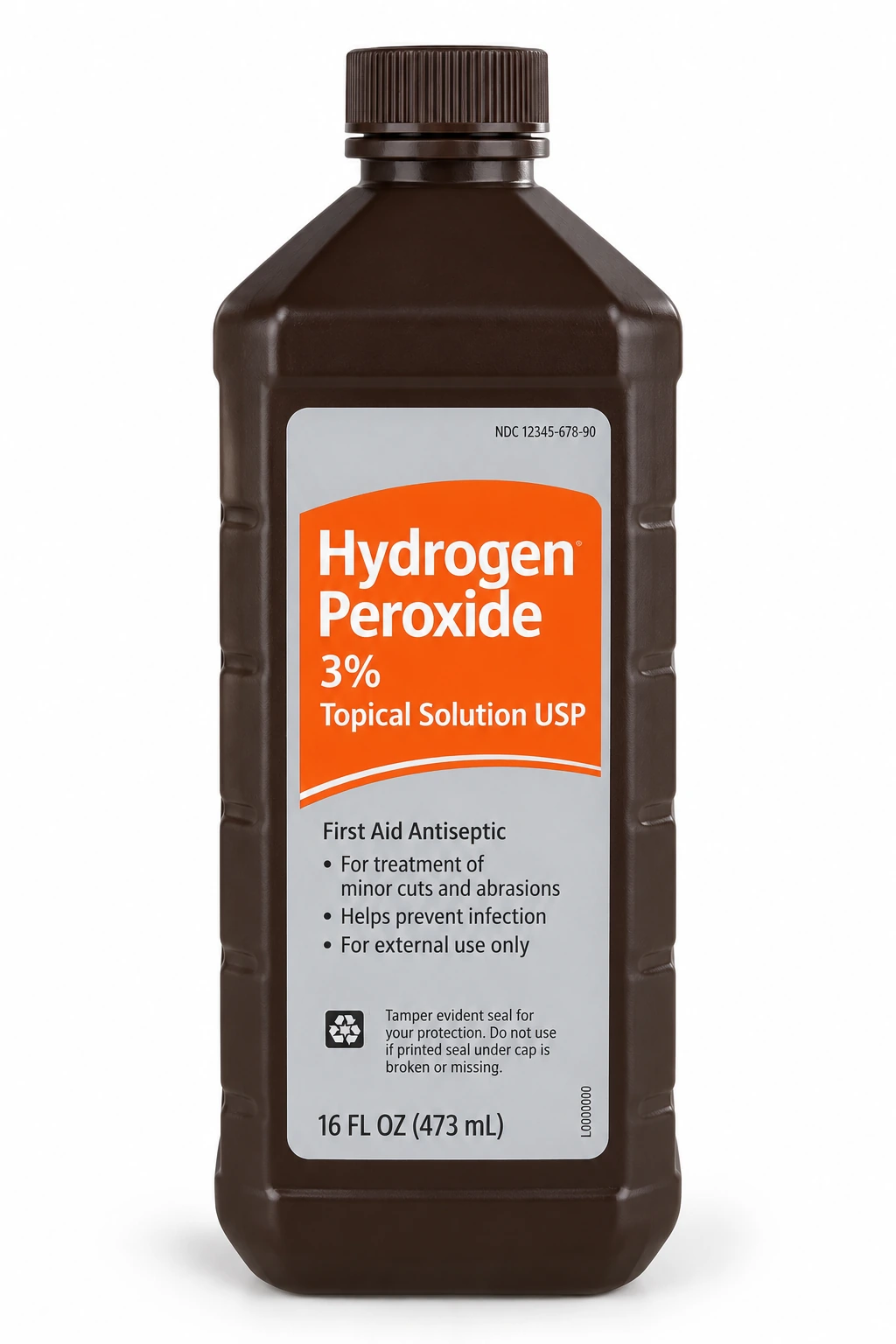
| Brand | Swan |
| Product Type | First aid antiseptic solution |
| Active Ingredient | Hydrogen peroxide (stabilized) 3% |
| Inactive Ingredient | Purified water |
| Concentration | 3% (30 mg/mL) |
| Dosage Form | Topical liquid solution |
| Package | 10 fl oz (295 mL) spray bottle |
| Application | External use on minor skin injuries as directed |
| Appearance | Clear, colorless liquid |
| Prescription Status | Over-the-counter (OTC) |
| Storage | Tightly closed at controlled room temperature |
3% Hydrogen Peroxide First Aid Antiseptic
Swan Hydrogen Peroxide 3% Topical Solution is an over-the-counter antiseptic labeled to help reduce the risk of infection in minor cuts, scrapes and burns. The stabilized 3% solution is supplied in a spray bottle for controlled topical application.
Hydrogen peroxide releases oxygen when it contacts certain substances on the skin. Because it can also irritate healthy tissue, it is not recommended for repeated routine wound cleansing.
Pharmacy Availability
Find an offline pharmacy through the Sweetwater Medical Center pharmacy finder for location and contact information.
What Swan Hydrogen Peroxide 3% Is Used For
The product is labeled as a first aid antiseptic for minor skin injuries. Hydrogen peroxide acts as an oxidizing agent, producing a chemical reaction that can affect microorganisms. The familiar bubbling that occurs when it contacts blood or damaged tissue comes from the release of oxygen.
Bubbling should not be mistaken for proof that a wound is free of infection or completely clean.
Although the product’s Drug Facts label permits limited antiseptic use, hydrogen peroxide can damage cells involved in skin repair. For ordinary minor cuts and scrapes, gentle cleaning with running water is generally preferable. Applying peroxide repeatedly to a healing wound may cause irritation and delay recovery.
It should not be used as a substitute for wound irrigation, sterile dressings or proper treatment of an infected injury.
Active Ingredient and Spray Formulation
Swan contains stabilized hydrogen peroxide at a concentration of 3%, with purified water listed as the inactive ingredient. This is a diluted topical preparation, not the concentrated hydrogen peroxide used in industrial applications.
The 10 fl oz bottle includes a trigger sprayer. It allows a small quantity to be directed toward the intended treatment area without pouring liquid directly from a larger container.
Understanding the 3% Concentration
The concentration describes the amount of hydrogen peroxide present in the solution. It does not indicate how quickly a wound will heal or establish that peroxide is preferable to other wound-cleansing methods.
Higher concentrations are more hazardous and must not be substituted for a labeled first aid preparation.
Topical Spray Versus Other Swan Formulations
Swan also markets hydrogen peroxide in other bottle sizes, and some versions have labeling that includes oral debriding use. Directions may differ between products.
The 10 fl oz topical spray described here is labeled for external first aid use. It should not be used as a mouth rinse or gargle unless the actual purchased product specifically includes oral-use directions.
Directions for Topical Application
The following directions reflect the Swan topical spray labeling. They describe the permitted method of use rather than a recommendation to apply peroxide routinely to every wound.
Clean the Affected Area
Begin by gently cleaning the minor injury. Remove visible dirt using clean running water, and avoid scrubbing damaged tissue.
Apply a Small Amount
If using the antiseptic as directed on its label, spray a small amount onto the affected area one to three times daily. Avoid spraying toward the face or eyes.
Allow the Area to Dry
The treated area may be covered with a suitable sterile bandage after the solution dries. Do not use a damaged or contaminated dressing.
Do not use hydrogen peroxide on large areas of the body or continue treatment for longer than one week. If the condition persists or worsens, stop use and seek medical assessment.
When Hydrogen Peroxide Should Be Avoided
Hydrogen peroxide is not appropriate for every type of injury. The Swan label specifically advises against use in the eyes or over large areas of the body and calls for medical guidance before use on deep wounds, punctures, animal bites or serious burns.
Additional precautions include:
- Eye exposure: avoid all direct contact with the eyes.
- Deep injuries: do not attempt to flush puncture wounds or deep tissue spaces with peroxide.
- Persistent irritation: discontinue use if redness, burning or discomfort worsens.
- Accidental swallowing: seek medical assistance or contact Poison Control immediately.
Keep the solution away from children. It is not intended for internal use, and the topical spray should never be injected or placed into an enclosed body cavity.
Signs of a wound infection, including spreading redness, warmth, swelling, pus or increasing pain, require attention beyond an over-the-counter antiseptic. Serious bleeding and extensive burns need prompt medical care.
Hydrogen Peroxide and Other Wound-Cleansing Options
For a minor cut or abrasion, clean running water can remove dirt and debris without exposing healing tissue to the oxidizing effects of peroxide. Sterile saline wound wash is another option when convenient wound irrigation is needed.
Antiseptics and cleansers serve different purposes. A product may have antimicrobial activity yet still be unsuitable for frequent use on an open wound because of its effects on healthy cells.
After a small wound is cleaned, a suitable sterile dressing can help protect it from friction and contamination while it heals.
Storage and Bottle Handling
Store Swan Hydrogen Peroxide tightly closed at controlled room temperature. Keep the bottle away from excessive heat, and do not shake it. The manufacturer also instructs users to hold the sprayer tip away from the face when opening.
Protect the container from contamination. Avoid allowing the nozzle to touch the wound, skin or used dressing.
Check the bottle and its protective seal before first use. Do not use a container with a damaged or missing tamper-evident seal.