
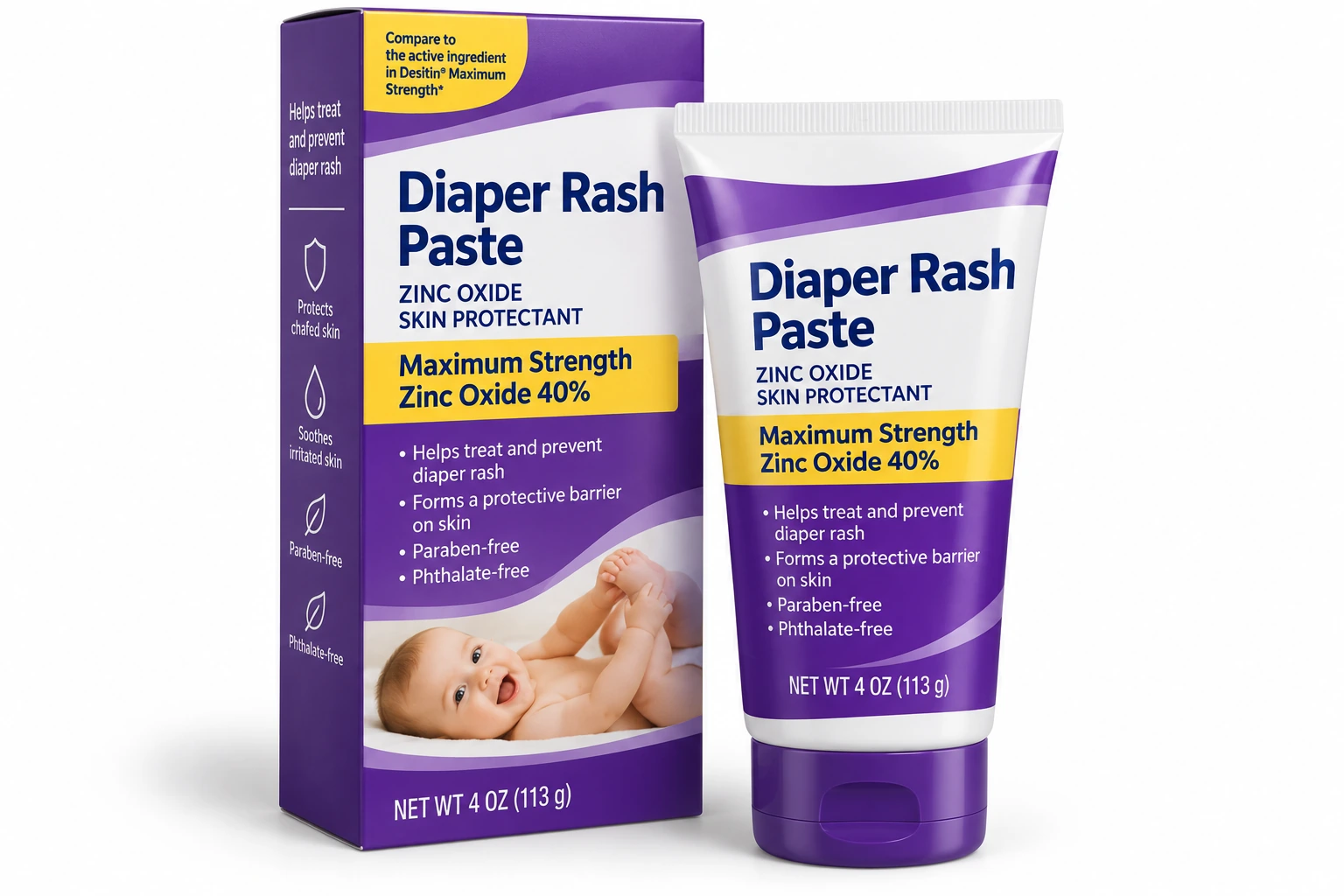
| Brand | Desitin |
| Product Line | Maximum Strength Original |
| Manufacturer | Kenvue |
| Product Type | Diaper rash skin protectant paste |
| Active Ingredient | Zinc oxide 40% |
| Selected Inactive Ingredients | Petrolatum, cod liver oil, lanolin, glycerin and beeswax |
| Texture | Thick protective paste |
| Package | 4 oz (113 g) |
| Primary Purpose | Treatment and prevention of diaper rash |
| Application | With each diaper change, as often as necessary |
| Prescription Status | Over-the-counter (OTC) |
| Storage | 68°F to 77°F (20°C to 25°C) |
Maximum Strength Protection Against Diaper Rash
Desitin Maximum Strength Original Paste contains 40% zinc oxide to help treat and prevent diaper rash. Its thick formula forms a protective barrier over irritated skin, limiting contact with moisture and other irritants inside the diaper.
Designed for use during diaper changes, the paste is particularly useful when prolonged wetness or overnight exposure may aggravate redness and chafing.
Pharmacy Availability
Find pharmacy locations and contact information through the Sweetwater Medical Center pharmacy finder.
How Desitin Maximum Strength Protects Skin
Diaper rash often develops when skin remains exposed to moisture, friction, urine or stool. The diaper environment makes it difficult for irritated skin to stay dry, particularly during prolonged wear.
Zinc oxide acts as a skin protectant rather than an antibiotic. It stays primarily on the surface, creating a physical barrier between sensitive skin and substances that can worsen irritation. This protection gives the affected area a better opportunity to recover during normal diaper care.
Desitin Maximum Strength Original contains the highest concentration of zinc oxide available in an over-the-counter diaper rash paste. The 40% formula has a dense, opaque texture and is designed to remain in place rather than disappear immediately after application.
It can be used when a rash is already present or applied preventively when a baby is prone to irritation from wet diapers.
What’s in the Original Desitin Formula?
Alongside zinc oxide, the paste contains petrolatum, cod liver oil, lanolin, glycerin and other ingredients that contribute to its consistency and skin-protective properties.
Petrolatum helps reduce moisture loss, while waxes and emollients give the paste its substantial, spreadable texture. Unlike a lightweight lotion, this formula is meant to leave a visible coating on the skin.
The original version contains fragrance and lanolin. Parents caring for a child with known sensitivity to either ingredient should check the full ingredient list before use.
Desitin describes the product as hypoallergenic and pediatrician tested, but no topical preparation can be guaranteed to suit every child’s skin.
How to Apply Desitin During Diaper Changes
Desitin’s Drug Facts directions recommend applying the paste liberally as often as necessary. A thin, barely visible film is not the intended application for this thick barrier product.
Change and Clean
Remove the wet or soiled diaper promptly. Gently cleanse the diaper area with water or a suitable mild wipe, taking care not to scrub red or tender skin.
Let the Skin Dry
Pat the skin dry or allow a brief period of air drying. Pay attention to skin folds, where moisture can remain after cleaning.
Apply a Generous Layer
Spread enough paste to cover the diaper area that needs protection, including any chafed or irritated skin. Apply a fresh diaper without rubbing away the coating.
Bedtime is an especially useful opportunity for application because the interval before the next diaper change may be longer.
At later changes, intact paste does not need to be scrubbed off completely. Gently remove soiled material, clean as needed and replenish the protective layer. Excessive wiping can make an already irritated area more uncomfortable.
When Diaper Rash Needs More Than a Barrier Paste
Many uncomplicated diaper rashes improve when the skin is kept clean, protected and changed promptly. However, persistent redness is not always caused by ordinary moisture irritation.
A bright red rash with small surrounding spots, especially within skin folds, may suggest a yeast infection. A barrier paste may protect the skin but does not treat the underlying fungus. Severe erosions, blisters, pus or significant tenderness also require assessment rather than continued self-treatment alone.
According to the Desitin label, stop use and ask a doctor if the condition worsens, lasts longer than seven days, or clears and returns within a few days.
Do not combine multiple medicated creams under the diaper without checking that they are appropriate for the child’s condition.
Safety, Cleanup and Storage
Desitin Maximum Strength Original is for external use only. Avoid contact with the eyes, and keep the container out of children’s reach. If swallowed, seek medical help or contact a Poison Control Center immediately.
Because the paste is rich in zinc oxide and oils, it can leave white marks or greasy residue on clothing, towels and changing surfaces. Wipe away excess product before washing fabrics, and follow the garment’s care instructions.
Store the container at 68°F to 77°F (20°C to 25°C), with its lid securely closed. Use clean hands when taking paste from a jar to limit contamination.