
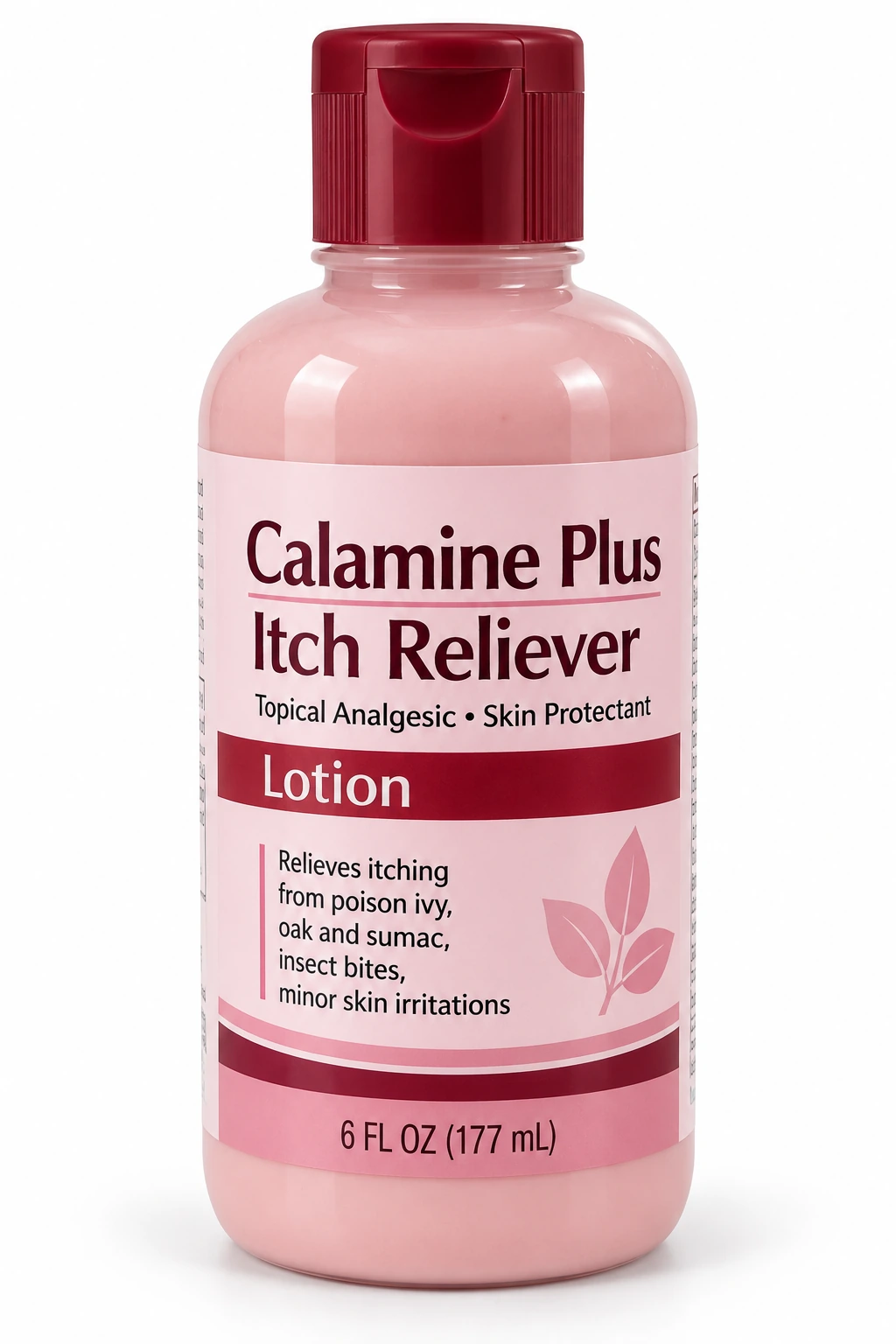
| Brand | Caladryl |
| Distributor | Bausch Health US, LLC |
| Product Type | Anti-itch lotion and skin protectant |
| Active Ingredient 1 | Calamine 8% — skin protectant |
| Active Ingredient 2 | Pramoxine HCl 1% — topical analgesic |
| Form | Topical lotion |
| Appearance | Pink lotion |
| Package | 6 fl oz (177 mL) bottle |
| Primary Uses | Temporary relief of itching and minor skin discomfort |
| Application Frequency | No more than 3 to 4 times daily |
| Age Guidance | Ages 2 and older; under 2, ask a doctor |
| Prescription Status | Over-the-counter (OTC) |
| Storage | 68°F to 77°F (20°C to 25°C) |
Calamine Lotion with Added Itch Relief
Caladryl Calamine Plus Itch Reliever Lotion combines calamine 8% with pramoxine hydrochloride 1% to temporarily relieve itching and discomfort from minor skin irritations. The lotion also helps dry the oozing and weeping associated with poison ivy, poison oak and poison sumac rashes.
Its pink, shake-before-use formula provides both a protective coating and localized itch relief.
Pharmacy Availability
Find pharmacy locations and contact information through the Sweetwater Medical Center pharmacy finder.
When Caladryl Lotion Can Help
A rash caused by poison ivy, poison oak or poison sumac may produce intense itching along with small blisters that release fluid. Caladryl is designed to address both symptoms: discomfort on the skin and moisture from weeping areas.
The Drug Facts label also includes temporary relief of pain and itching associated with:
- Insect bites: localized itching and irritation after a bite.
- Minor skin irritation: uncomfortable areas caused by mild external irritants.
- Minor cuts: temporary relief of associated superficial discomfort.
Caladryl treats symptoms rather than the cause of an allergic plant reaction. If plant oils remain on clothing, gardening tools or other objects, repeated contact can produce new irritation. Washing contaminated items is an important separate step.
How Calamine and Pramoxine Work Together
The two active ingredients serve different purposes. Calamine is a mineral-based skin protectant that leaves a visible coating as the lotion dries. This coating is particularly suited to mildly irritated, weeping skin.
Pramoxine hydrochloride is a topical anesthetic. It temporarily reduces itching and minor pain by limiting the transmission of sensory signals from the treated area.
Unlike a hydrocortisone cream, Caladryl does not contain a corticosteroid.
Texture and Additional Ingredients
Caladryl has a pourable consistency in the bottle but can leave a dry, powdery pink film after application. That residue is normal and may transfer onto clothing or bedding.
The formula also contains alcohol, camphor, fragrance and preservatives. People with known sensitivities to these ingredients should review the full Drug Facts label before use. The lotion may feel drying on skin that is already cracked or unusually sensitive.
How to Apply Caladryl Calamine Plus Lotion
Shake the bottle well before every application. The ingredients can settle during storage, and shaking helps distribute the suspended material evenly.
For adults and children ages 2 and older, the label permits application to the affected area no more than three to four times daily.
Prepare the Area
Gently clean the skin if necessary, especially after contact with plants or outdoor irritants. Pat dry without scrubbing inflamed areas or breaking blisters.
Shake and Apply
Shake the bottle, then place a small amount of lotion on clean fingers or a suitable applicator. Spread gently over the irritated skin without rubbing vigorously.
Allow the Lotion to Dry
Let the coating dry before putting clothing over the treated area. Wash your hands afterward unless they are being treated.
Use a fresh applicator when needed and avoid touching the bottle opening directly to an irritated or weeping rash.
What to Expect During Use
As the lotion dries, the treated area may look pale pink and feel less damp. The coating can gradually flake or rub away through normal activity, particularly beneath tight clothing.
Relief is temporary. An itchy rash may continue to evolve for several days even when Caladryl makes the skin more comfortable, and the product does not necessarily shorten the overall course of contact dermatitis.
Cool compresses and avoiding scratching may provide additional comfort. If itching is severe enough to disrupt sleep, or a rash involves a large area of the body, further treatment may be needed.
Warnings and When to Stop Treatment
Caladryl is for external use only. Keep it out of the eyes and avoid applying it to sensitive internal surfaces. Do not use it as a substitute for proper cleaning or dressing of a significant wound.
Children younger than 2 years should not use the lotion without a doctor’s advice.
Stop using Caladryl and seek medical guidance if the condition worsens, does not improve within seven days, or clears and then returns within a few days. Increasing redness, warmth, swelling, pus or unusual tenderness may indicate a complication rather than ordinary skin irritation.
Swelling of the face, breathing difficulties or rapidly spreading symptoms after an allergic exposure require urgent medical care.
Keep the bottle out of children’s reach. If swallowed, obtain medical help or contact a Poison Control Center immediately.
Storage and Bottle Care
Store Caladryl at 68°F to 77°F (20°C to 25°C), away from excessive heat. Keep the cap closed tightly and do not dilute the lotion with water or other skin care products.
Clean any residue around the bottle opening before replacing the cap. If the product develops an unusual odor or a consistency that does not return to normal after shaking, do not continue using it.