
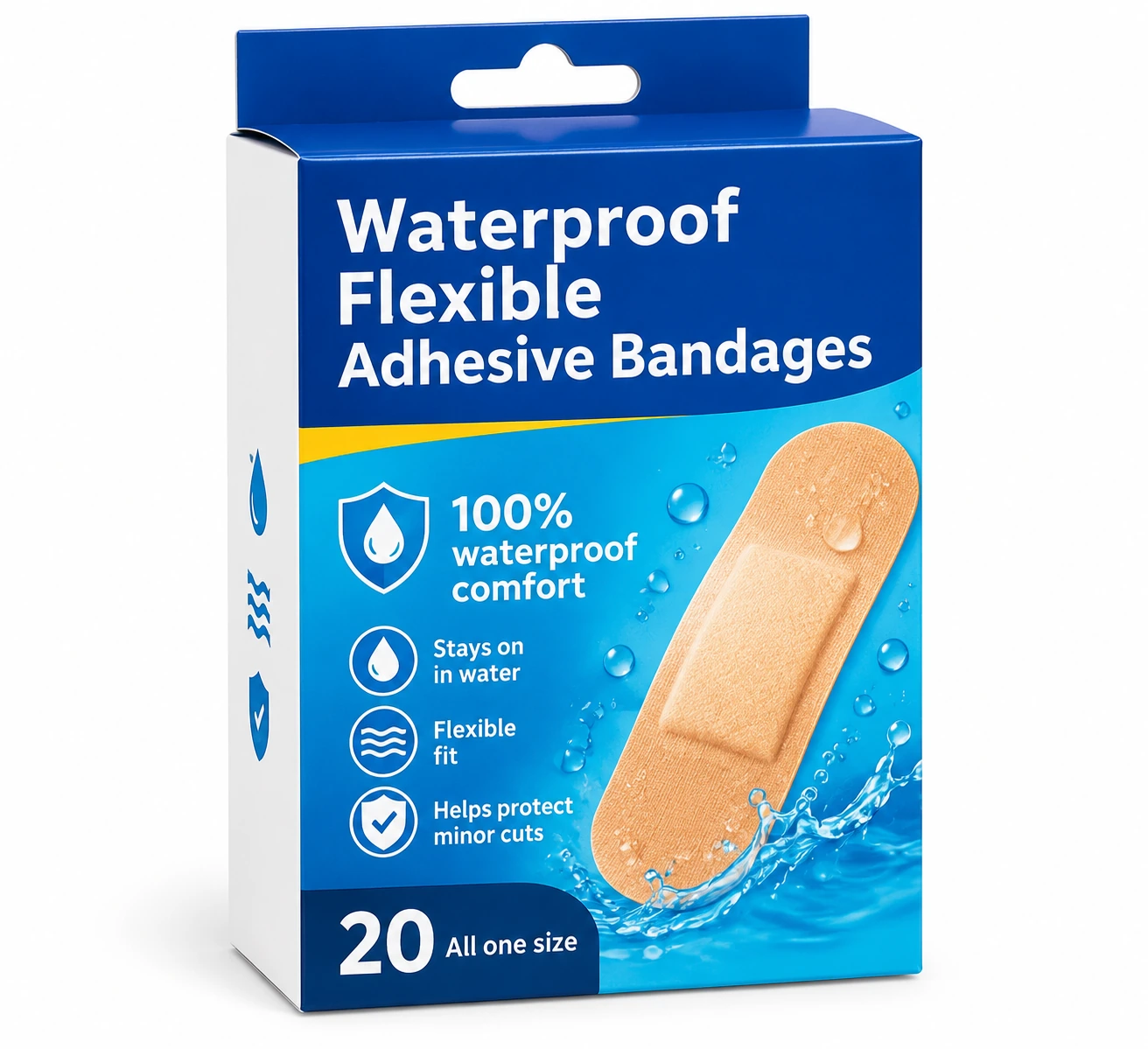
| Brand | Band-Aid |
| Product Line | Water Block Flex |
| Product Type | Sterile waterproof adhesive bandages |
| Water Protection | 100% waterproof design |
| Backing | Ultra-flexible, fabric-like material |
| Adhesive | Four-sided adhesive seal |
| Wound Pad | Non-stick QUILT-AID Comfort Pad |
| Primary Use | Minor cuts and scrapes |
| One Size Package | 20 bandages |
| Extra Large Package | 7 bandages |
| Sterility | Sterile in an intact individual wrapper |
| Prescription Status | Over-the-counter first aid supply |
Waterproof Bandages for Minor Cuts and Scrapes
Band-Aid Water Block Flex Waterproof Adhesive Bandages protect minor wounds from water and everyday contact. A flexible backing follows body movement, while the adhesive border seals around a cushioned, non-stick pad.
Designed for use during handwashing, showering and swimming, these bandages come in standard and extra-large sizes.
Pharmacy Availability
Visit the Sweetwater Medical Center pharmacy finder for offline pharmacy locations and contact information.
What Makes Water Block Flex Different?
Many ordinary adhesive strips have exposed edges near the wound pad. When those edges get wet, the dressing may loosen or allow moisture underneath. Water Block Flex has adhesive on all four sides of its central pad, creating a continuous border against the surrounding skin.
The backing is soft and flexible rather than rigid. It bends with knees, elbows and other moving areas, which helps prevent pulling during normal activity.
QUILT-AID Comfort Pad
The cushioned QUILT-AID pad sits directly over the wound. Its non-stick surface is designed to reduce adhesion to healing tissue, making bandage changes more comfortable.
The pad provides physical protection, not antibacterial treatment. It contains no antibiotic medication.
When to Use Waterproof Adhesive Bandages
Water Block Flex is intended for clean, minor skin injuries that need protection from occasional or repeated contact with water. It is useful for people who wash their hands frequently or need a dressing that can remain in place during a shower.
Typical applications include:
- Small cuts on hands and fingers.
- Minor scrapes on knees, elbows and arms.
- Superficial abrasions that may come into contact with water.
- Covered minor wounds during bathing or swimming, when water exposure is otherwise appropriate.
A waterproof bandage does not make every wound safe to submerge. Open surgical incisions, infected wounds and injuries requiring specialized care may need to stay dry under instructions specific to the condition.
For ordinary shallow cuts and scrapes, the bandage can help keep the wound covered without requiring a separate waterproof dressing.
Available Sizes and Coverage
The manufacturer offers two Water Block Flex configurations. The smaller version is intended for routine minor cuts, while the extra-large option covers a broader area.
| Size | Package Quantity | Common Use |
|---|---|---|
| One Size | 20 bandages | Small cuts and scrapes |
| Extra Large | 7 bandages | Larger superficial abrasions |
Choose a bandage with a pad large enough to cover the wound completely. The adhesive border must rest on intact skin; otherwise, it cannot form a reliable seal.
How to Apply Band-Aid Water Block Flex
Dry skin is essential for proper adhesion. Applying a waterproof bandage immediately after washing, while the surrounding skin is still damp, can weaken the seal.
Clean the Wound
Wash your hands and gently rinse the injured area with clean running water. Remove visible dirt and control minor bleeding with clean gauze. Carefully dry the surrounding skin.
Apply the Bandage
Open the wrapper, remove the protective backing and center the pad over the wound. Press the adhesive border firmly onto intact skin, smoothing all four sides without stretching the material.
Check the Seal
Make sure the edges lie flat before getting the bandage wet. After water exposure, inspect the dressing and replace it if the edges have lifted or moisture has reached the pad.
Do not try to restore a damaged waterproof seal by adding tape over loose edges. A fresh bandage is more appropriate.
Changing and Removing the Bandage
Water Block Flex is disposable. Replace it when it becomes dirty, wet underneath, loose or no longer provides adequate wound coverage. For routine minor wound care, changing the dressing daily is generally appropriate unless specific instructions indicate otherwise.
To remove it, loosen one corner and slowly peel the adhesive back while supporting the surrounding skin. Avoid pulling sharply, particularly around sensitive areas or joints. If any portion of the pad has adhered to the wound, moisten it gently before removal.
Discard the used bandage. Its adhesive border is not designed to maintain a waterproof seal after removal and reapplication.
What Can Affect Waterproof Protection?
The material is waterproof, but the dressing still depends on good contact between the adhesive and the skin. Several conditions can interfere with that contact:
- Moisture or lotion beneath the adhesive.
- Wrinkles or folds along the bandage edges.
- Repeated rubbing against clothing.
- Applying a bandage too small for the wound.
- Stretching the backing excessively during application.
Movement can gradually loosen a bandage, even when it was applied correctly. Check areas such as elbows and knees more frequently if they are exposed to repeated bending or friction.
Waterproof protection should never be assumed once the adhesive border begins to separate.
Safety and Storage
Use Band-Aid Water Block Flex only for appropriate minor injuries. Deep cuts, serious burns, persistent bleeding and wounds containing embedded objects require medical attention rather than routine adhesive coverage.
Increasing redness, warmth, swelling, pus or worsening pain may indicate infection. Remove the bandage if significant irritation develops beneath the adhesive.
Each bandage is sterile while its individual wrapper remains intact. Do not use products from damaged or previously opened wrappers when sterile coverage is required.
Store unopened bandages in a clean, dry location, away from excessive heat and moisture.
Band-Aid Water Block Flex for Home First Aid
Water Block Flex combines waterproof coverage with a flexible backing suitable for moving parts of the body. The four-sided adhesive seal is its main distinction from conventional fabric strips.
Keep the appropriate size available for minor cuts and scrapes, apply it to dry skin and replace the dressing whenever the seal is no longer secure.