
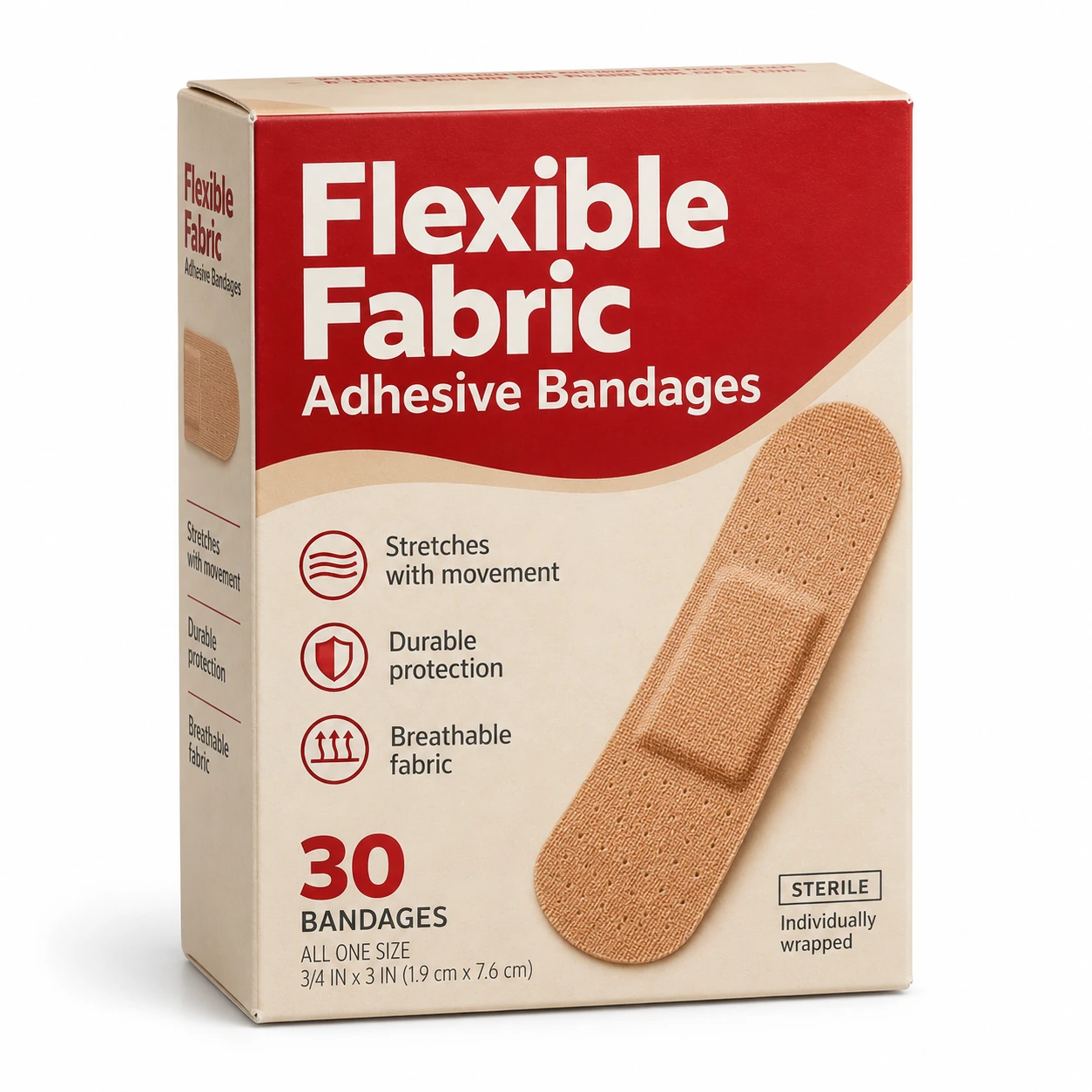
| Brand | Band-Aid |
| Product | Flexible Fabric Adhesive Bandages |
| Product Type | Adhesive wound dressing |
| Material | MEMORY WEAVE flexible fabric |
| Wound Pad | QUILT-AID Comfort Pad with HURT-FREE non-stick surface |
| Sterility | Sterile in an intact individual wrapper |
| Natural Rubber Latex | Not made with natural rubber latex |
| Sizes | One Size, Assorted Sizes, Extra Large |
| Package Options | 8, 10, 30 or 100 bandages, depending on the product variant |
| Prescription Status | Over-the-counter, no prescription required |
Package design, bandage sizes and quantities may vary. Confirm the available product with the selected pharmacy.
Flexible Fabric Bandages for Minor Cuts and Scrapes
Band-Aid Flexible Fabric Adhesive Bandages are sterile adhesive dressings made for everyday minor wound care. Their stretchable fabric backing follows the movement of the skin, helping the bandage stay comfortable on fingers, hands, knees and other areas that bend frequently.
A cushioned central pad covers the wound, while the adhesive fabric holds the dressing in place. The pad has a non-stick surface designed to reduce adherence to the injured skin during removal. These bandages can be kept in a bathroom cabinet, workplace first aid kit or travel bag for the small cuts and scrapes that occur during normal activities.
The product comes in different sizes and package quantities, including assorted packs for covering minor injuries on different parts of the body.
Pharmacy Availability
Band-Aid Flexible Fabric bandages are nonprescription first aid supplies. Individual pharmacy locations may carry different sizes and package quantities.
For pharmacy locations and contact information, visit the Sweetwater Medical Center pharmacy finder. Confirm current stock directly with the pharmacy.
Minor cuts and scrapes are common when preparing food, working around the house or spending time outdoors. Once a small wound has been cleaned and any bleeding has stopped, a suitable adhesive bandage helps keep it covered and limits direct contact with clothing, dirt and everyday surfaces.
Flexible Fabric bandages are particularly convenient on moving areas of the body. Their fabric construction accommodates ordinary bending and stretching, which can make them more comfortable than a rigid adhesive strip. They are intended for minor injuries and are not a substitute for medical treatment when a wound is deep, heavily bleeding or otherwise serious.
Band-Aid Flexible Fabric Features and Materials
Band-Aid combines a flexible adhesive backing with a protective wound pad. The fabric and central pad serve different purposes: one keeps the dressing attached to the surrounding skin, while the other cushions the injured area.
MEMORY WEAVE Fabric
The MEMORY WEAVE material stretches with natural body movement. This is helpful around knuckles, fingers, elbows and knees, where frequent bending may loosen a less flexible dressing. The fabric backing is designed to remain comfortable during ordinary activities, although water, moisture and repeated friction can still affect adhesion.
QUILT-AID Comfort Pad
At the center of the bandage is a cushioned QUILT-AID Comfort Pad with a HURT-FREE non-stick surface. It covers the wound and provides a barrier against minor everyday contact. The non-stick design also helps prevent the pad from attaching firmly to the wound as it heals.
Each dressing is individually wrapped and sterile unless the wrapper has been opened or damaged. Bandages are intended for one-time use and should be discarded after removal.
Sizes and Package Options
Band-Aid Flexible Fabric bandages are offered in several configurations, allowing customers to choose between standard strips, assorted sizes and larger dressings.
| Size or Package Type | Quantity |
|---|---|
| One Size | 30 or 100 bandages |
| Assorted Sizes | 30 or 100 bandages |
| Extra Large | 10 bandages |
| One Size Travel Pack | 8 bandages |
For small cuts on a finger or hand, a standard adhesive strip may provide sufficient coverage. Larger superficial scrapes may require a wider dressing. The wound pad should cover the injured area completely, with the adhesive edges resting on healthy surrounding skin.
Common Uses for Band-Aid Flexible Fabric Bandages
These bandages are suitable for covering clean, minor skin injuries that do not require specialized dressings. Their flexible backing is especially useful where the skin moves often, and the cushioned pad provides a protective layer over the affected spot.
- Minor cuts: covering small cuts on hands, fingers and other areas after cleaning.
- Scrapes and abrasions: protecting superficial injuries from clothing and everyday contact.
- Knuckles and joints: providing a flexible dressing that moves with the skin.
- Home and travel first aid: keeping individually wrapped bandages available for routine minor injuries.
For wounds that produce substantial drainage, cover a large surface or require frequent dressing changes, a different type of sterile wound dressing may be more appropriate. Standard Flexible Fabric bandages should not be treated as waterproof dressings.
How to Apply and Remove Band-Aid Flexible Fabric Bandages
Clean, dry skin is important for proper adhesion. Before applying the bandage, gently rinse the minor wound with clean running water and remove visible debris. If there is minor bleeding, apply gentle pressure with clean gauze until it stops. Dry the surrounding skin without rubbing the wound itself.
Prepare the Wound
Wash your hands, clean the injured area and make sure the surrounding skin is dry. Choose a bandage with a pad large enough to cover the entire wound.
Position the Bandage
Open the individual wrapper and remove the protective backing. Place the cushioned pad over the wound without touching its contact surface. Press the adhesive edges gently onto the surrounding skin.
Replace the Dressing
Change the bandage daily, whenever it becomes wet or dirty, or sooner when necessary. Gently peel it away while supporting the surrounding skin. Apply a fresh bandage if the wound still needs protection.
Do not reuse removed bandages or use a dressing from an opened or damaged sterile wrapper. When applying a strip around a finger, avoid stretching it tightly enough to restrict circulation.
Important Precautions and Storage
Band-Aid Flexible Fabric Adhesive Bandages are intended for minor wound protection. Deep cuts, wounds with embedded objects, serious burns and injuries with bleeding that does not stop after sustained direct pressure require medical attention. A bandage should not delay appropriate treatment.
Remove the dressing if the adhesive causes a significant skin reaction. Increasing redness, swelling, warmth, worsening pain or pus may indicate a wound infection. Although the product is not made with natural rubber latex, an individual may still be sensitive to its adhesive or other materials.
Keep unused bandages in a clean, dry place in their original packaging. Avoid exposing the wrappers to unnecessary moisture or damage, and check their condition before use.
Band-Aid Flexible Fabric Bandages at Sweetwater Medical Center Pharmacy
Band-Aid Flexible Fabric Adhesive Bandages provide a convenient way to protect minor everyday wounds. Their stretchable fabric, cushioned non-stick pad and choice of sizes make them useful for household and workplace first aid supplies.