
Learn everything you need to know about amoxicillin – how it works, what it treats, correct dosing, safety rules, and when a doctor might recommend stronger combinations like amoxicillin-clavulanate in 2025.
Medical Disclaimer
This article is for educational purposes only and does not constitute medical advice. Always consult a licensed healthcare professional before starting, adjusting, or stopping any medication
Author: Dr. David R. Dansie, Family Medicine Physician.
Understanding Amoxicillin
Amoxicillin is one of the most trusted and widely prescribed antibiotics in modern medicine. Doctors rely on it because it’s effective, affordable, safe for most people, and capable of treating a broad range of bacterial infections. As a penicillin-based antibiotic, it works by weakening the protective walls of bacteria. Without these walls, bacteria can’t survive, which allows the immune system to finally take control. This simple, powerful mechanism is what makes amoxicillin a dependable choice in everyday clinical practice.
People often associate the medication with common strengths like amoxicillin 500mg, but it exists in many forms: capsules, tablets, chewable tablets, extended-release tablets, and liquid suspension for children. The variety of available forms allows healthcare providers to tailor treatment to individual needs. For example, the liquid form is ideal for kids because it allows precise dosing based on weight, while adults often prefer tablets for convenience.
How Amoxicillin Works Inside the Body
Once a dose of amoxicillin enters the body, it travels through the digestive system and is absorbed into the bloodstream. From there, it spreads into tissues where bacteria may be causing problems. The antibiotic identifies vulnerable bacteria and blocks the enzymes they need to build their cell walls. As a result, bacteria gradually weaken, fail to reproduce, and eventually die off.
This process doesn’t happen instantly symptoms usually begin improving within the first 48–72 hours. Patients often notice less pain, reduced swelling, and more energy. However, for the medication to fully work, it must be taken exactly as prescribed. Skipping doses or stopping too early can allow surviving bacteria to multiply again, sometimes becoming more resistant than before.
Because amoxicillin is a broad-spectrum antibiotic, it can treat many different infections. But it’s important to understand that it works only against bacteria, not viruses. It won’t help with the flu, the common cold, or most cases of sore throat. Doctors carefully evaluate symptoms before prescribing amoxicillin to make sure it’s the right tool for the job.
What Amoxicillin Is Used For
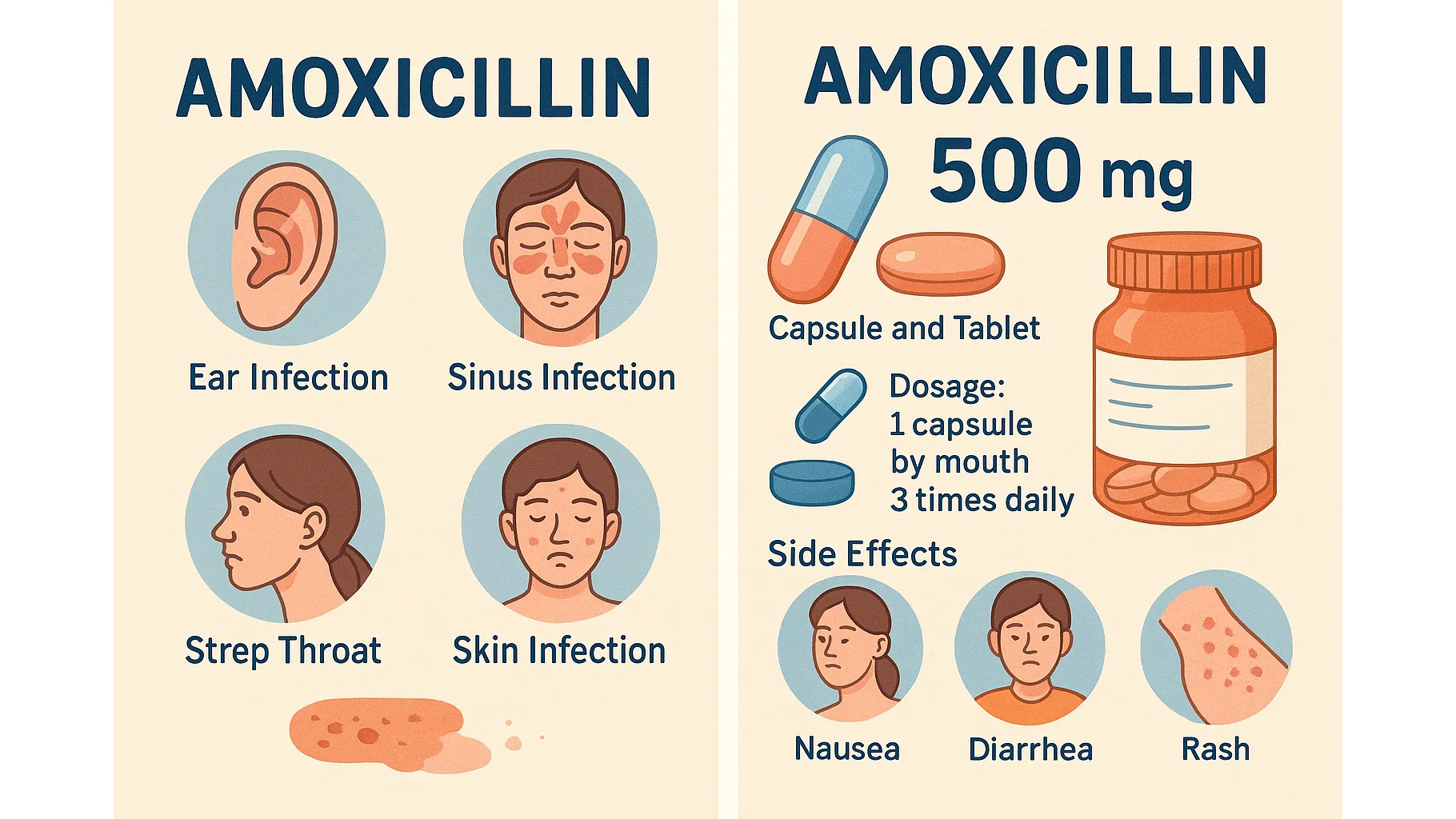
Amoxicillin is prescribed for many infections affecting different parts of the body. The most common ones include ear infections, sinus infections, and throat infections like strep throat. These conditions are widespread and uncomfortable, but they usually respond quickly when treated early.
One of the biggest advantages of amoxicillin is its ability to treat respiratory infections that bacteria cause. For example, certain types of pneumonia and bronchitis improve significantly when the antibiotic is taken properly. In these cases, amoxicillin works by reducing inflammation in the lungs and helping the body eliminate bacteria more effectively.
Skin and soft-tissue infections are another area where amoxicillin performs well. If someone gets a small wound that becomes infected or experiences conditions like cellulitis, the antibiotic helps stop bacteria from spreading deeper into the tissues. When treated early, such infections often resolve within a week.
Amoxicillin may also be used for urinary tract infections, although doctors often choose different antibiotics first because some urinary bacteria have developed resistance. Still, when lab tests show that the bacteria are sensitive to amoxicillin, it becomes a safe and effective option.
Key Information About Amoxicillin
| Category | Details |
|---|---|
| Medication Type | Broad-spectrum penicillin antibiotic |
| Common Forms | Capsules, tablets, chewable tablets, oral suspension |
| Typical Strengths | 250 mg, 500 mg, 875 mg |
| Standard Adult Dosage | 500 mg every 8 hours or 875 mg every 12 hours |
| Treatment Duration | 5–14 days depending on infection severity |
| Common Uses | Ear infection, sinus infection, strep throat, skin infections, respiratory infections |
| Frequent Side Effects | Nausea, mild diarrhea, headache, non-allergic rash |
| Alcohol Use | Generally safe in moderation, but may worsen stomach upset |
| When Not to Use | Penicillin allergy, severe liver disease, known antibiotic hypersensitivity |
| Special Notes | Must finish full course to avoid antibiotic resistance |
Why Amoxicillin 500mg Is So Popular
The strength 500mg is prescribed very frequently, especially for adults. It’s strong enough to deal with most uncomplicated bacterial infections but gentle enough not to overwhelm the body. Doctors commonly recommend taking 500mg every eight hours, making it easy to build a routine around meals or daily activities.
In some situations, especially when the infection is more intense, doctors prescribe 875mg tablets. These are taken every twelve hours and provide a higher dose with fewer daily administrations. The choice between Amoxicillin 500mg and Amoxicillin 875mg depends on the severity of the infection, a patient’s health history, age, and how well their kidneys process medications.
How to Take Amoxicillin Properly
Correct dosing is essential for successful treatment. Amoxicillin is usually taken with water, and although it can be taken on an empty stomach, many people prefer taking it with food to reduce stomach discomfort. The key is consistency. If the prescription says “every eight hours,” sticking to that schedule helps maintain steady levels of the antibiotic in the body. This consistency makes it harder for bacteria to adapt or regrow.
If someone forgets a dose, the general rule is to take it as soon as possible unless it’s almost time for the next one. Doubling doses is not recommended because it increases the risk of side effects such as nausea or diarrhea. Completing the entire course is equally important. Even if symptoms go away sooner, the bacteria may still be present in small amounts. Stopping early gives them a chance to return sometimes with added resistance.
Side Effects of Amoxicillin and How to Manage Them
Even though amoxicillin is considered one of the safest antibiotics available, it can still cause side effects in some people. Many of these reactions are mild and temporary, disappearing on their own once the body adjusts to the medication. The most common effects include nausea, mild diarrhea, and stomach discomfort. These symptoms don’t necessarily mean you must stop the medication. In fact, many patients manage them by taking amoxicillin with food, drinking more water during treatment, or adding probiotics to their diet.
Some people experience headaches or a slight change in taste while taking amoxicillin. These reactions are generally harmless and fade as soon as the treatment ends. However, paying attention to how your body responds is always important. If symptoms become more intense or start interfering with daily activities, it’s a good idea to reach out to a healthcare provider for advice.
Understanding the Amoxicillin Rash
One of the reactions people worry about most is the amoxicillin rash. This rash can appear for different reasons, and not all of them are dangerous. In children, a non-allergic rash is fairly common. It usually appears as small pink spots, doesn’t itch, and often shows up around days 3–6 of treatment. While it can look alarming, this type of rash is harmless and typically goes away without stopping the medication.
A true allergic reaction, however, is a different situation. An allergic rash is usually itchy, raised, and may spread quickly. It can also be accompanied by swelling, trouble breathing, or dizziness. In this case, the medication should be stopped immediately, and medical help is needed. Distinguishing between a harmless rash and a dangerous one is essential, which is why doctors recommend contacting them whenever a new or unusual reaction appears during treatment.
Rare but Serious Side Effects
Although uncommon, there are situations where amoxicillin can cause serious reactions. These include:
- Severe allergic reactions, such as anaphylaxis
- Liver problems, especially in people who already have liver disease
- Severe diarrhea caused by Clostridioides difficile
- Skin reactions, including Stevens-Johnson syndrome
These reactions are extremely rare but require immediate medical attention. Most patients never experience anything close to these complications, but being informed helps you act quickly if something doesn’t feel right.
Amoxicillin and Alcohol: What You Should Know
A common question patients ask is whether they can drink alcohol while taking amoxicillin. The answer is that alcohol does not directly interfere with the effectiveness of the antibiotic, which makes amoxicillin safer in this regard compared to several other medications. However, alcohol can irritate the stomach, slow down recovery, and worsen side effects like nausea or dizziness.
For most people, a small amount of alcohol won’t cause harm. Still, doctors often recommend limiting or avoiding alcohol until the infection has cleared. Your body needs as much strength as possible to fight off the bacteria, and alcohol can take away some of that energy.
Important Drug Interactions
Amoxicillin is usually easy to combine with other medications, but a few interactions require attention. The most common interaction occurs with blood thinners, especially warfarin. Taking both medications together can increase the risk of bruising or bleeding. Doctors might recommend regular blood tests to ensure that the combination remains safe.
Another area of concern involves birth control pills. While amoxicillin doesn’t fully deactivate them, it may slightly reduce their effectiveness in some people. For that reason, doctors often suggest using an extra form of protection during treatment. Certain other antibiotics or medications for gout, such as allopurinol, can also interact with amoxicillin and increase the risk of side effects like rashes.
Who Should Not Take Amoxicillin
Although amoxicillin is safe for most people, certain groups must be more cautious. Anyone with a known allergy to penicillin or cephalosporins should avoid it. Allergic reactions can be unpredictable and sometimes severe, so an alternative antibiotic is usually recommended. People with kidney or liver disease may still take amoxicillin, but the dosage often needs to be adjusted. That’s why accurate medical history is essential before starting any antibiotic.
Pregnant women can usually take amoxicillin safely, as it is considered low risk. However, like with all medications, using it under the supervision of a healthcare provider is crucial. Breastfeeding mothers can also use amoxicillin, although small amounts may pass into breast milk. Most babies tolerate it well, but monitoring them for signs of stomach upset or rash is always helpful.
Amoxicillin With Clavulanate Potassium
There are times when regular amoxicillin isn’t enough to treat an infection. Some bacteria produce enzymes that break down the antibiotic, making it ineffective. To solve this problem, scientists developed a powerful combination: amoxicillin with clavulanate potassium. Clavulanate works by blocking those bacterial enzymes, which allows the amoxicillin to do its job again.
This combination is especially useful for tougher infections, such as:
- Severe sinus infections
- Persistent ear infections
- Animal bites
- Certain types of pneumonia
Because of its strength, amoxicillin-clavulanate (often known by the brand name Augmentin) may cause more stomach discomfort than simple amoxicillin. Doctors usually recommend taking it with a meal to reduce the risk of nausea or diarrhea. Despite the stronger effects, this combination remains one of the most reliable options when bacteria have developed resistance.
How Long You Should Take Amoxicillin
The length of treatment with amoxicillin depends on the type of infection and how your body responds. Most mild to moderate infections require 5 to 7 days of treatment. For strep throat, the standard course is 10 days. In more complex cases, such as severe respiratory infections, a doctor may prescribe amoxicillin for up to 14 days.
Many people believe they should stop the antibiotic as soon as they feel better. This is one of the biggest mistakes. Symptoms often improve before all bacteria are eliminated. Stopping early may allow the remaining bacteria to regrow, sometimes becoming resistant to the medication. That’s why it’s essential to complete the full course, even if your condition improves quickly.
If you reach the end of your prescription and still feel unwell, it’s important to contact your doctor rather than continuing the medication on your own. Sometimes a different antibiotic may be needed, especially if lab tests show the bacteria aren’t responding to amoxicillin.
Why Finishing the Course Matters
Modern medicine is facing a serious challenge known as antibiotic resistance. When bacteria survive antibiotics, they can change, grow stronger, and become harder to treat. Incorrect use of medications like amoxicillin contributes to this global problem. This is why doctors carefully evaluate symptoms before prescribing antibiotics and why they emphasize taking the medication exactly as directed.
By following treatment instructions, patients not only protect their own health but also help reduce the spread of resistant bacteria in the community.
Amoxicillin for Children
Amoxicillin is one of the most commonly prescribed antibiotics for children because it is effective and generally gentle on young stomachs. Doctors calculate the pediatric dose based on weight, usually in milligrams per kilogram (mg/kg). The liquid suspension makes it easy for parents to measure the exact amount their child needs.
Children often take amoxicillin for:
- ear infections
- strep throat
- sinus infections
- mild pneumonia
- skin infections
Parents should make sure doses are given at the correct times and that the full course is completed. Even if a child seems fully recovered, stopping early may cause the infection to return. If vomiting or diarrhea occurs, a pediatrician may suggest giving the medicine after a small meal to improve tolerance.
Amoxicillin for Older Adults
Older adults can safely take amoxicillin, but doctors may adjust the dose depending on kidney function. Since the kidneys remove amoxicillin from the body, slower kidney function may cause the medication to stay in the system longer. Adjusting the dose ensures the antibiotic remains effective without causing unnecessary side effects.
Many older adults take several medications at once, so checking for possible drug interactions is especially important. In general, amoxicillin is safe, but monitoring is recommended for those on blood thinners or medications affecting the liver.
When Amoxicillin Isn’t Enough
Although amoxicillin is powerful, it’s not always the right solution. Some infections are caused by bacteria that naturally resist it. In such cases, a doctor may prescribe a stronger or broader antibiotic.
Common reasons amoxicillin fails to work include:
- bacteria producing enzymes that destroy penicillin
- improper dosage or missed doses
- infection caused by a virus instead of bacteria
- severe or deep-tissue infections needing stronger therapy
When this happens, doctors often switch to amoxicillin-clavulanate, which adds extra protection against resistant bacteria.
How to Store Amoxicillin Correctly
Proper storage helps preserve the effectiveness of the medication. Tablets and capsules should be kept at room temperature, away from direct heat and moisture. The liquid suspension is more sensitive. Once mixed by the pharmacy, it must be refrigerated and used within a set number of days (usually 7–14 days depending on the formula). If the liquid begins to smell unusual or changes in color, it should be discarded.
Keeping medication in the bathroom is not recommended because humidity can affect its stability. A kitchen cabinet or bedroom drawer is usually a better choice.
Conclusion
Amoxicillin remains one of the most trusted antibiotics worldwide because it is effective, well-tolerated, and suitable for both adults and children. When used correctly, it treats a wide range of infections and supports a quick recovery. Understanding how it works, how to take it properly, and what side effects to watch for helps patients stay safe and informed.
If symptoms don’t improve or unusual reactions appear, it’s important to contact a healthcare professional promptly. With responsible use, amoxicillin continues to be a powerful tool in modern medicine.
Frequently Asked Questions About Amoxicillin
What does amoxicillin treat?
Amoxicillin treats bacterial infections such as ear infections, sinus infections, strep throat, skin infections, and certain types of respiratory illnesses.
How fast does amoxicillin start working?
Many people feel improvement within 48–72 hours. However, the full course must be completed even if symptoms disappear early.
Can I drink alcohol while taking amoxicillin?
Yes, moderate alcohol usually doesn’t interfere with the medication. Still, avoiding alcohol during treatment helps the body recover faster and reduces stomach upset.
What should I do if I miss a dose?
Take the missed dose as soon as you remember. If it’s nearly time for the next dose, skip the missed one. Don’t double the dose.
Is amoxicillin safe during pregnancy?
Yes, it’s generally considered safe, but it should only be taken under medical supervision.
Why do some people get diarrhea from amoxicillin?
The medication can affect gut bacteria. Most cases are mild, but severe or watery diarrhea may require medical attention.
Can amoxicillin cause yeast infections?
Yes. Because it changes the balance of bacteria, some people may develop yeast infections, especially women. Antifungal treatment may be needed.
Does amoxicillin interact with birth control pills?
It may slightly reduce their effectiveness. Using backup contraception during treatment is a safe precaution.