
ACE Elastic Bandage with Clips
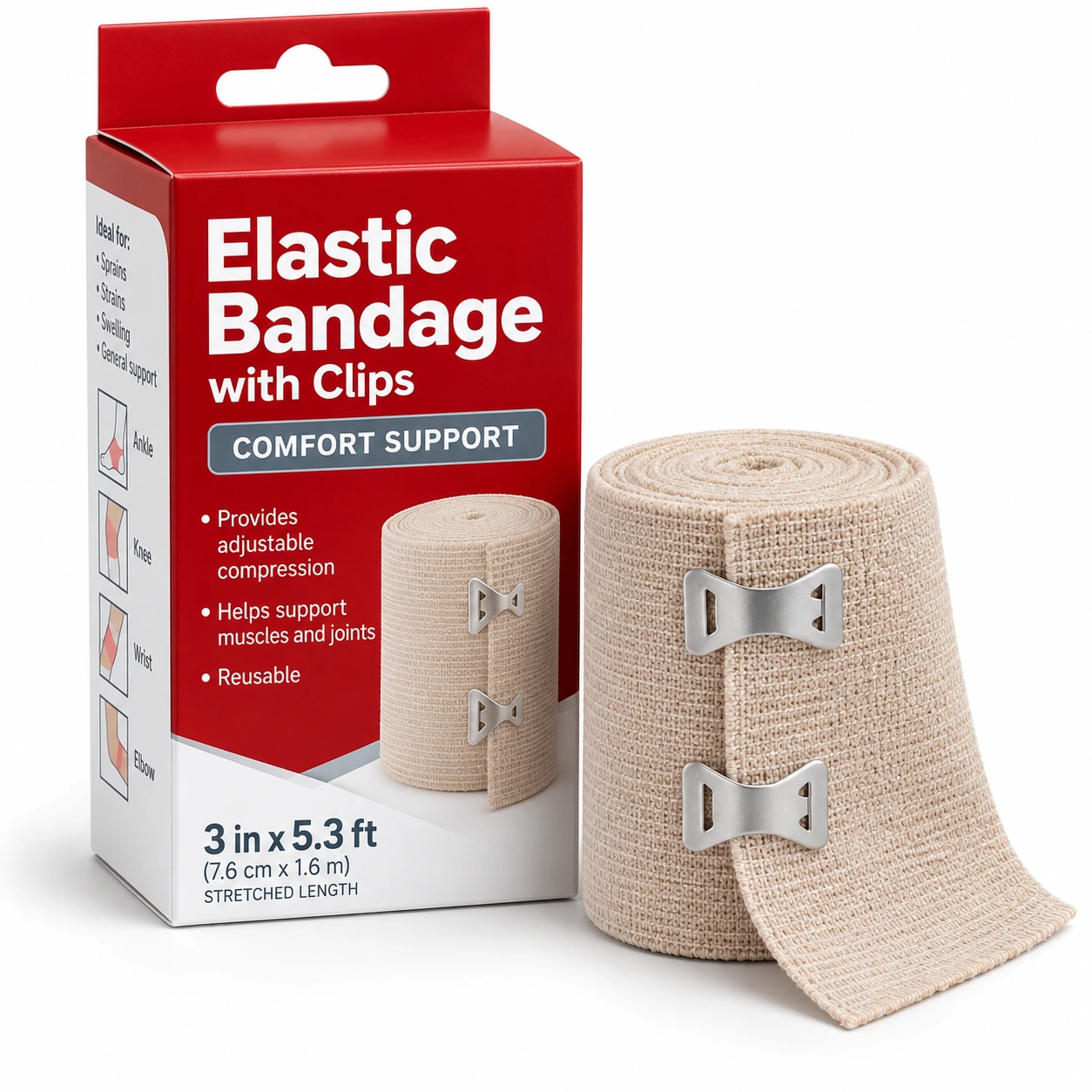
| Brand | ACE |
| Manufacturer | 3M |
| Product Type | Reusable elastic support bandage |
| Material | Cotton, polyester and synthetic rubber |
| Elasticity | Four-way stretch |
| Closure | Adjustable fastening clips |
| Support Level | Moderate, adjustable compression |
| Available Widths | 2, 3, 4 and 6 inches |
| Color | Tan; black in selected variants |
| Reusability | Washable and reusable |
| Natural Rubber Latex | Not made with natural rubber latex |
| Prescription Status | Over-the-counter support bandage |
Adjustable Compression for Muscles and Joints
ACE Elastic Bandage with Clips is a reusable support wrap for weak, sore or mildly injured muscles and joints. Its four-way stretch material conforms to the body, while adjustable clips hold the bandage in place and allow the compression to be changed without adhesive tape.
The soft elastic fabric can be wrapped around ankles, knees, wrists and other areas requiring moderate support. It can be washed and reused as needed.
Pharmacy Availability
ACE Elastic Bandage with Clips is available as a nonprescription support product. Visit the Sweetwater Medical Center pharmacy finder to locate an offline pharmacy and check available bandage sizes.
Elastic support bandages are used when a joint or muscle needs gentle, adjustable compression without the bulk of a rigid brace. The ACE wrap can be positioned around an affected area and tightened or loosened to accommodate the required level of support. Unlike a disposable wound dressing, this product is intended to be removed, cleaned and used again.
When to Use an ACE Elastic Bandage
An elastic bandage applies gentle pressure around soft tissues. This can be useful during the early management of certain mild sprains and strains, when swelling or discomfort makes additional support desirable. Compression is one component of injury care, rather than a treatment for the underlying injury itself.
ACE Elastic Bandage with Clips is intended for moderate support of weak or sore muscles and joints. Depending on the injury and its location, a wrap may be used around the ankle, wrist, knee or another suitable body area.
- Mild ankle sprains: providing adjustable compression around the ankle when appropriate.
- Muscle strains: supporting an affected muscle during recovery.
- Minor swelling: applying gentle external pressure when compression is appropriate.
- Joint support: helping support a weak or sore joint during suitable everyday activities.
The bandage is not designed to immobilize a fracture, replace a fitted orthopedic brace or provide a prescribed medical compression level. Significant swelling, inability to bear weight, visible deformity or severe pain should be evaluated before relying on an elastic wrap.
Four-Way Stretch and Adjustable Clip Closure
ACE uses a soft elastic fabric that stretches in multiple directions. This allows the material to follow the changing contours of the body when a knee bends or an ankle moves. The wrap can provide support without completely restricting ordinary movement.
Compression That Can Be Adjusted
The pressure created by an elastic bandage depends largely on how tightly it is wrapped and how much the layers overlap. ACE Elastic Bandage with Clips allows the wearer to adjust the fit by releasing and repositioning the fastening clips.
The goal is even, comfortable compression. A bandage does not need to be pulled tightly to remain secure. Excessive tension can restrict circulation and increase discomfort, particularly around smaller joints.
Clips Instead of Adhesive
Separate fastening clips secure the end of the elastic wrap after it has been positioned. Unlike self-adhering bandages, this version does not rely on the fabric sticking to itself. The clips make it possible to reopen the wrap, adjust the tension and secure it again.
Check that each clip is attached securely to the bandage material and is not pressing into the skin. Clips should also be removed before washing the bandage.
Soft Fabric for Repeated Use
The blend of cotton, polyester and synthetic rubber gives the wrap its elasticity and soft feel. It is designed to fit close to the body and can be worn beneath ordinary clothing when the wrapping position allows.
The bandage is not made with natural rubber latex. However, skin irritation can still occur from friction, prolonged moisture exposure or sensitivity to individual materials.
ACE Elastic Bandage Sizes
Choosing the right width makes wrapping easier and helps distribute pressure across the supported area. Narrower bandages are generally easier to position around smaller joints, while wider wraps cover larger areas with fewer turns.
| Bandage Width | Typical Wrapping Area |
|---|---|
| 2 inches | Wrist and smaller body areas |
| 3 inches | Ankle and medium-sized joints |
| 4 inches | Knee and larger wrapping areas |
| 6 inches | Broad muscle areas requiring wider coverage |
These are general size-selection examples rather than fixed medical requirements. The appropriate bandage width also depends on body measurements, comfort and the area requiring compression. A wrap should distribute pressure evenly without creating narrow, excessively tight bands.
How to Apply an ACE Elastic Bandage with Clips
Before wrapping a joint, check the skin for cuts, irritation or other problems. Position the limb comfortably and make sure the bandage is clean, dry and free of damaged elastic sections.
Position the Bandage
Begin below the area requiring support when appropriate for the joint being wrapped. Hold the loose end against the skin and make an initial turn to keep the material in position.
Wrap With Gentle Tension
Continue wrapping smoothly, overlapping successive layers to create even coverage. Avoid folds, gaps and sudden changes in tightness. Use only enough tension to provide comfortable support.
Attach the Fastening Clips
Secure the final end of the bandage with the included clips. Position them so they hold the fabric without contacting the skin directly or causing pressure when the joint moves.
Check Circulation and Comfort
Move the fingers or toes beyond the wrap and check for normal warmth, color and sensation. Loosen or remove the bandage immediately if numbness, tingling, increased pain or unusual discoloration occurs.
Specific ankle, wrist and knee wrapping methods vary. Follow the instructions supplied with the product or an individual wrapping plan provided for the injury. Unless otherwise directed, an elastic support wrap should generally be removed before sleeping.
Elastic Bandage vs. Rigid Joint Support
An ACE Elastic Bandage provides flexible compression rather than structural immobilization. This distinction matters when choosing support for an injury. The wrap permits movement and allows tension to be adjusted, while a rigid brace or splint may restrict movement to protect a particular joint or injured structure.
For a mild injury, flexible compression may be sufficient as part of appropriate care. A suspected fracture, unstable joint, substantial ligament injury or persistent loss of function may require a different type of support and medical evaluation.
Elastic bandages also differ from wound dressings. An ACE wrap can help hold a suitable dressing in position, but it is not a sterile wound-contact pad and should not be used directly over an open wound as a substitute for one.
Washing and Reusing the Bandage
Unlike single-use gauze or adhesive bandages, ACE Elastic Bandage with Clips is designed for repeated use. Gentle cleaning helps remove accumulated sweat and dirt while preserving the elasticity of the fabric.
Remove the fastening clips before washing. Hand rinse the bandage in lukewarm water without scrubbing or aggressively stretching the fabric. Lay it flat on a clean surface to dry completely, then roll it neatly for storage. Do not iron the material.
Inspect the wrap before each use. Replace it if the elastic no longer provides consistent support, the fabric becomes damaged or the clips cannot hold the bandage securely.
Compression Safety and Precautions
A compression bandage should feel supportive, not restrictive. Excessive pressure can interfere with blood flow or aggravate swelling. Symptoms such as cold fingers or toes, numbness, tingling, increasing pain and changes in skin color are reasons to remove or loosen the wrap immediately.
People with circulation problems, peripheral arterial disease, significant neuropathy or unexplained limb swelling should not apply compression without appropriate medical guidance. Seek urgent care for severe pain, deformity, sudden swelling or loss of sensation after an injury.
Do not use the bandage to support an injury during activities that cause worsening pain. Keep it clean and allow the skin to dry between periods of wear. Discontinue use if persistent irritation develops beneath the material.
ACE Elastic Bandage with Clips for Home and Sports First Aid
ACE Elastic Bandage with Clips combines a washable elastic wrap with adjustable fastening clips. Its four-way stretch construction allows the material to conform to different joints, while the clip closure makes it possible to change the fit without adhesive tape.
Available in several widths, the bandage can be kept with other basic first aid supplies for situations where moderate, adjustable support is appropriate. Correct wrapping technique and comfortable tension are essential to its use.