
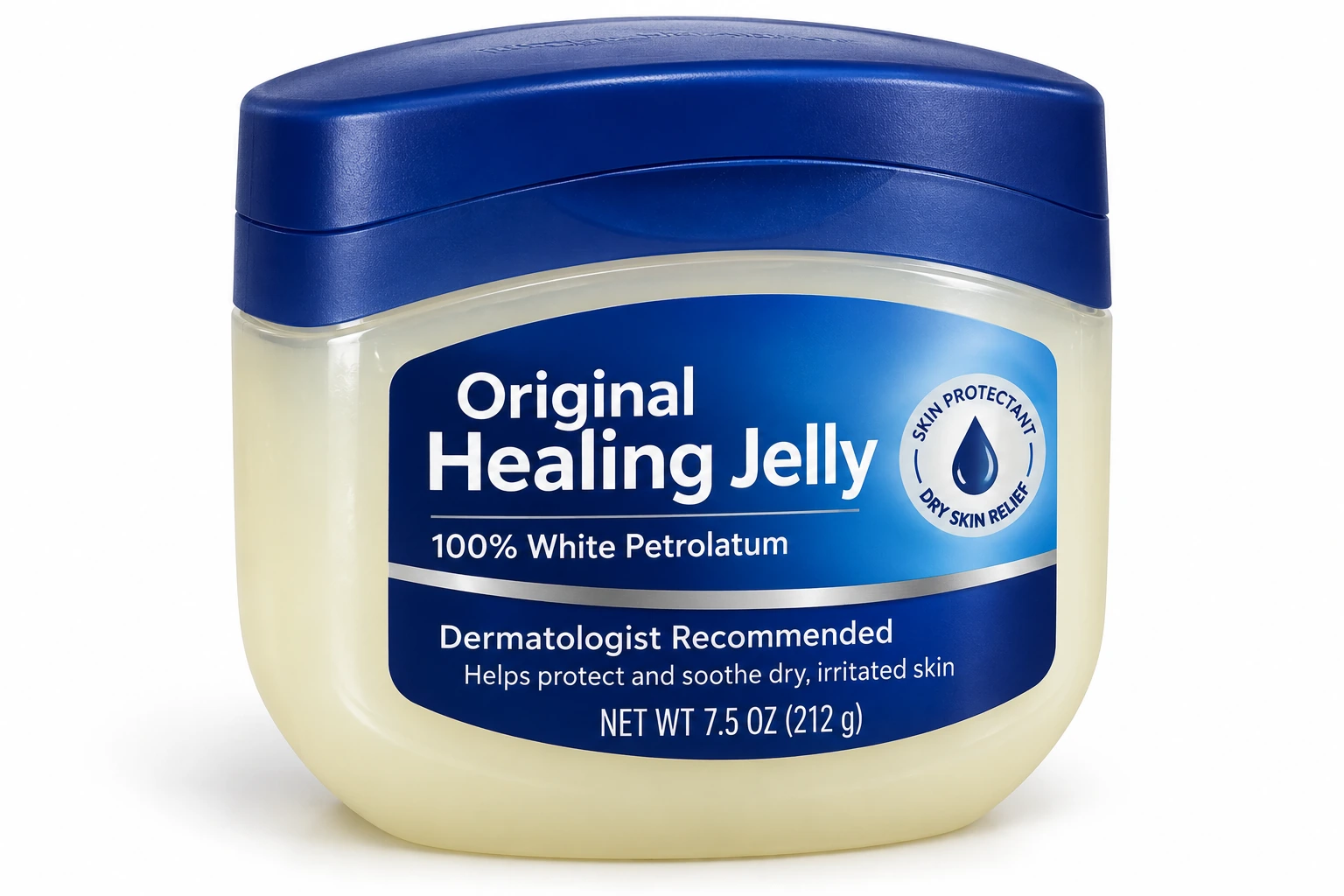
| Brand | Vaseline |
| Product Line | Healing Jelly Original |
| Manufacturer | Unilever |
| Product Type | Skin protectant |
| Active Ingredient | White Petrolatum USP 100% |
| Purification | Triple-purified petroleum jelly |
| Texture | Thick, semi-solid jelly |
| Fragrance | Fragrance-free |
| Package | 7.5 oz (212 g) jar |
| Primary Purpose | Protects dry, chapped and cracked skin |
| Application Frequency | As needed |
| Prescription Status | Over-the-counter (OTC) |
Original Petroleum Jelly for Dry and Damaged Skin
Vaseline Healing Jelly Original is a 100% white petrolatum skin protectant that helps relieve dry, cracked skin and chapped lips. Its thick, fragrance-free formula creates a protective layer that slows moisture loss from the skin.
It can also temporarily protect minor cuts, scrapes and burns while the skin heals naturally.
Pharmacy Availability
Find pharmacy locations and contact information through the Sweetwater Medical Center pharmacy finder.
How Vaseline Healing Jelly Protects the Skin
Healthy skin has a natural barrier that helps retain water. Cold weather, frequent handwashing, friction and exposure to dry air can weaken that barrier, leaving the surface rough or uncomfortable.
Petrolatum works by forming an occlusive layer over the skin. Instead of supplying water directly, it reduces the amount that escapes through the surface. This makes it particularly useful after washing or bathing, when the skin still contains some moisture.
The original Vaseline formula is triple-purified and fragrance-free. Its dense consistency is different from a lightweight body lotion: a small quantity can leave a noticeable protective coating rather than absorbing completely.
Vaseline does not contain an antibiotic, antiseptic or corticosteroid. Its benefit comes from physical protection and moisture retention, not from killing bacteria or suppressing inflammation.
Common Uses for Vaseline Healing Jelly Original
Dry hands, rough elbows, cracked heels and chapped lips are among the areas where petroleum jelly is commonly applied. It is especially useful on skin that feels tight or develops small surface cracks from repeated exposure to water and cold conditions.
The manufacturer’s labeling also includes protection from the drying effects of wind and cold weather.
- Dry hands: helps retain moisture after washing, particularly around knuckles and cuticles.
- Chapped lips: creates a barrier against further moisture loss.
- Rough heels and elbows: softens the feel of dry, thickened skin with regular application.
- Minor skin injuries: provides temporary surface protection for small cuts, scrapes and burns after appropriate cleaning.
- Friction-prone areas: can reduce rubbing on intact skin where clothing or footwear causes chafing.
For dryness associated with eczema, plain petroleum jelly may help support the skin barrier. It does not, however, replace medication when active inflammation requires treatment.
How to Apply Petroleum Jelly
Vaseline’s Drug Facts directions are simple: apply as needed. There is no fixed daily schedule or required treatment course for ordinary dry skin.
Start with clean skin. Scoop out a small amount using clean fingers and spread it gently over the area needing protection. For very dry hands or feet, applying the jelly after washing can help retain moisture that would otherwise evaporate.
A thin, even coating is usually sufficient for routine dryness. More jelly may be appropriate for heavily cracked areas, but excessive amounts can feel slippery and transfer onto fabric.
Using Vaseline on Minor Cuts and Scrapes
Rinse a superficial injury with clean running water and remove any visible dirt before applying a small amount of petroleum jelly. A suitable sterile bandage may then be used if the area needs protection from clothing or contact.
Do not place petroleum jelly over dirt or debris that has not been removed. The product helps maintain a protective environment; it does not clean a wound or treat an established infection.
When Vaseline Healing Jelly Should Not Be Used
The Drug Facts label advises against using Vaseline on deep or puncture wounds, animal bites and serious burns. These injuries may require cleaning, evaluation or treatment beyond a basic skin protectant.
A wound that becomes increasingly painful, swollen or warm, or develops spreading redness or drainage, should be assessed for infection. Covering the area with more petroleum jelly will not address the underlying problem.
Vaseline is intended for external use. Avoid contact with the eyes, and do not deliberately introduce the product into the nose or other body cavities.
If a skin condition lasts longer than seven days, seek medical advice as directed by the label. Keep the jar out of children’s reach; if swallowed, obtain medical help or contact Poison Control immediately.
Storage and Jar Hygiene
Keep the jar closed between applications and store it in a clean place away from excessive heat. Petroleum jelly may soften as temperatures rise, but this does not mean water or other ingredients should be mixed into the container.
Use clean, dry fingers or a clean applicator to remove the amount needed. Avoid returning unused jelly to the jar, especially after it has touched damaged skin.
The product’s oily texture can leave marks on clothing and bedding. Allow a small amount of time after application before dressing, or protect the treated area with a suitable covering when appropriate.