
Lotrimin AF Athlete’s Foot Antifungal Cream, Clotrimazole 1%
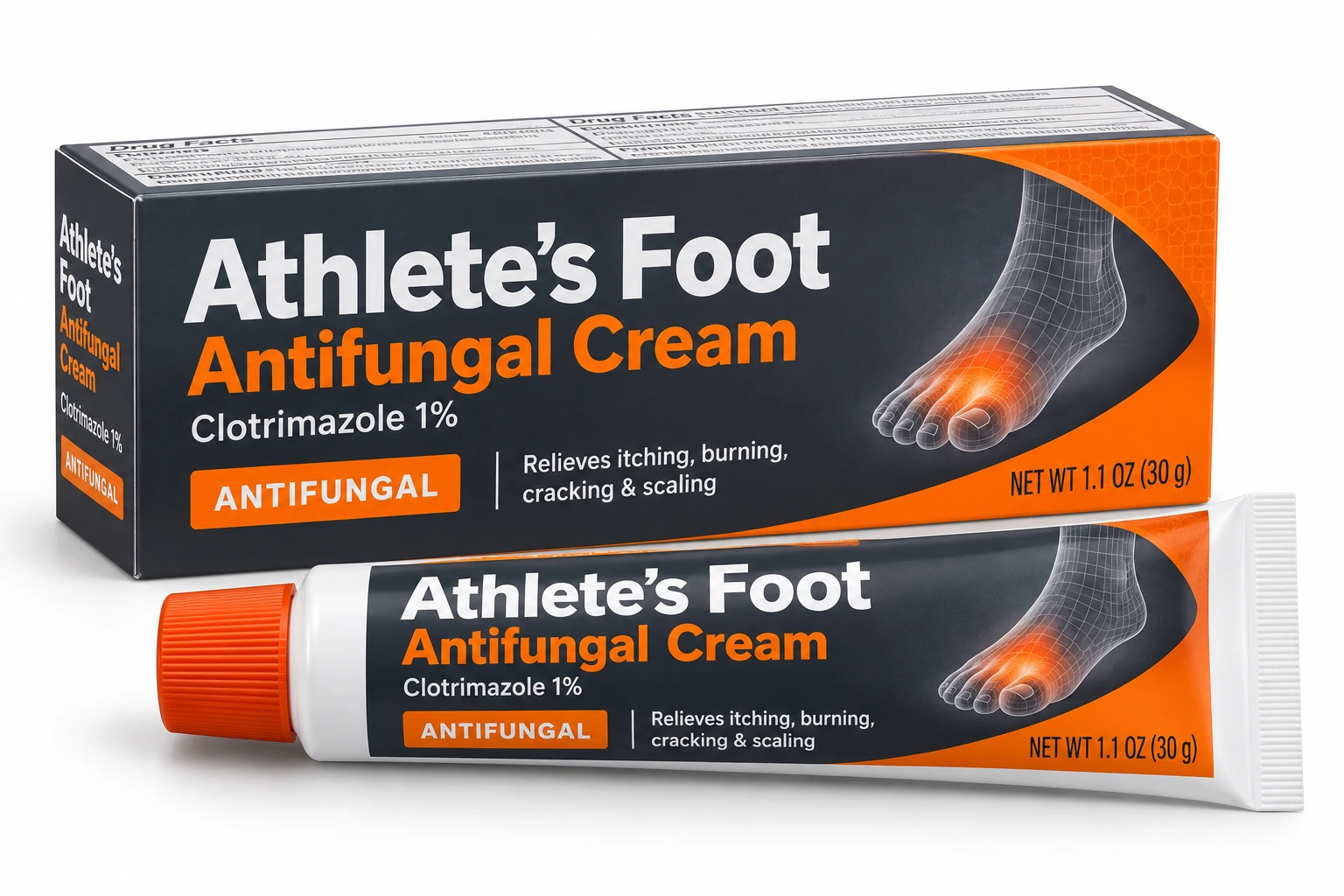
| Brand | Lotrimin AF |
| Product Type | Topical antifungal cream |
| Active Ingredient | Clotrimazole 1% |
| Drug Class | Imidazole antifungal |
| Dosage Form | Non-greasy topical cream |
| Package | 0.42 oz (12 g) tube |
| Indications | Athlete’s foot, ringworm and jock itch |
| Application | Twice daily, morning and night |
| Treatment Duration | 4 weeks for athlete’s foot or ringworm; 2 weeks for jock itch |
| Age Guidance | Ages 2 and older; under 2 only as directed by a doctor |
| Prescription Status | Over-the-counter (OTC) |
| Storage | 68°F to 77°F (20°C to 25°C) |
Clotrimazole 1% Cream for Athlete’s Foot
Lotrimin AF Athlete’s Foot Antifungal Cream treats common fungal infections of the skin with clotrimazole 1%. It helps relieve the itching, burning, cracking and scaling associated with athlete’s foot while treating the fungus responsible for the infection.
The cream is odorless, non-greasy and formulated for application to affected skin, including the spaces between the toes.
Pharmacy Availability
Find pharmacy locations and contact information through the Sweetwater Medical Center pharmacy finder.
What Lotrimin AF Treats
Athlete’s foot, medically known as tinea pedis, is a fungal infection that frequently develops between the toes. The affected skin may itch, peel, crack or appear whitish and softened by moisture. Some people also develop dry, scaly areas along the soles or sides of the feet.
Lotrimin AF contains an antifungal medication rather than a corticosteroid or a simple moisturizing ingredient. This distinction matters because relieving an itch alone does not eliminate the fungus causing it.
Its clotrimazole formula is also labeled for two other common superficial fungal infections:
- Ringworm (tinea corporis): a fungal skin infection that often produces a scaly, expanding patch with a more noticeable border.
- Jock itch (tinea cruris): an itchy fungal rash affecting the groin and adjacent skin.
Not every red or peeling rash is fungal. Eczema, contact dermatitis, psoriasis and some bacterial conditions can resemble these infections. A rash that looks unusual or continues to spread despite appropriate treatment needs a more specific diagnosis.
How Clotrimazole Works Against Skin Fungus
Clotrimazole belongs to the imidazole family of antifungal medications. It interferes with the production of ergosterol, an important component of fungal cell membranes. Without normal membrane function, susceptible fungi have difficulty growing and surviving.
The cream acts where it is applied. It is not intended to treat fungal infections deep inside the body.
Lotrimin AF also has practical features that distinguish it from antifungal powders and sprays. Its smooth consistency allows targeted application to a visible patch of infected skin, and the manufacturer describes the formula as non-staining and non-greasy.
For patients with dry, flaky areas between the toes, a cream may be easier to distribute evenly than a powder. The choice of dosage form, however, does not change the need to keep the feet clean and dry between applications.
How to Apply Lotrimin AF Antifungal Cream
Apply a thin layer twice daily, once in the morning and once at night. Consistent treatment is important because itching can improve before the fungal infection has fully cleared.
Wash and Dry the Area
Clean the affected skin and dry it thoroughly, especially between the toes. Avoid aggressive scrubbing or pulling at peeling skin.
Apply a Thin Layer
Spread a small amount of cream across the affected area. Rub it in gently and wash your hands afterward unless your hands are being treated.
Continue for the Labeled Duration
Use the cream on the recommended schedule, even if visible symptoms begin to improve. Do not stop treatment early simply because itching has subsided.
A thick coating is unnecessary. Applying more medication than directed will not reliably shorten the treatment period and may increase irritation.
How Long Does Lotrimin AF Take to Work?
The recommended treatment period depends on which fungal infection is being treated. The Drug Facts label distinguishes between infections of the feet, body and groin rather than prescribing one duration for every rash.
| Condition | Application Frequency | Recommended Duration |
|---|---|---|
| Athlete’s foot | Twice daily | 4 weeks |
| Ringworm | Twice daily | 4 weeks |
| Jock itch | Twice daily | 2 weeks |
Some relief from itching or burning may occur before the full course is finished. The disappearance of symptoms does not necessarily mean all fungal activity has stopped.
If athlete’s foot or ringworm has not improved within four weeks, or jock itch has not improved within two weeks, stop self-treatment and ask a doctor. Persistent symptoms may indicate a different diagnosis or the need for another treatment.
Foot Care During Antifungal Treatment
Fungi responsible for athlete’s foot thrive in warm, damp environments. Tight shoes, sweaty socks and prolonged moisture between the toes can create conditions that favor fungal growth.
Simple changes in daily footwear habits can support treatment:
- Dry carefully between the toes after bathing.
- Choose well-fitting shoes that allow ventilation.
- Change socks at least once daily, and more often if they become damp.
- Allow shoes to dry between uses whenever practical.
- Wear shower sandals in communal locker rooms and public showers.
Shared towels and footwear can also spread fungal infections. Keep personal items separate while an infection is active.
These measures help reduce repeated exposure to moisture and contaminated surfaces, but they are not substitutes for the medication’s prescribed course.
Warnings and Treatment Limitations
Lotrimin AF is for external use only. Avoid contact with the eyes, and do not apply the cream inside the mouth or other body cavities.
The product should not be used for children younger than 2 years unless directed by a doctor. Older children should be supervised during application.
Stop use if irritation develops. Burning, unusual redness or a worsening rash after application may indicate sensitivity to the product rather than the expected course of healing.
Not for Scalp or Nail Infections
Lotrimin AF cream is not effective for fungal infections of the scalp or nails. These infections involve structures that topical clotrimazole cream generally cannot treat adequately.
Thickened, discolored or crumbling toenails may require assessment for nail fungus. Likewise, a scaly scalp with patchy hair loss should not be treated with this cream alone.
Keep the product out of children’s reach. If swallowed, obtain medical help or contact a Poison Control Center immediately.
Storage and Tube Handling
Store Lotrimin AF between 68°F and 77°F (20°C to 25°C). Keep the cap securely closed and protect the tube from excessive heat.
Do not press the applicator opening against an infected area. Dispense the cream onto a clean fingertip to help avoid contaminating the contents, and avoid sharing the tube between people.
Check the expiration date before use and discard expired medication according to local disposal guidance.