
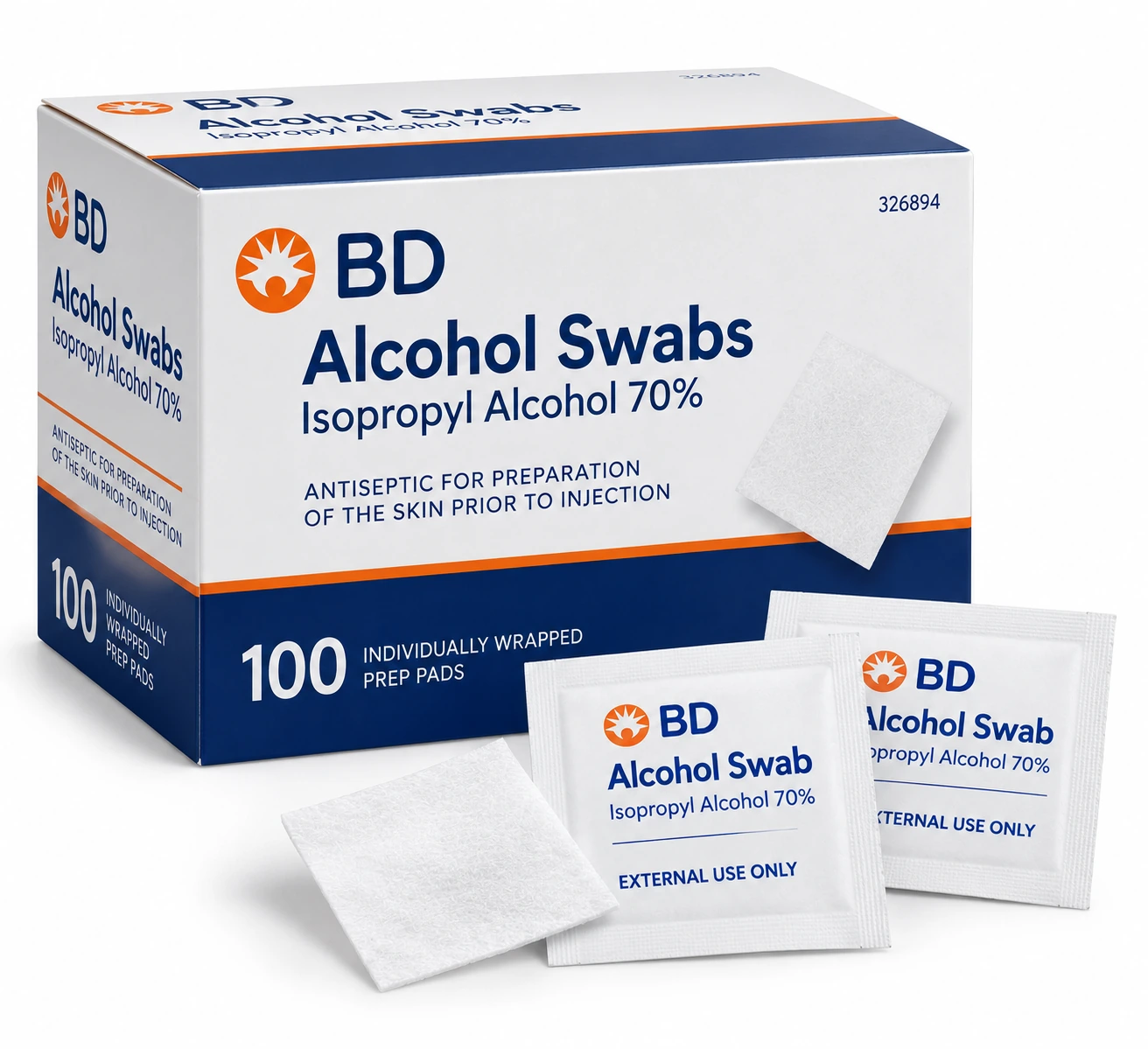
| Brand | BD |
| Product Type | Pre-moistened antiseptic alcohol swabs |
| Active Ingredient | Isopropyl alcohol 70% (v/v) |
| Primary Use | Skin preparation before injections |
| Swab Material | Soft, absorbent pad |
| Packaging | Individually foil-wrapped swabs |
| Wrapper Design | Four-layer protective seal |
| Package Quantity | 100 swabs |
| Application | External use on intact skin |
| Usage | Single use |
| Prescription Status | Over-the-counter antiseptic product |
Alcohol Swabs for Injection Site Preparation
BD Alcohol Swabs contain 70% isopropyl alcohol for antiseptic preparation of the skin before injections and finger-stick testing. Each pre-moistened pad comes in an individual foil wrapper that helps prevent drying before use.
The 100-count box provides a convenient supply for regular injection routines and home blood glucose monitoring.
Pharmacy Availability
Find offline pharmacy locations through the Sweetwater Medical Center pharmacy finder.
Preparing Skin Before an Injection
Alcohol swabs are commonly kept alongside insulin syringes, pen needles and blood glucose testing supplies. They provide a ready-to-use antiseptic when skin preparation with alcohol is appropriate.
BD uses a 70% isopropyl alcohol formula that acts against many microorganisms on the skin. Before an injection, the swab is wiped across the intended site to reduce surface bacteria. The alcohol should then evaporate completely before the needle enters the skin.
A swab is not a replacement for handwashing or clean injection equipment.
Typical applications include:
- Preparing intact skin before insulin injections.
- Cleaning the intended site before other prescribed subcutaneous injections.
- Skin preparation before finger-stick blood glucose testing when required by the testing instructions.
For routine diabetes care, follow the instructions provided with the injection or testing device. Alcohol preparation may not be required in every setting, particularly when the skin is already clean and dry.
Individually Wrapped, Pre-Moistened Pads
The individual foil packets distinguish BD Alcohol Swabs from cotton pads that require a separate bottle of rubbing alcohol. There is no need to measure or pour liquid before preparing the skin.
Each packet has a four-layer wrapper designed to retain moisture and reduce leakage. This helps keep the pad ready for use until its seal is opened.
Soft Pad Construction
BD describes its alcohol swabs as thicker and softer than conventional alternatives. The material holds enough solution for a small skin preparation area without the handling required for loose cotton.
The pad is designed for a single preparation, not repeated cleaning of different body sites.
Why the 70% Formula Matters
Isopropyl alcohol disrupts microorganisms through effects on their proteins and cell membranes. In a 70% solution, water helps support this antimicrobial action rather than simply making the alcohol weaker.
Once applied, the liquid evaporates and leaves the prepared skin dry. BD Alcohol Swabs do not provide a lasting protective coating, so the injection site should not be touched again after preparation.
How to Use BD Alcohol Swabs
Use a fresh packet for each injection-site preparation. Opening several packets in advance can allow their contents to dry out or become contaminated.
Wash Your Hands
Wash and dry your hands before preparing an injection or blood glucose test. Identify the intended site and make sure the skin is free from visible dirt.
Open a Fresh Packet
Tear open the foil wrapper immediately before use. Remove the pad without placing it on a countertop or another potentially contaminated surface.
Wipe the Injection Site
Wipe the intended area of intact skin thoroughly with the alcohol pad. Avoid touching the cleaned area afterward.
Allow the Skin to Dry
Let the alcohol evaporate naturally before proceeding with the injection or finger stick. Do not blow on the skin or wipe away the remaining moisture. Discard the used pad.
If a packet is already open, dry or damaged, use another swab. Do not re-moisten an old pad with bottled alcohol.
Alcohol Swabs and Blood Glucose Testing
Blood glucose testing requires particular attention to hand cleanliness. Residue from food or other substances on the fingers can affect some meter readings, which is why washing and thoroughly drying the hands is generally preferred before testing.
When an alcohol swab is used before a finger stick, the site must be completely dry. Residual moisture may interfere with obtaining a clean blood sample, while puncturing damp skin may cause unnecessary stinging.
BD Alcohol Swabs are intended for skin preparation. They should not be used to clean a glucose meter, test strips or reusable medical equipment unless the equipment manufacturer’s instructions specifically allow alcohol swabs.
Important Safety Precautions
BD Alcohol Swabs are for external use only. The solution is flammable, so keep opened packets and freshly treated skin away from flames, sparks and other ignition sources until the alcohol has dried.
Do not apply the swabs inside the eyes, mouth or ears, or use them to clean deep wounds. Alcohol can cause significant discomfort and tissue irritation when applied to broken or inflamed skin.
Stop using the product if persistent redness, burning or an allergic skin reaction develops.
Keep unopened packets away from children. If the contents are swallowed, obtain medical assistance or contact Poison Control at 1-800-222-1222.
Storage and Handling
Store the box in a dry location away from excessive heat and direct sunlight. Keep the foil packets sealed until needed, and avoid storing them near open flames or other ignition sources.
Individual wrappers make it convenient to carry a small supply with injection materials during travel. Inspect the packet before opening it; a torn or leaking wrapper may no longer protect the alcohol pad adequately.
Used swabs can be discarded after skin preparation. Needles and lancets, however, must go into an appropriate sharps disposal container rather than ordinary household trash.