
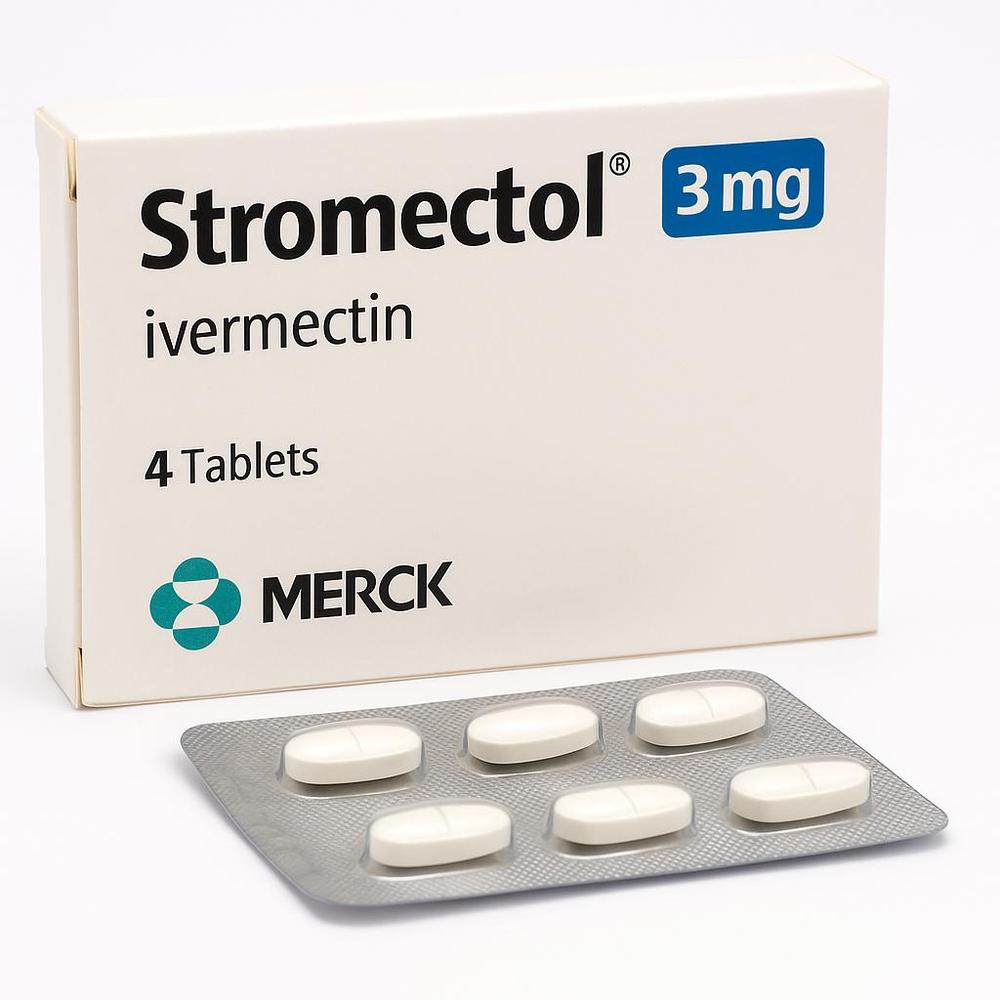
Active ingredient: Ivermectin
Drug class: Anthelmintic (antiparasitic medicine)
Dosage form: Oral tablets
U.S. approved tablet strength: 3 mg
Prescription status: Prescription required
Approved indications: Intestinal strongyloidiasis and onchocerciasis
About Stromectol
Stromectol contains ivermectin, a prescription antiparasitic medicine used against specific infections caused by roundworms. In the United States, its approved indications are intestinal strongyloidiasis and onchocerciasis, two diseases that may have very different consequences if left untreated.
The medication works by disrupting nerve and muscle activity in susceptible parasites. The effect depends on the organism involved: ivermectin can help eliminate an intestinal Strongyloides infection, but in onchocerciasis it primarily acts against immature worms rather than the adults that continue producing them. This difference explains why some patients need only a short treatment course while others require repeated treatment over a much longer period.
Stromectol is supplied as 3 mg tablets in the U.S. market. A prescribed dose may involve more than one tablet because the amount of ivermectin is calculated using body weight.
Stromectol is not an antibiotic or a treatment for every type of parasite. A diagnosis is necessary to determine whether ivermectin is appropriate.
What Is Stromectol and How Does Ivermectin Work?
Stromectol is the brand-name formulation of ivermectin, an antiparasitic medicine derived from the avermectin family of compounds. It has been used in the treatment of certain parasitic diseases for decades, although the infections for which it is prescribed vary by country and clinical circumstances.
Its mechanism of action is different from that of antibiotics used against bacteria. Ivermectin interacts with glutamate-gated chloride channels found in the nerve and muscle cells of many invertebrates. This increases chloride ion movement across cell membranes, interferes with normal signaling and produces paralysis or death in susceptible parasites. Mammals do not have the same glutamate-gated chloride channels, which contributes to the drug’s selective action at recommended human doses.
That selectivity does not make ivermectin harmless at any dose. Neurological toxicity has been reported, including in some patients receiving prescribed treatment. The risk also changes when someone has certain accompanying parasitic infections, most notably loiasis.
Another limitation is that ivermectin does not affect every developmental stage of every parasite. In onchocerciasis, for example, it substantially reduces the number of microfilariae, the immature worms responsible for much of the tissue damage, but it does not reliably destroy adult Onchocerca volvulus. Treatment therefore controls the infection rather than immediately eliminating its entire life cycle.
What Infections Does Stromectol Treat?
The FDA-approved uses of oral Stromectol are intestinal strongyloidiasis and onchocerciasis. Both are caused by nematodes, or roundworms, but the parasites enter the body differently, affect different tissues and require different methods of follow-up.
Strongyloidiasis: An Intestinal Parasitic Infection
Strongyloidiasis is caused by Strongyloides stercoralis. People usually become infected when larvae living in contaminated soil penetrate the skin, often through bare feet. The larvae migrate through the body before reaching the digestive tract, where the parasite can establish a persistent infection.
The symptoms are not always easy to recognize. Some people experience abdominal discomfort, intermittent diarrhea, nausea or an itchy rash. Others feel entirely well. Unlike many intestinal worms, Strongyloides can complete part of its life cycle within the same human host through a process called autoinfection. This allows an untreated infection to remain present for years, sometimes decades, even without another exposure to contaminated soil.
The greatest concern arises when the immune system is suppressed. A person with an unrecognized Strongyloides infection who begins corticosteroid treatment, for example, may develop hyperinfection syndrome. Parasite numbers can increase dramatically, larvae may spread beyond their usual sites, and severe bacterial infections or organ complications can occur. This situation is potentially life-threatening.
For uncomplicated intestinal strongyloidiasis, ivermectin is a first-line treatment recommended by the CDC. Its purpose is to clear the infection, not merely relieve the diarrhea or skin symptoms. Patients with persistent infection or impaired immunity may need additional therapy and closer monitoring.
Onchocerciasis: River Blindness
Onchocerciasis, commonly known as river blindness, is caused by Onchocerca volvulus. The infection is transmitted through bites from infected blackflies, which breed near fast-flowing rivers and streams in endemic areas. Most cases occur in sub-Saharan Africa, although the geographic distribution of the disease has changed as a result of control programs.
Adult worms live in tissues beneath the skin and can survive for many years. They produce microfilariae that migrate through the skin and sometimes the eyes. The body’s inflammatory response to these larvae can cause persistent itching, skin thickening, changes in pigmentation and, in severe cases, progressive visual impairment.
Ivermectin reduces the microfilarial burden and helps limit the damage associated with these immature parasites. It does not reliably kill adult worms, so a single treatment cannot be assumed to cure the infection. Repeated doses may be required over several years while the adult parasites remain alive.
CDC guidance also describes doxycycline as a treatment that can affect adult worms indirectly by targeting Wolbachia, bacteria on which the parasites depend. This is a separate clinical approach that may be considered by a specialist; it is not a reason to add an antibiotic to ivermectin without a specific treatment plan.
Stromectol and Generic Ivermectin: What Is the Difference?
Stromectol is a trade name. Ivermectin is the active pharmaceutical ingredient. An FDA-approved generic ivermectin tablet must meet the applicable requirements for equivalence to its reference medication, including the relevant standards for active ingredient, strength, dosage form and bioequivalence.
The differences patients notice are often physical rather than pharmacological. A generic tablet may have another shape, imprint or color, and it can contain different inactive ingredients. Such differences are permitted within regulatory requirements, although individual allergies or sensitivities to excipients may occasionally matter.
In the United States, the branded Stromectol tablet contains 3 mg of ivermectin. FDA-approved oral generic products are also documented in the 3 mg strength. Tablets advertised internationally as ivermectin 6 mg or 12 mg should not automatically be regarded as FDA-approved U.S. products. Approval is specific to the manufacturer and finished formulation, not simply to the ingredient name.
This distinction becomes even more important when comparing oral tablets with ivermectin creams, lotions or veterinary preparations. They are not interchangeable. The concentration, route of administration and intended use can differ substantially.
Stromectol Dosage and Instructions for Use
Stromectol does not have one standard dose suitable for every parasitic infection. For its approved indications, the amount is calculated according to body weight, while the treatment interval depends on the organism being treated. The numbers printed on an ivermectin tablet describe the amount of medicine in that tablet, not the complete dose required for a particular patient.
Dosage for Strongyloidiasis and Onchocerciasis
For uncomplicated intestinal strongyloidiasis, the U.S. Stromectol label recommends a single oral dose designed to provide approximately 200 micrograms per kilogram of body weight. CDC clinical guidance describes ivermectin at the same weight-based amount for one or two days. These recommendations are not contradictory: clinical practice may include an additional day of treatment depending on the circumstances.
Onchocerciasis is treated differently. The labeled oral dose is approximately 150 micrograms per kilogram. Treatment is generally repeated when necessary because the adult worms survive the initial exposure. CDC clinical guidance describes repeat treatment every six months, while the Stromectol label discusses intervals that vary according to the treatment setting and individual circumstances.
These are prescribing reference doses, not directions for self-treatment. Weight is only one consideration. A clinician must also establish the diagnosis, assess possible co-infections and decide whether routine treatment is appropriate or specialist care is required.
Patients with disseminated strongyloidiasis or hyperinfection syndrome need a different approach. The CDC recommends prolonged treatment until stool or sputum examinations remain negative for two weeks, along with management of immunosuppression where possible. Such treatment belongs in a closely supervised medical setting.
Taking Stromectol Correctly
The official prescribing instructions for Stromectol recommend taking the tablets orally on an empty stomach with water. For patients receiving ivermectin for one of its FDA-approved indications, this is the administration method described in the product label.
A common mistake is assuming that more tablets will produce a faster response. They will not necessarily improve parasite clearance and can cause dangerous toxicity. Patients should not repeat a dose because itching, digestive symptoms or other complaints remain present during the days after treatment.
- Take the prescribed number of tablets according to the instructions for the diagnosed infection.
- Do not change the dose based on an online weight calculator or another patient’s prescription.
- If a scheduled dose is missed, contact the prescriber rather than doubling the next dose.
- Report any new medication or supplement started before treatment.
- Attend recommended follow-up examinations, even when symptoms have improved.
Administration advice can differ for an off-label indication. For scabies, for instance, CDC guidance recommends taking oral ivermectin with food, unlike the empty-stomach instructions in the Stromectol label for its approved uses. The appropriate directions are those given for the particular condition being treated.
Stromectol Side Effects and Possible Reactions
Most patients receiving an appropriate dose do not develop severe medication-related complications. However, the side-effect profile is influenced by the infection itself. A reaction following treatment for onchocerciasis may result partly from the immune system responding to dying microfilariae rather than from a direct toxic effect of ivermectin.
Common Side Effects
Reported reactions during treatment of strongyloidiasis include dizziness, nausea, diarrhea, abdominal discomfort, reduced appetite, fatigue and itching. Vomiting, constipation or skin rash can also occur. The frequency of individual reactions varies, and many were uncommon in the clinical studies used for the original prescribing information.
Not every stomach complaint following a dose is caused by ivermectin. Intestinal strongyloidiasis itself can produce diarrhea and abdominal pain, making it difficult to separate symptoms of the illness from medication effects during the first days after treatment.
In patients with onchocerciasis, swelling, joint pain, itching and fever may be more prominent. Such symptoms should be interpreted in the context of the infection and the patient’s clinical condition rather than assumed to be harmless.
Mazzotti Reactions and Serious Adverse Effects
The term Mazzotti reaction describes an inflammatory response associated with treatment of filarial infections, particularly onchocerciasis. As microfilariae die, the immune response can produce itching, skin eruptions, enlarged or tender lymph nodes, fever, joint discomfort and swelling. In more severe cases, patients may experience a marked fall in blood pressure or reactions involving the eyes.
The reaction should not be confused with an ordinary mild side effect. Significant facial swelling, fainting or worsening eye symptoms need prompt medical evaluation, especially in someone receiving treatment for an infection that already affects the skin or eyes.
Rare but serious neurological reactions have also been reported with ivermectin, including confusion, abnormal drowsiness, impaired coordination, seizures and altered consciousness. Severe skin reactions such as Stevens-Johnson syndrome and toxic epidermal necrolysis appear in post-marketing safety reports.
Seek emergency medical care for seizures, loss of consciousness, severe breathing difficulty or a widespread blistering or peeling rash. New confusion, major walking difficulties or sudden visual changes also require urgent assessment.
Who Should Avoid Stromectol or Use It With Special Precautions?
Stromectol is contraindicated in patients with known hypersensitivity to ivermectin or another component of the product. Other situations are more complex: the medication may be unsuitable, or treatment may require specialist evaluation rather than routine prescribing.
One of the most significant risks concerns people who have been exposed to Loa loa, a filarial parasite found in parts of West and Central Africa. Individuals with high levels of Loa loa microfilariae can develop severe encephalopathy after ivermectin treatment. This complication may be fatal. Previous residence in or travel to an endemic region should therefore be discussed before treatment, particularly when onchocerciasis is suspected. The absence of obvious loiasis symptoms does not necessarily exclude infection.
Pregnancy also requires special consideration. Adequate controlled studies in pregnant women are lacking, and the U.S. Stromectol label advises against its use during pregnancy because safety has not been established. Small amounts of ivermectin pass into breast milk. Treatment during breastfeeding requires an assessment of the risks of postponing therapy and the possible effects on the infant.
Safety and effectiveness have not been established in children weighing less than 15 kg. For older adults, treatment decisions should account for other medical conditions and medicines, particularly when liver, kidney or cardiovascular function is impaired.
Patients taking warfarin should tell their prescriber before using ivermectin. Rare reports describe increased international normalized ratio (INR) values during concurrent treatment. A complete medication history is preferable to checking only for one interaction because supplements, other prescribed therapies and underlying illnesses can affect the safety assessment.
People with a weakened immune system deserve separate attention. An uncomplicated Strongyloides infection can become dangerous under immunosuppression, and standard treatment may not always clear persistent infection. The clinician may need to investigate further, extend treatment or arrange repeated testing.
Can Ivermectin Treat Scabies or COVID-19?
Not every medical use of ivermectin appears among the FDA-approved indications for Stromectol tablets. Physicians may prescribe approved medicines outside their labeled indications when the evidence and individual circumstances justify doing so. That is different from assuming a medication is effective for an unrelated illness.
Scabies is caused by mites that burrow into the skin. Oral ivermectin is used in clinical practice for some patients with scabies, even though the oral formulation is not FDA-approved specifically for this condition. CDC guidance recognizes oral ivermectin as a treatment option and describes repeated administration for classic scabies. The reason for repeating treatment is partly that ivermectin has limited activity against mite eggs. More complicated cases, including crusted scabies, may require combined oral and topical treatment under medical supervision.
For COVID-19, the situation is different. The FDA has not approved or authorized ivermectin to prevent or treat the disease. Available clinical trial evidence reviewed by the agency has not demonstrated effectiveness for this purpose. Results from laboratory experiments cannot be treated as proof that ivermectin improves outcomes in infected patients.
Veterinary ivermectin must not be used as an alternative to human medication. Products designed for horses, cattle or other animals may contain concentrations and ingredients that are unsuitable for human use. The FDA has documented hospitalizations and serious adverse events following attempts to self-medicate with animal formulations.
Follow-Up After Stromectol Treatment
Patients sometimes expect the disappearance of symptoms to mean that treatment is complete. With parasitic infections, that conclusion can be premature.
Strongyloidiasis is a particular example. An infected person may have few symptoms even before treatment, and temporary improvement in abdominal discomfort or diarrhea does not prove that the parasite has been eliminated. The Stromectol prescribing information calls for follow-up stool examinations to verify clearance. Because larvae can be present in small numbers and may not appear in every sample, repeated testing can be necessary. The prescribing information discusses at least three stool examinations over the first three months following treatment, while CDC guidance specifically recommends examinations two to four weeks after treatment when the initial stool test was positive and symptoms persist.
If larvae are still detected, another course of treatment may be required. Patients receiving immunosuppressive therapy or those with severe infection may need a different monitoring schedule.
Follow-up for onchocerciasis is usually much longer. The adult worms continue to survive and can produce new microfilariae after the effects of treatment diminish. Repeated ivermectin treatment helps suppress the immature parasites and reduce the risk of further skin and eye damage, but it does not immediately eliminate the adult infection.
Changes in vision, severe itching, painful swelling or a return of previously controlled symptoms should be reported to the treating clinician. Decisions about retreatment are based on clinical assessment and the specific infection, not simply on how much time has passed since the last tablet.
Medical Disclaimer
This article provides general educational information about Stromectol (ivermectin). It is not a substitute for professional diagnosis or an individualized treatment plan. Ivermectin should be used only when prescribed for an appropriate medical indication, and patients should not adjust doses or repeat treatment without medical guidance.
Severe allergic reactions, neurological symptoms, loss of consciousness or other potentially serious complications require urgent medical attention.
Frequently Asked Questions About Stromectol
Is Stromectol the same as ivermectin?
What infections does Stromectol treat?
Why is Stromectol dosage based on body weight?
Can ivermectin be used to treat scabies?
When should I contact a doctor after taking Stromectol?
Kari Quickenden, Pharm.D., RPh.
Resources
DailyMed – Stromectol (Ivermectin) Official Prescribing Information, Revised September 2024
CDC – Clinical Care of Strongyloides
CDC – Clinical Treatment of Onchocerciasis
Article Update: October 23, 2026
This article was editorially updated on October 23, 2026. Medical information was checked against U.S. prescribing information and CDC guidance. This editorial update does not represent a new pharmacist review.
2026 prescribing information update: A U.S. generic ivermectin product from Ajanta Pharma USA Inc. was listed in DailyMed with an updated label dated April 9, 2026. The product is registered under ANDA 218509 and contains 3 mg of ivermectin per tablet. Its documented indications remain intestinal strongyloidiasis and onchocerciasis. The listing confirms an additional FDA-approved generic product, not a new medical use for ivermectin.
Source: DailyMed – Ivermectin Tablets, Ajanta Pharma USA Inc., April 2026.