
Baclofen 5 mg, 10 mg and 20 mg Tablet Availability
Baclofen Product Details
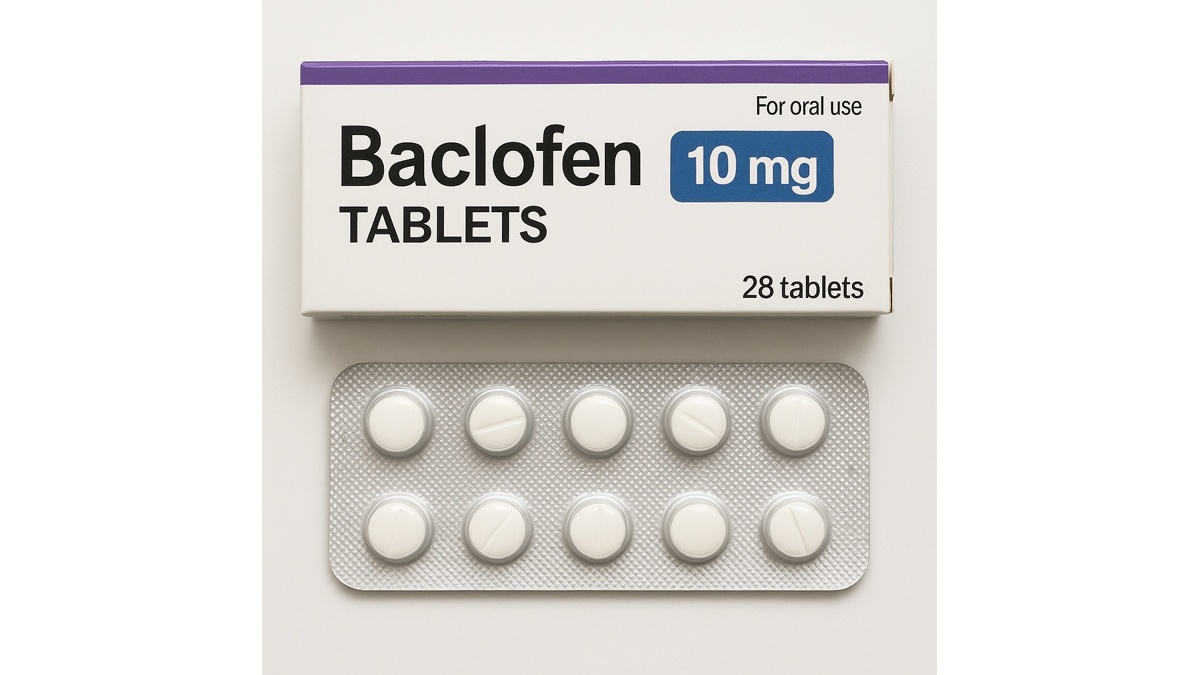
| Medication | Baclofen |
|---|---|
| Active ingredient | Baclofen |
| Product type | Generic prescription medication |
| Drug class | Antispastic muscle relaxant |
| Dosage form | Oral tablets |
| U.S. tablet strengths | 5 mg, 10 mg and 20 mg |
| Displayed priced strength | 10 mg |
| Manufacturer | Provided by the assigned dispensing pharmacy |
| Country of manufacture | Provided for the available finished product |
| NDC | Provided for the available finished product |
| FDA status | FDA-approved generic baclofen tablets are available in the United States; the assigned pharmacy identifies the exact finished product |
| Prescription status | Prescription required |
The image is illustrative and may not show the product ultimately dispensed. The assigned pharmacy provides the manufacturer, tablet imprint, inactive ingredients, package, country of manufacture and NDC for the available finished drug.
Approximate Baclofen 10 mg Price
The amount below is an approximate price for the displayed 10-tablet package. The assigned pharmacy confirms the actual manufacturer, available package and final charge before the order is completed.
| Strength | Package | Approximate price | Per tablet |
|---|---|---|---|
| Baclofen 10 mg | 10 tablets | Approximately $41.71 | Approximately $4.17 |
The final amount may differ according to the prescription, quantity authorized, available manufacturer, insurance or discount terms and the pharmacy assigned to process the request.
Patients without a current prescription may select a $20 online medical consultation with Cody R. Christensen, DO, where available. A consultation does not guarantee that baclofen will be prescribed. The clinician must first determine whether the patient’s muscle stiffness or spasms are caused by a condition for which baclofen is appropriate.
Prescription, medical and account information is handled according to the Sweetwater Medical Center Privacy Statement.
Baclofen is a prescription antispastic medication used primarily to relieve flexor spasms, muscle rigidity, clonus and associated pain in patients with multiple sclerosis. It may also be useful when reversible spasticity is caused by a spinal cord injury or another spinal cord disease.
Baclofen is intended for neurologic spasticity and is not the usual muscle relaxant for an uncomplicated pulled muscle, back strain or skeletal muscle spasm caused by a rheumatic condition. A clinician should establish why muscle tone is increased before selecting the medication.
Patients looking to buy baclofen online with a prescription can review the confirmed tablet strengths and the displayed price before submitting an order request. The order does not guarantee a particular manufacturer, tablet appearance or package size.
Sweetwater Medical Center displays approximate medication information and routes the order request. It does not independently validate the prescription, select the manufacturer, guarantee availability, dispense baclofen or ship the medication.
Baclofen Cost Without Insurance and Refill Considerations
The baclofen cost without insurance is influenced by the tablet strength, prescribed daily dose, number of tablets, manufacturer, pharmacy and available discount terms. Because baclofen is often titrated and taken in divided doses, the number of tablets needed for one month may be more important than the price of a single small package.
Patients comparing a baclofen 10 mg price should check whether the quotation covers 10, 30, 90 or another number of tablets. A lower package price does not necessarily produce a lower monthly treatment cost.
For an ongoing refill, the pharmacy must still have a valid prescription with remaining authorized refills. A previous baclofen prescription does not permit the pharmacy to continue dispensing indefinitely after the authorized supply has been used.
How Baclofen Orders Are Assigned to a Pharmacy
A patient requesting a new prescription or a baclofen refill online selects the prescribed product and submits the ZIP code and prescription information. The system then assigns an eligible pharmacy rather than asking the patient to select a dispensing pharmacy manually.
Select the Prescribed Tablet Strength
Select the baclofen strength and displayed quantity that correspond to the current prescription.
Provide ZIP Code and Prescription Details
Submit an existing prescription, request an eligible transfer or select an available medical consultation.
The System Assigns an Eligible Pharmacy
The request is routed according to the destination, pharmacy licensing, service coverage and ability to process the order.
The Pharmacy Reviews the Prescription
The assigned pharmacy validates the prescription, identifies the finished product, checks inventory and confirms the final price and available shipping options.
Neurologic Spasticity Treated With Baclofen
Spasticity is more than an occasional muscle cramp. It develops when injury or disease affecting the brain or spinal cord disrupts the signals that regulate muscle tone. Muscles may remain abnormally tight, contract without voluntary control or resist movement during walking, dressing, transfers and rehabilitation.
The current oral tablet labeling supports baclofen for signs and symptoms of spasticity associated with multiple sclerosis, particularly flexor spasms, clonus, rigidity and related pain. It may also be useful in patients with spinal cord injuries and other spinal cord diseases when reducing excessive tone is expected to improve remaining function.
Not every degree of muscle tightness should be removed. Some patients rely on increased tone to stand, maintain posture or transfer between surfaces. Treatment therefore aims for a practical balance: enough relaxation to reduce painful or disruptive spasms without taking away muscle tone that still supports useful movement.
Limits of Oral Baclofen Treatment
Baclofen tablets are not indicated for ordinary skeletal muscle spasm caused by rheumatic disorders. The labeling also states that efficacy has not been established for spasticity related to stroke, cerebral palsy or Parkinson’s disease and does not recommend oral tablets for those conditions.
Clinicians may sometimes use baclofen outside its FDA-approved labeling, but an off-label prescription is a separate medical decision. The existence of research involving hiccups, alcohol use disorder or other conditions does not mean that an online order should be approved for those purposes automatically.
Baclofen Dosage and Gradual Titration
Baclofen treatment usually begins at a low dose because drowsiness, dizziness and weakness are more noticeable when the dose is increased too quickly. The official tablet labeling provides a suggested adult titration beginning with 5 mg three times daily and increasing in stages according to response and tolerability.
The commonly referenced schedule progresses from 5 mg three times daily to 10 mg, 15 mg and then 20 mg three times daily, with each stage lasting approximately three days. This is a labeling framework rather than a personal dosing instruction. A prescriber may increase more slowly, stop at a lower dose or use another schedule when age, kidney function, side effects or functional needs make that safer.
The lowest dose that produces a useful response should be maintained. Although many patients respond within a total range of 40–80 mg per day, the labeled maximum is 80 mg daily, commonly divided as 20 mg four times daily.
Practical Administration
- Take each dose at the times written on the prescription.
- Do not increase the number of tablets because spasms worsen temporarily.
- Use caution with driving until the effect on alertness and coordination is known.
- Contact the prescriber if sedation or weakness interferes with walking, transfers or rehabilitation.
Why Baclofen Must Be Reduced Gradually
Baclofen should not be stopped abruptly after regular use unless a clinician directs an emergency change. Sudden withdrawal from oral treatment has been associated with hallucinations and seizures and can produce a rapid return of severe spasticity.
The risk is particularly serious with intrathecal baclofen delivered through an implanted pump, but oral therapy also requires a planned reduction. Running out of tablets is therefore not the same as completing an ordinary short course of medication. Patients approaching the end of an authorized supply should address the refill before doses are missed.
Kidney Function and Baclofen Accumulation
Baclofen is eliminated primarily through the kidneys in largely unchanged form. When kidney function is reduced, the medication can remain in the body longer and produce excessive sedation, confusion, weakness or other signs of toxicity.
This issue is especially important in advanced chronic kidney disease and dialysis. A standard dose tolerated by a person with normal renal function may be inappropriate for someone with substantial impairment. The prescriber may use a smaller dose, increase it more slowly or avoid baclofen depending on the severity of the kidney disease.
Common Effects and Functional Safety
Drowsiness is the most frequently reported adverse effect and can be substantial when treatment begins. Dizziness, weakness and fatigue are also common. These effects matter clinically because a medication intended to improve mobility can increase fall risk if it causes excessive sedation or removes too much useful muscle tone.
Effects Patients Commonly Notice
- Sleepiness or reduced alertness
- Dizziness or unsteady coordination
- Muscle weakness and fatigue
- Nausea or constipation
- Headache or confusion
Some effects improve after the body adjusts or when the dose is changed. Persistent weakness, repeated falls or an inability to perform usual transfers should be reported rather than accepted as the unavoidable price of reducing spasms.
Serious Reactions and Baclofen Overdose
Severe toxicity can depress the central nervous system. Overdose may cause profound drowsiness, loss of muscle tone, vomiting, seizures, slowed or impaired breathing and coma. The difference between expected sleepiness and dangerous toxicity is the patient’s ability to remain awake, breathe normally and respond appropriately.
Urgent evaluation is required for:
- Difficulty waking the patient or loss of consciousness
- Slow, shallow or labored breathing
- New seizure activity
- Severe confusion, hallucinations or marked agitation
- Sudden severe worsening after baclofen doses are missed
Suspected overdose should not be managed by waiting for the patient to sleep it off. Baclofen must also be stored securely because accidental ingestion can be dangerous.
Alcohol, Sedatives and Other Drug Interactions
Baclofen has central nervous system depressant effects. Alcohol, opioids, benzodiazepines, sleep medicines, sedating antihistamines and other muscle relaxants can add to drowsiness, poor coordination and respiratory suppression.
The practical concern is not limited to medicines taken every day. A new opioid after a procedure, an over-the-counter nighttime cold product or alcohol consumed during an evening dose can change how strongly baclofen affects alertness. Patients should review new sedating products with a pharmacist before combining them.
Blood-pressure medicines can contribute to dizziness or hypotension in susceptible patients. The prescriber should also know about seizure disorders, psychiatric symptoms and all prescription medicines, nonprescription products and supplements before adjusting the baclofen dose.
Pregnancy, Breastfeeding and Pediatric Use
Oral baclofen during pregnancy requires an individual assessment of benefit and risk. Neonatal withdrawal has been reported after maternal use throughout pregnancy, including increased muscle tone, tremor, jitteriness and seizures after delivery. A pregnant patient should not stop treatment suddenly but should contact the prescriber to plan management.
The current tablet labeling states that safety and effectiveness have not been established in children younger than 12 years. Breastfeeding decisions also require clinical review because information about infant exposure and risk is limited.
Oral Tablets, Liquid Baclofen and Intrathecal Therapy
This page concerns oral baclofen tablets. Other formulations serve different clinical needs and should not be treated as interchangeable versions of the same order.
- Oral tablets are used for adjustable outpatient dosing and are available in confirmed U.S. strengths of 5 mg, 10 mg and 20 mg.
- Oral liquid products may be used when swallowing tablets is difficult or a different dosing format is required.
- Intrathecal baclofen is delivered into spinal fluid through a specialized pump for selected patients with severe spasticity and requires specialist management.
An intrathecal dose is measured and managed differently from an oral tablet dose. Pump refills, catheter problems and interruption of intrathecal delivery are urgent specialist issues, not routine online pharmacy refills.
Medical Disclaimer
This page provides general information about baclofen tablets, spasticity treatment and the pharmacy-order process. It does not determine the cause of muscle stiffness, distinguish neurologic spasticity from an ordinary muscle spasm or establish a personal titration schedule.
An online consultation does not guarantee a baclofen prescription. Trouble breathing, loss of consciousness, seizures, suspected overdose or severe symptoms after abruptly missing baclofen require urgent medical evaluation.
Buying Baclofen Online: Prescription, Price and Refill FAQ
How much does baclofen 10 mg cost without insurance?
The cost depends on the tablet quantity, manufacturer, pharmacy and available discount terms. The approximate displayed amount is shown above, and the assigned pharmacy provides the final charge.
Can I get a baclofen prescription online?
An online consultation may be available depending on the patient’s location and clinical circumstances. A licensed clinician determines whether the muscle symptoms represent an appropriate indication for baclofen.
Can I refill baclofen online before running out?
A refill can be processed only when the prescription has an authorized refill or a clinician issues a new prescription. Addressing the refill early is important because regular baclofen should not be stopped abruptly.
Can I buy baclofen without a prescription?
No. Baclofen is a prescription medication in the United States, and a licensed pharmacy must validate the prescription before dispensing it.
Is baclofen 20 mg more expensive than 10 mg?
The final comparison depends on the manufacturer, package size and pharmacy rather than strength alone. No 20 mg price is displayed on this page because a confirmed price was not provided.
Related Spasticity and Medication Monitoring Information
These Sweetwater Medical Center resources provide additional context for prescription monitoring, laboratory assessment and coordinated long-term care.
Medical References
Pharmacist Review of Baclofen Information
The medication information on this page, including baclofen’s approved uses, prescription status, confirmed U.S. tablet strengths, titration, maximum labeled dosage, renal precautions, withdrawal risk, central nervous system effects, interactions and overdose warnings, was reviewed by Jeffrey Collins, PharmD, Pharmacist — Wyoming Pharmacist License 3836; NPI 1255701884.
This pharmacist review applies to the published medication information and does not approve an individual prescription or order. The pharmacy assigned during the order process remains responsible for validating the prescription, identifying the available finished product, confirming inventory and final price, and dispensing and shipping the medication.
Last pharmacist review: 08.05.2026.