
What Is Tretinoin Cream and How Does It Work?
Tretinoin cream is a prescription topical retinoid used to treat acne. Its active ingredient, tretinoin, is a form of retinoic acid related to vitamin A. Rather than drying out individual pimples, it changes how cells mature and shed inside the hair follicles where acne develops. This makes the medication useful for existing clogged pores and for reducing the formation of new comedones over time.
Tretinoin Cream Medication Information
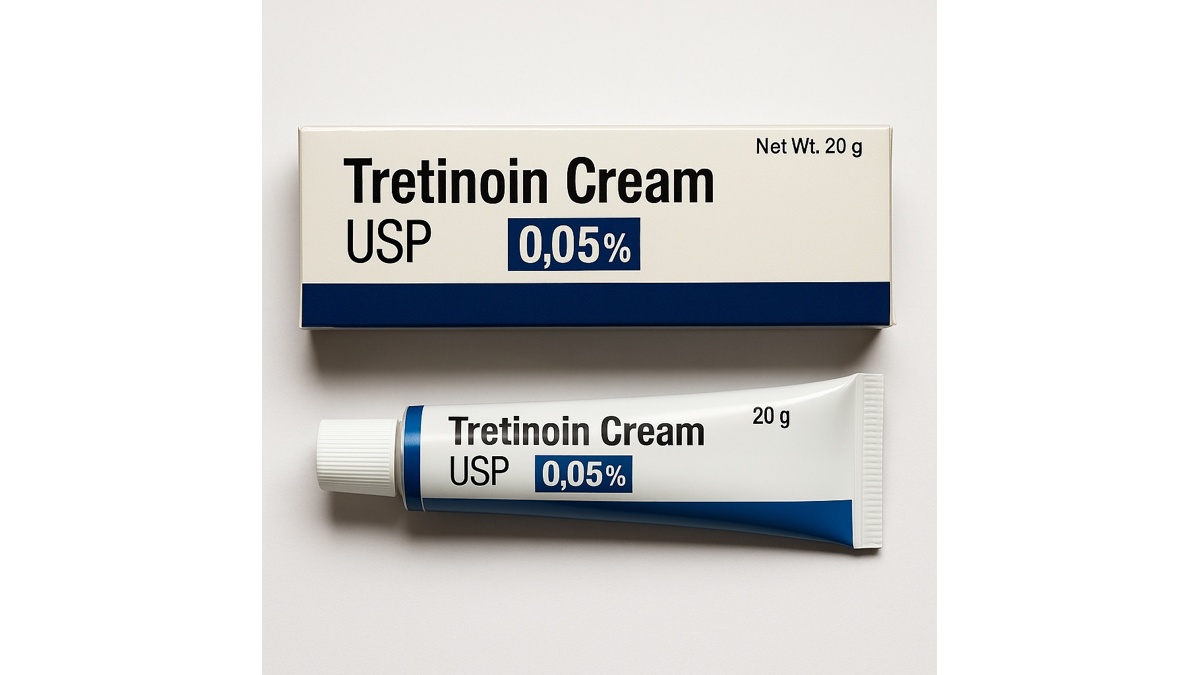
Medication: Tretinoin Cream
Active ingredient: Tretinoin (all-trans-retinoic acid)
Drug class: Topical retinoid
Dosage form: Cream for application to the skin
Strengths covered: 0.025% and 0.05%
FDA-approved indication: Acne vulgaris
Typical application: Once daily in the evening, or as prescribed
Prescription status: Prescription required in the United States
The image is illustrative. Tretinoin cream is produced by different manufacturers, and packaging, ingredients in the cream base and available tube sizes may vary.
How Tretinoin Affects Clogged Pores
Acne often begins before a visible pimple appears. Inside a hair follicle, skin cells can accumulate and mix with sebum, forming a microscopic blockage called a microcomedone. As the blockage develops, it may become a whitehead or blackhead. Inflammation can follow, sometimes producing red papules, pustules or deeper lesions.
Tretinoin helps normalize the shedding of follicular cells and reduces the formation of these early blockages. This is different from a cleanser that removes surface oil or a spot treatment applied only after a pimple has formed. The medication is generally spread over the acne-prone area because its purpose includes preventing new lesions, not merely treating those already visible.
The effect develops gradually. Applying a larger amount does not force blocked pores to clear more quickly and usually increases irritation instead.
Tretinoin Cream 0.05%
Contains 0.5 mg of tretinoin per gram of cream. This concentration may be considered when a clinician determines that a higher-strength formulation is appropriate. Skin tolerance, previous retinoid exposure and the severity of acne all influence the decision.
For topical use only. The percentage indicates concentration, not the amount to apply.
Tretinoin Cream 0.025%
Contains 0.25 mg of tretinoin per gram of cream. The lower concentration may be useful when tolerability is a concern, although irritation remains possible and the overall formulation also matters.
For topical use only. Follow the instructions for the specific prescribed product.
What Skin Conditions Can Tretinoin Cream Treat?
The principal FDA-approved indication for conventional tretinoin acne creams is acne vulgaris. Dermatologists may also prescribe tretinoin for certain problems involving skin pigmentation or signs of sun damage, but those uses need to be distinguished from the approved indication on a particular product’s label.
Acne Vulgaris and Clogged Pores
Tretinoin cream for acne is especially relevant when blackheads, whiteheads and recurring clogged pores are prominent. By reducing microcomedone formation, topical tretinoin can help control a process that occurs early in acne development. This preventive activity is one reason retinoids remain a fundamental part of modern acne treatment.
Inflammatory acne is more complicated. Red pimples and pustules arise from interactions between blocked follicles, sebum, Cutibacterium acnes and the skin’s inflammatory response. Tretinoin can contribute to treatment, but some patients need additional medication. The American Academy of Dermatology recommends topical retinoids and supports combining therapies with different mechanisms when appropriate. Benzoyl peroxide, for example, may be used in a broader regimen. Antibiotics may be needed for selected inflammatory cases, although their use should be limited to appropriate circumstances and combined with other treatments to reduce resistance.
The order and timing of topical products matter because applying several irritating treatments at once can make the skin less tolerant of the entire regimen. Patients using benzoyl peroxide, exfoliating acids or other acne medicines should follow a coordinated treatment plan rather than assume that all products can be layered together.
Once acne is controlled, a dermatologist may recommend continued topical retinoid treatment to reduce new comedones. Maintenance does not necessarily require the same concentration or application frequency that was used at the beginning.
For a broader explanation of treatment choices, see Acne in Teenagers and Adults: Modern Treatment Strategies.
Fine Wrinkles, Skin Texture and Hyperpigmentation
Tretinoin is also studied and prescribed for some visible effects of photodamage. Over time, retinoid treatment can influence epidermal renewal and processes involved in collagen remodeling. Patients may notice gradual changes in fine facial lines, uneven texture or certain areas of discoloration. These effects are usually slower to appear than the earliest changes in acne.
However, the distinction between the active ingredient and a particular approved product is important. Ordinary tretinoin creams labeled for acne, including the 0.025% and 0.05% products discussed here, should not automatically be described as FDA-approved anti-aging treatments. Separate tretinoin formulations have been approved for limited cosmetic indications. For example, RENOVA 0.02% has labeling for reducing the appearance of fine facial wrinkles as an adjunct to comprehensive skin care and sun avoidance. Even that label does not claim to eliminate wrinkles or reverse photoaging.
Tretinoin for fine wrinkles may produce a modest improvement in selected patients, but deep folds, substantial skin laxity and established scars are not reliably corrected by applying the cream.
Post-inflammatory hyperpigmentation requires similar care in how results are described. Marks left after acne can fade gradually, but irritation from treatment may worsen pigmentation, particularly in people prone to developing dark marks after inflammation. Preventing new acne lesions, controlling irritation and protecting the skin from ultraviolet exposure are all relevant to the outcome.
Tretinoin should not be presented as a treatment that reverses every form of skin discoloration or removes acne scars.
Tretinoin Cream 0.025% vs 0.05%: Which Strength Is Appropriate?
The difference between tretinoin 0.025% cream and tretinoin 0.05% cream is the concentration of the active ingredient. The 0.05% formulation contains twice as much tretinoin per gram. That does not mean the patient should expect twice the improvement or that the higher concentration will necessarily clear acne faster.
Skin tolerance is often the deciding factor. A higher concentration may produce more pronounced irritation, particularly when a patient has not previously used a prescription retinoid. However, the cream base also influences how a product feels and behaves on the skin. Two preparations with the same tretinoin concentration may contain different inactive ingredients and may not be tolerated identically.
For someone experiencing persistent dryness and peeling, increasing the percentage is unlikely to solve the problem. A dermatologist may instead adjust the frequency of application, recommend additional moisturizing care or consider a different formulation. In other circumstances, a change in concentration may be considered when treatment has been well tolerated but the response remains inadequate.
There is no universal rule that every patient must start with 0.025% or that 0.05% is the correct strength for adult acne.
How to Apply Tretinoin Cream Correctly
How to apply tretinoin cream is as important as choosing the concentration. The U.S. prescribing information generally describes a thin application once daily in the evening to the affected skin. Applying the medicine repeatedly during the day or using a thick layer does not improve results and can make treatment considerably more irritating.
Begin by washing the treatment area gently, without abrasive brushes or harsh cleansers. Pat the skin dry and allow it to become completely dry before applying the cream. Some product instructions recommend waiting approximately 20 to 30 minutes after washing to reduce the chance of irritation. A small amount, often described as pea-sized for the entire face, is generally sufficient when spread thinly. The appropriate amount depends on the area being treated and the directions for the prescribed product.
Keep the cream away from the eyes, lips, inside the nose, corners of the mouth and broken skin. Applying additional medication directly to an inflamed pimple is not a substitute for treating the surrounding acne-prone area.
A simple routine is usually easier to tolerate:
- Cleanse with a gentle, nonabrasive product and let the skin dry.
- Apply the prescribed amount in a thin layer in the evening.
- Use a suitable moisturizer to help manage dryness.
- During the day, apply broad-spectrum sunscreen with SPF 30 or higher and use other sun-protective measures.
Moisturizer can be an important part of treatment rather than an optional cosmetic addition. Dry, irritated skin is more likely to become uncomfortable enough that a patient stops using the medication. Some patients tolerate moisturizer before or after tretinoin, but the application order should be consistent with advice for the specific product and their skin condition.
The First Weeks of Treatment
Tretinoin does not make skin tolerant to irritation immediately. Early treatment may cause tightness, mild burning, redness or visible flaking, especially around areas where the skin is thinner. Some patients notice that previously developing acne lesions become more apparent during the initial weeks. This temporary worsening is often called purging, but the term should not be used to dismiss every new skin problem.
If the face becomes intensely red, painful or swollen, or if the skin cracks and develops significant irritation, continuing the same application schedule may make matters worse. The product labeling allows for temporary interruption or reduced frequency when irritation requires it, followed by reassessment of tolerability. Starting every other night may also be recommended for some patients with sensitive skin. These adjustments should follow the prescriber’s instructions rather than a fixed online schedule based solely on concentration.
A particularly common mistake is adding several active skin-care products at the same time. An exfoliating acid, medicated cleanser and prescription retinoid may each be tolerable alone but produce considerable irritation when combined. Keeping the routine uncomplicated makes it easier to identify what the skin is reacting to.
When Tretinoin Results Become Visible
The first few applications usually provide little indication of how effective treatment will be. According to U.S. prescribing information, initial improvement may appear after two to three weeks, but more than six weeks can be required for definite beneficial effects. For many patients, evaluating the response after approximately eight to twelve weeks is more informative than judging the skin after a few days.
Progress may show up first as fewer new clogged pores or less frequent development of inflammatory lesions. Existing discoloration can take longer to fade. Improvement in fine wrinkles, when tretinoin is used for that purpose, may take several months and should not be evaluated on the same timeline as acne.
Tretinoin cream results depend on regular use, the underlying skin condition and the patient’s ability to tolerate the prescribed regimen. Visible improvement is not necessarily permanent after discontinuation, particularly when the tendency to form acne lesions remains.
If acne has not responded sufficiently after an appropriate treatment period, the next step is to reassess the diagnosis and regimen. Applying more cream is not a reliable solution.
Tretinoin Cream Side Effects and Safety
Topical tretinoin acts mainly at the application site, which makes local skin irritation the most familiar adverse effect. Its safety considerations nevertheless extend beyond dryness. Pregnancy, other skin diseases, ultraviolet exposure and concurrent skin-care products can all influence whether treatment is appropriate.
Dryness, Peeling and Skin Irritation
The most common tretinoin cream side effects include redness, dryness, flaking, itching, stinging and a burning sensation. These reactions often appear early, when the skin is adjusting to the medication, although irritation can also develop later if the regimen changes or the skin barrier becomes compromised.
Severity matters more than the mere presence of peeling. Mild dryness may be manageable with a moisturizer and changes to the skin-care routine. Painful inflammation, marked swelling, blistering or persistent burning is different and may require stopping the medication until the patient has been evaluated.
Some people are tempted to continue applying tretinoin through severe irritation because they believe peeling indicates that the treatment is working. It does not. Excessive irritation can make acne management more difficult and may leave temporary discoloration, especially in skin prone to post-inflammatory hyperpigmentation.
Another consideration is contact allergy to an ingredient in the formulation. A reaction to the cream base is possible even when a patient previously tolerated a different tretinoin product. Persistent or unusual reactions should therefore be assessed rather than automatically attributed to normal retinoid effects.
Pregnancy and Other Precautions
Tretinoin during pregnancy requires particular caution. The American Academy of Dermatology recommends avoiding topical retinoids while pregnant. Patients who are planning a pregnancy should discuss when to discontinue tretinoin and which alternative treatments may be appropriate. Anyone who becomes pregnant while using the medication should stop applying it and contact their healthcare professional for advice.
Topically applied tretinoin generally produces much lower systemic exposure than oral isotretinoin. The medicines should therefore not be treated as if they have identical exposure levels or regulatory requirements. However, low systemic absorption does not establish safety during pregnancy, and the available human evidence is insufficient to recommend routine use.
Patients who are breastfeeding should also discuss treatment with their clinician, particularly when considering application to large areas or locations that could come into contact with an infant.
Tretinoin should not be applied to sunburned skin, open wounds or areas affected by active eczema unless the treating clinician specifically advises otherwise. These conditions can make irritation substantially worse. Products containing alcohol, strong exfoliating ingredients or other irritating substances may cause additional discomfort.
Sun protection is important throughout treatment. Avoid tanning beds and unnecessary ultraviolet exposure, use protective clothing when appropriate and apply broad-spectrum sunscreen every morning. Wind and cold weather may also aggravate dryness in already sensitive skin.
A history of allergy to tretinoin or an ingredient in the selected formulation must be reviewed before treatment.
Tretinoin Gel vs Cream: Does the Formulation Matter?
The comparison between tretinoin gel vs cream is not simply a choice between oily and dry skin. Both forms deliver the same active ingredient, but their bases differ in texture, spreading characteristics and potentially irritating inactive ingredients.
Some creams feel richer or more emollient and may be preferred by patients who find certain gels uncomfortable. Other people dislike the feel of a cream or tolerate a particular gel better. Because formulations vary among manufacturers, it is misleading to assume that every gel is drying or that every cream is automatically suitable for sensitive skin.
Concentration also needs to be considered. A lower-strength gel should not be assumed to have the same irritation profile as a cream solely because it contains less tretinoin. How the medicine is delivered and the patient’s existing skin-care routine can affect tolerance.
Additional information about available gel formulations is provided on the Tretinoin Gel page.
Topical tretinoin should also not be confused with oral isotretinoin, which has different indications, systemic effects and monitoring requirements. Their differences are covered in Isotretinoin and Tretinoin: Effectiveness, Risks, and Safety Monitoring.
Medical Disclaimer
This article provides general information about topical tretinoin, its uses, concentrations, application and safety precautions. It does not determine whether a particular patient should begin treatment or which formulation is appropriate.
Tretinoin is a prescription medication in the United States. Patients who are pregnant, planning pregnancy or experiencing significant skin irritation should discuss treatment decisions with a qualified healthcare professional.
Frequently Asked Questions About Tretinoin Cream
What is tretinoin cream used for?
Conventional tretinoin cream is FDA-approved for treating acne vulgaris. It helps reduce the formation of clogged pores and may be part of treatment for both comedonal and inflammatory acne. Dermatologists may also use tretinoin for selected pigmentation concerns or fine wrinkles, but the approved indications depend on the particular product.
How long does tretinoin take to work?
Early changes may appear after two to three weeks, although definite acne improvement often requires more than six weeks. Many patients need approximately eight to twelve weeks to evaluate the response. Changes in pigmentation or fine wrinkles can take considerably longer.
Is 0.025% or 0.05% tretinoin better?
Neither concentration is automatically better for everyone. The 0.05% cream contains twice as much active ingredient per gram, but a higher concentration may also increase irritation. Acne severity, previous treatment and skin tolerance help determine which product is appropriate.
Can tretinoin make acne worse at first?
Some patients notice a temporary increase in visible acne lesions during the early weeks of treatment. However, severe redness, painful inflammation or significant peeling should not automatically be considered a normal adjustment. The treatment schedule may need to be reviewed.
Can tretinoin be used during pregnancy?
Topical tretinoin is generally avoided during pregnancy. The American Academy of Dermatology recommends stopping topical retinoids while pregnant. Patients planning pregnancy should discuss appropriate alternatives with their dermatologist or obstetrician.
Medical References
- DailyMed: Tretinoin Cream USP 0.025%, Viona Pharmaceuticals, Updated September 2026
- DailyMed: Tretinoin Cream USP 0.05%, Alembic Pharmaceuticals, Updated June 2026
- MedlinePlus: Tretinoin Topical Drug Information
- American Academy of Dermatology: Acne Clinical Guideline
- American Academy of Dermatology: Acne Treatment During Pregnancy
- DailyMed: RENOVA 0.02% Tretinoin Cream, Fine Facial Wrinkles Indication
Article Update: October 23, 2026
This article was editorially updated on October 23, 2026, to reflect current U.S. prescribing information and evidence-based dermatology guidance. The revision clarifies the approved use of conventional tretinoin cream for acne, the differences between 0.025% and 0.05% formulations, application precautions and recommendations concerning pregnancy.
September 2026 labeling update: DailyMed updated the listing for Tretinoin Cream USP 0.025% distributed by Viona Pharmaceuticals on September 30, 2026. The listing identifies 20 g and 45 g tubes and shows a marketing start date of October 1, 2026, under ANDA 218560. The approved indication remains topical treatment of acne vulgaris.
This update concerns the labeling and listing of a particular generic product. It does not indicate a newly approved use for wrinkles, hyperpigmentation or other skin conditions, and it does not mean that tretinoin was first introduced in 2026.
Source: DailyMed – Tretinoin Cream USP 0.025%, Updated September 30, 2026.